Metacam for cats: a complete guide to meloxicam pain relief
Metacam for cats is a prescription anti-inflammatory painkiller containing meloxicam. It's one of the most widely used medicines for arthritis and post-operative pain in UK cats. This guide explains how Metacam works, how it's given, the side effects to watch for, how generic versions such as Loxicom compare, and the other pain relief options your vet may suggest.
Quick answer
- Metacam contains meloxicam, a non-steroidal anti-inflammatory drug (NSAID) used for arthritis and pain after surgery.
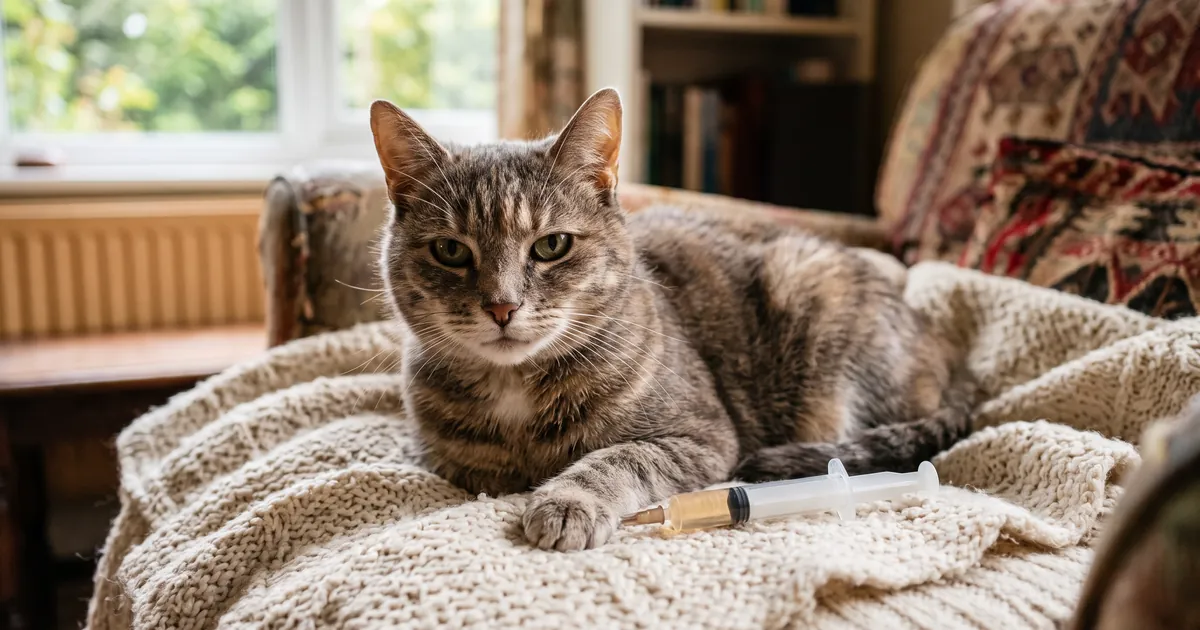
- It's prescription-only (POM-V) and dosed by your cat's exact weight using the syringe supplied.
- Give it with or after food; stop and call your vet if your cat vomits, has diarrhoea or stops eating.
- Never give human painkillers such as ibuprofen, aspirin or paracetamol to cats.
What is Metacam for cats?
Metacam is a brand of meloxicam, made by Boehringer Ingelheim. Meloxicam belongs to the group of drugs called non-steroidal anti-inflammatory drugs (NSAIDs), which reduce inflammation, pain and fever by blocking the body's production of prostaglandins.
For cats, Metacam comes in two main forms:
- Metacam 0.5 mg/ml oral suspension for cats: a honey-flavoured liquid given by mouth or on food, with a dosing syringe marked in kilograms of body weight.
- Metacam injection: given by your vet, usually before or after surgery.
In the UK, all forms of Metacam are prescription-only veterinary medicines (POM-V). Your vet must examine your cat before prescribing it.
What Metacam is used for
Arthritis and chronic pain
Arthritis (osteoarthritis) is extremely common in older cats, but often missed because cats hide pain. Studies have found signs of arthritis on X-rays in the majority of cats over 12 years old. Metacam is licensed for the long-term relief of chronic musculoskeletal pain in cats, which makes it one of the main treatments for arthritis.
Pain after surgery
Vets commonly give a Metacam injection before or after operations such as neutering, dental extractions and wound repairs. You may be sent home with oral suspension for a few days. Read more about recovery in our guide to cat neutering.
Injuries and inflammation
Vets may also prescribe meloxicam for soft-tissue injuries, inflammation and some other painful conditions, based on their clinical judgement.
Signs your cat may be in pain from arthritis
Cats rarely limp or cry with arthritis. Instead, look for gradual changes:
- Jumping up less, or hesitating before jumping.
- Using furniture as steps instead of jumping straight up or down.
- Difficulty using the stairs or the cat flap.
- Toileting outside the litter tray, often because the sides are too high.
- Grooming less, with a scruffy or matted coat over the back and hips.
- Sleeping more, playing less, or being grumpy when handled.
- Overgrown claws because of less scratching.
Many owners think these changes are "just old age". In reality, they're often signs of treatable pain. Our cat years calculator shows when your cat becomes a senior and more likely to have arthritis.
Metacam dose for cats
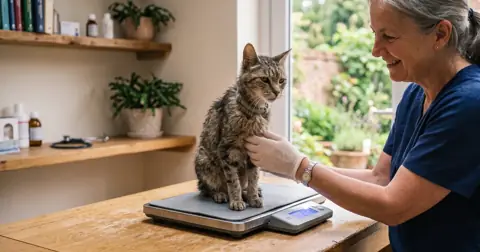
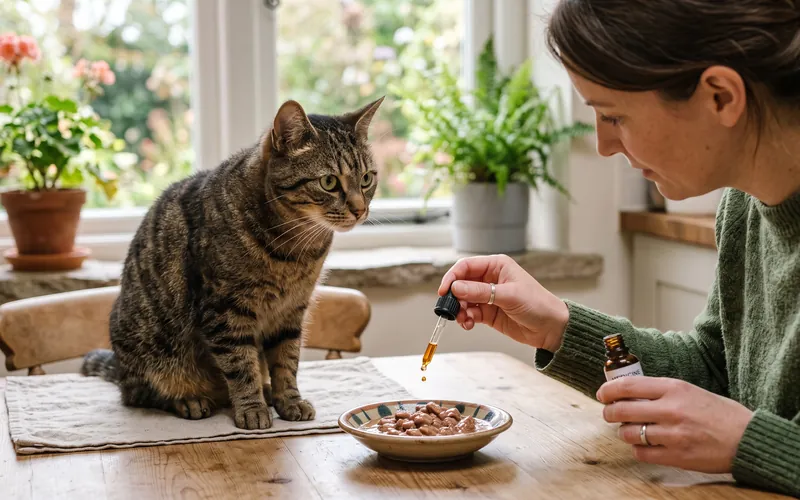
Your vet works out the dose based on your cat's weight and condition. With the oral suspension, the syringe supplied is marked in kilograms, so you simply draw up the liquid to your cat's weight mark. Typical licensed dosing is a higher starting dose on the first day, then a lower daily maintenance dose. Never estimate a dose yourself or use a dog's Metacam syringe, which is marked for dogs and would give a cat far too much.
- Shake the bottle well.
- Attach the cat syringe to the bottle and draw up to the line for your cat's weight, as instructed by your vet.
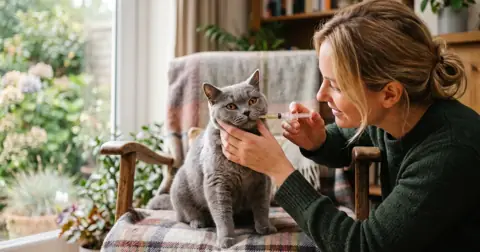
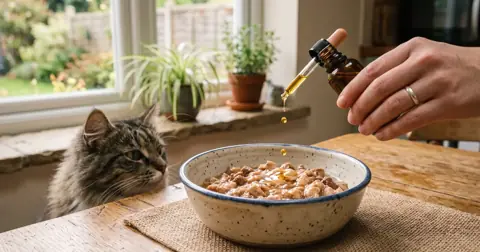
- Give it with food: drip it onto a small amount of wet food that your cat will finish, or give it directly into the side of the mouth.
- Wash the syringe after use and store the bottle as directed.
- Give it at the same time each day and don't double up a missed dose.
Use only the cat syringe. Meloxicam overdose in cats can cause kidney failure and stomach ulcers. If you think your cat has had too much, contact your vet immediately.
Metacam side effects in cats
Most cats tolerate Metacam well, but NSAIDs can cause side effects, especially in cats that are dehydrated, have kidney disease or are given too high a dose. Watch for:
- Vomiting or diarrhoea, sometimes with blood.
- Black, tarry stools (a sign of bleeding in the gut).
- Loss of appetite.
- Lethargy or unusual tiredness.
- Drinking or urinating more or less than usual.
If you notice any of these, stop giving Metacam and contact your vet. Make sure your cat is eating and drinking normally before each dose; if it's off its food, skip the dose and call your vet.
Does Metacam make cats sleepy?
Metacam itself isn't a sedative. Cats in pain often rest more once they're comfortable, which can look like extra sleepiness. However, marked lethargy can be a sign of a side effect, particularly kidney problems, so tell your vet if your cat seems unusually flat.
Metacam and kidney disease
Older cats frequently have both arthritis and chronic kidney disease. NSAIDs can affect blood flow to the kidneys, so vets take extra care. Many cats with stable kidney disease can still have meloxicam at a carefully chosen dose, because uncontrolled pain also harms quality of life, but your vet will usually:
- Run blood and urine tests before starting and at regular intervals.
- Use the lowest dose that controls pain.
- Advise you to stop if your cat is dehydrated, vomiting or not eating.
- Encourage water intake, for example with wet food or a water fountain.
Our guide to renal diets for cats explains how diet supports kidney health.
Metacam after surgery: what to expect
If your cat has had an operation, it may have received a Metacam injection at the practice and be sent home with a few days of oral suspension. In the first 24 hours, your cat may be sleepy from the anaesthetic, which is normal. Offer a small meal in the evening, give the first home dose with food as directed, and keep your cat warm and quiet. Contact your vet if your cat refuses food the next day, vomits, or seems in pain despite the medicine. Don't give extra doses to "top up" pain relief; ask your vet instead, as they can add a different type of painkiller safely.
Metacam vs steroids
Both NSAIDs like meloxicam and steroids like prednisolone reduce inflammation, but they work differently and must never be given together, because the combination greatly increases the risk of stomach ulcers. If your cat has been on steroids, your vet will usually leave a gap of several days before starting Metacam, and vice versa. Steroids are more often used for allergies, asthma and inflammatory bowel disease, while NSAIDs are preferred for arthritis pain. Read more about when steroids are used in our guides to lip swelling and eosinophilic granuloma and cat allergies.
Metacam and other medicines
Always tell your vet about every medicine and supplement your cat takes before starting Metacam. Particular care is needed with:
- Other NSAIDs such as robenacoxib, or any human anti-inflammatory: never combine.
- Steroids such as prednisolone.
- Diuretics (water tablets) and some blood pressure medicines, which can affect the kidneys together with NSAIDs.
- Anticoagulants, which increase bleeding risk.
Most supplements, such as omega-3 fatty acids and joint supplements, can usually be given alongside Metacam, but check first.
What to do if you miss a dose or give too much
Missed dose
If you forget a dose, give it as soon as you remember on the same day, with food. If it's almost time for the next dose, skip the missed one. Never give two doses together.
Accidental overdose
If you give more than the prescribed amount, or your cat gets into the bottle, or you've used a dog syringe by mistake, contact your vet or an emergency vet straight away, even if your cat seems fine. Early treatment can protect the kidneys and stomach. Take the bottle with you.
Storing Metacam
Keep the bottle tightly closed at room temperature, out of reach of children and pets. Note the date you open it: Metacam oral suspension for cats has a limited shelf life once opened (check the leaflet, often 6 months), after which any remaining liquid should be returned to your vet or a pharmacy for disposal.
Generic Metacam: Loxicom, Meloxidyl and Rheumocam
Several companies make meloxicam products for cats, including Loxicom, Meloxidyl and Rheumocam. They contain the same active ingredient as Metacam and are also prescription-only. Your vet may prescribe one of these instead, sometimes at a lower cost.
The concentration and the dosing syringe can differ between brands. Always use the syringe that comes with the product you've been prescribed, and never mix syringes between products.
Metacam for cats without vet prescription: why it isn't allowed
Owners sometimes search for Metacam for cats without a vet prescription, especially when a cat seems stiff or sore. In the UK, this isn't legally possible, and for good reason: NSAIDs are effective but can seriously harm cats that are dehydrated, have undiagnosed kidney disease or are given the wrong dose. If cost is the worry, ask your vet for a written prescription so you can compare online pharmacy prices, or ask whether a generic meloxicam is an option.
Other pain relief for cats
| Medicine | Type | Typical use |
|---|---|---|
| Meloxicam (Metacam, Loxicom and others) | NSAID, daily liquid | Arthritis, post-operative pain |
| Robenacoxib (Onsior) | NSAID, tablets or injection | Short-term pain and inflammation |
| Frunevetmab (Solensia) | Monthly injection (antibody) | Arthritis pain, an option when NSAIDs aren't suitable |
| Gabapentin | Capsule or liquid (controlled drug) | Chronic pain, nerve pain, reducing stress before vet visits |
| Buprenorphine | Opioid, given into the cheek | Moderate to severe pain, often after surgery |
Solensia for cats
Solensia contains frunevetmab, an antibody that blocks nerve growth factor, a key driver of arthritis pain. It's given as a monthly injection at the vet. It's an option for many arthritic cats, including some that can't have NSAIDs, though your vet will check whether it's suitable.
Gabapentin for cats in the UK
Gabapentin is used by UK vets for chronic and nerve-related pain, and sometimes to calm anxious cats before vet visits. It's a controlled drug in the UK, so prescriptions are handled with extra rules. It can make cats sleepy and wobbly, particularly at first.
Natural pain relief for cats: what helps alongside medication
There's no proven, safe herbal alternative to prescribed pain relief. However, these measures can make a real difference to arthritic cats when combined with treatment from your vet:
- Weight management: losing even a little excess weight reduces stress on joints. Check your cat with our cat weight checker.
- Omega-3 fatty acids: may support joint comfort. See our guide to salmon oil for cats.
- Joint supplements containing glucosamine, chondroitin or green-lipped mussel: evidence is limited, but some owners notice benefits.
- Home changes: ramps or steps to favourite spots, low-sided litter trays, food and water on every floor, and soft, warm beds.
- Gentle play to keep muscles strong.
- Physiotherapy and hydrotherapy, offered by some practices.
Never give human painkillers to cats. Paracetamol can kill a cat even in small amounts, and ibuprofen and aspirin can cause stomach ulcers and kidney failure. Read our guide on whether you can give cats paracetamol.
Giving Metacam to a fussy cat
Metacam's honey flavour means many cats accept it on food. If yours won't:
- Mix it into a teaspoon of a strong-smelling food, such as tuna or a meaty pouch, and offer it before the main meal.
- Give it directly into the side of the mouth with the syringe, then follow with a treat.
- Ask your vet about alternative formulations or medicines if your cat refuses repeatedly.
Our guide on how to give a cat a pill has tips that work for liquids too.
Metacam for cats: questions to ask your vet
- What exactly is the dose, and how long should my cat take it?
- Should it always be given with food, and at what time of day?
- Which blood or urine tests does my cat need, and how often?
- What side effects should make me stop and call you?
- Can my cat have its other medicines and supplements alongside it?
- Is a generic meloxicam suitable, and could a written prescription save money?
- What other pain relief options are there if Metacam isn't enough or isn't suitable?
Writing the answers down, or asking for them on the prescription label, makes it easier for everyone in the household to give the medicine correctly.
How much does Metacam for cats cost?
Prices vary by practice and bottle size. As a rough guide, a 3 ml bottle of Metacam oral suspension for cats costs around £15 to £25 from a vet, and a 15 ml bottle around £35 to £60. Generic meloxicam is often slightly cheaper. Ongoing use also involves regular check-ups and blood tests. Pet insurance usually covers long-term pain medication for conditions that started after the policy began; see our guide to cat insurance.
Monitoring a cat on long-term Metacam
Cats with arthritis may take Metacam for months or years. To keep them safe, your vet will usually recommend:
- A check-up and blood test after the first few weeks.
- Regular reviews every 3 to 6 months, with blood and urine tests.
- Blood pressure checks in older cats. See our guide to normal cat blood pressure.
- Adjusting the dose to the lowest that keeps your cat comfortable.
Keep a simple diary of your cat's mobility, appetite and thirst, such as how often it jumps onto the sofa or uses the stairs. It helps your vet judge how well the medicine is working and whether the dose can be reduced.
FAQs
What is Metacam used for in cats?
Metacam is used to reduce pain and inflammation in cats with chronic musculoskeletal pain such as arthritis, and to control pain after surgery such as neutering or dental procedures. Your vet decides whether it's suitable for your cat.
Can I get Metacam for cats without a vet prescription?
No. Metacam is a prescription-only veterinary medicine (POM-V) in the UK. A vet must examine your cat before prescribing it, because NSAIDs need careful dosing and can cause side effects in cats with kidney disease, dehydration or stomach problems. Your vet can provide a written prescription if you'd like to buy it from an online pharmacy.
Does Metacam make cats sleepy?
Metacam doesn't usually cause drowsiness. Some cats rest more once their pain is controlled, which is normal. But if your cat becomes very lethargic, stops eating, vomits or drinks much more than usual, stop the medicine and contact your vet, as these can be signs of a side effect.
Is Loxicom the same as Metacam?
Loxicom, Meloxidyl and Rheumocam are generic medicines containing meloxicam, the same active ingredient as Metacam. Strengths and syringes can differ slightly between brands, so always use the syringe that comes with the product you've been prescribed.
How long can a cat stay on Metacam?
Metacam oral suspension is licensed for long-term use in cats with chronic pain, at the lowest effective dose. Your vet will usually recommend regular check-ups and blood tests to monitor kidney function while your cat is on it.
What natural pain relief is there for cats?
There's no safe natural substitute for prescribed pain relief, but some measures help alongside it: keeping your cat slim, joint supplements, omega-3 fatty acids, warm bedding, ramps and low-sided litter trays. Never use human painkillers or essential oils, which can be toxic.
Sources and further reading
This guide is for general information only and is not a substitute for advice from a vet. Medicines, doses and costs change: always follow your vet and the product leaflet. If your cat is unwell or you think it has eaten something toxic, contact your vet or an emergency vet straight away.