Salmon oil for cats: benefits, dose and risks
Salmon oil for cats is rich in omega-3 fatty acids, which can support skin and coat health and may help cats with arthritis, allergies and kidney disease. But more isn't better, and the type of oil matters. This guide explains the benefits, how much to give, the risks of too much, and how salmon oil compares with cod liver oil and coconut oil.
Quick answer
- Salmon oil provides the omega-3 fatty acids EPA and DHA, which help reduce inflammation.
- Benefits may include a healthier skin and coat and support for joints, kidneys and allergies.
- Start with a small amount and follow the product's dosing or your vet's advice. Too much can cause diarrhoea and weight gain.
- Avoid regular cod liver oil (very high in vitamins A and D). Coconut oil has no proven benefit for cats.
What is salmon oil?
Salmon oil is extracted from the body of salmon. It's a rich source of two long-chain omega-3 fatty acids: EPA (eicosapentaenoic acid) and DHA (docosahexaenoic acid). Unlike people, cats can't make useful amounts of these from plant oils such as flaxseed, so fish oils are the main source.
Omega-3 fatty acids are built into cell membranes throughout the body and help regulate inflammation. That's why they are of interest for conditions such as arthritis, skin allergies and kidney disease.
Benefits of salmon oil for cats
| Area | Possible benefit | Strength of evidence |
|---|---|---|
| Skin and coat | Glossier coat, less dryness and flaking | Moderate |
| Allergies and itchy skin | Supports the skin barrier; may reduce itching alongside other treatment | Moderate |
| Arthritis | May improve mobility and comfort | Some evidence in cats |
| Kidney disease | Omega-3s are included in many renal diets | Some evidence |
| Heart health | May support heart function | Limited in cats |
| Brain and eyes | DHA supports development in kittens | Mainly from kitten diet studies |
For cats with itchy skin, read our guide to whether cats can get hayfever. For stiff, older cats, see Metacam and other pain relief for cats, since omega-3s work best alongside proper treatment rather than instead of it.
Does my cat need salmon oil?
Many complete commercial cat foods already contain fish oil or other omega-3 sources. A healthy cat eating a complete diet doesn't necessarily need extra. Salmon oil may be worth considering if your cat has:
- Dry, flaky skin or a dull coat.
- Skin allergies, under your vet's guidance.
- Arthritis or stiffness.
- Chronic kidney disease (often already covered by a prescription renal diet; see renal diets for cats).
If your cat is on a prescription diet, ask your vet before adding any supplement, as the diet may already be balanced for omega-3.
How much salmon oil to give a cat
Doses depend on the product's strength and the reason you're giving it. As a general approach:
- Choose a product made for pets that lists the amount of EPA and DHA per pump or millilitre.
- Start low: give about a quarter of the recommended amount, mixed into food.
- Increase slowly over 7 to 14 days to the full dose if your cat's stools stay normal.
- Be consistent: benefits for skin and joints usually take 6 to 8 weeks to appear.
- Adjust food: oil adds calories, so reduce food slightly if your cat gains weight. Use our cat food calculator.
For arthritis or kidney disease, your vet may recommend a specific therapeutic dose.
Side effects and risks
- Digestive upset: soft stools, diarrhoea or vomiting, especially if started at a high dose.
- Fishy breath or coat smell.
- Weight gain: oils are calorie-dense.
- Effects on blood clotting at very high doses; tell your vet before surgery.
- Vitamin E depletion over time; many pet products add vitamin E as an antioxidant.
- Rancid oil: fish oil oxidises once opened. Keep it sealed, cool and away from light, and throw it out if it smells rancid.
Cats with pancreatitis, bleeding disorders or on anticoagulant medicines should only have fish oil under veterinary advice.
Salmon oil vs other oils
| Oil | Omega-3 (EPA/DHA) | Notes |
|---|---|---|
| Salmon oil | High | Popular, palatable to most cats |
| Fish oil (anchovy, sardine, mackerel) | High | Often more concentrated, sometimes more sustainable |
| Krill oil | Moderate | More expensive; less research in cats |
| Cod liver oil | Moderate | Very high in vitamins A and D: risk of toxicity with regular use |
| Flaxseed (linseed) oil | Plant omega-3 only (ALA) | Cats convert very little into EPA/DHA |
| Coconut oil | None | Mostly saturated fat; no proven benefit for cats |
| Olive oil | Very low | Not useful for omega-3; can cause diarrhoea |
Is cod liver oil good for cats?
Cod liver oil was once a popular supplement, but it's made from the liver rather than the body of the fish, so it's very high in vitamins A and D. Cats eating a complete diet already get enough of these vitamins, and too much vitamin A can cause painful bone and joint changes, while too much vitamin D can damage the kidneys. Avoid giving cod liver oil regularly unless your vet specifically recommends it.
Coconut oil for cats: does it help?
Coconut oil is often promoted online for hairballs, skin, digestion and even fleas. There's no good scientific evidence for any of these in cats. It's high in saturated fat and calories, and can cause greasy stools, diarrhoea and weight gain. In cats prone to pancreatitis, fatty foods may trigger a flare-up. A tiny amount isn't toxic, but there are better, proven options:
- For hairballs, see our cat hairball remedies.
- For dry skin, an omega-3 fish oil is more useful.
- For fleas, use a licensed flea treatment.
How to give salmon oil to a fussy cat
Most cats like the taste of salmon oil, but some are suspicious of anything new in their food. Try these tips:
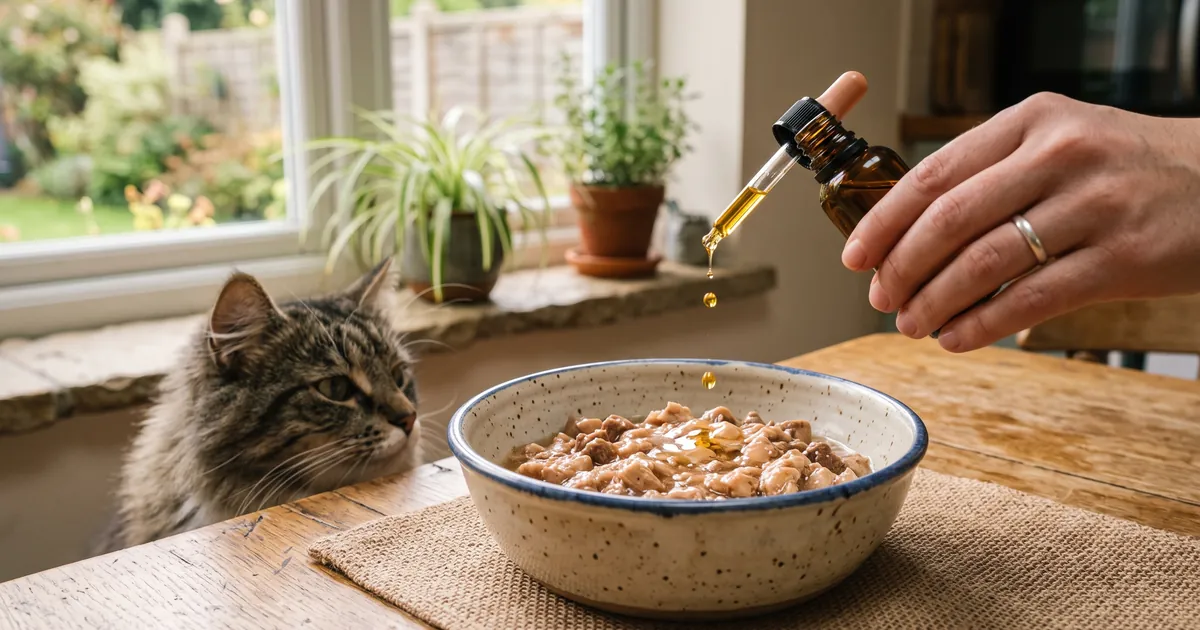
- Mix it into wet food rather than dry food, where it can pool and smell stronger.
- Start with a single drop and increase gradually as your cat gets used to it.
- Offer it on a treat or a teaspoon of your cat's favourite pâté before the main meal.
- Try capsules pierced and squeezed onto food if a liquid isn't accepted.
- Check freshness: cats often refuse oil that has started to go rancid.
If your cat won't eat food with oil added, don't let it go hungry. Ask your vet about a complete diet that already contains omega-3, such as some skin, joint or renal diets.
Salmon oil for cats with arthritis
Several studies suggest that diets rich in omega-3 fatty acids can improve mobility and activity in cats with arthritis. Salmon oil is not a painkiller and won't replace prescribed pain relief, but it may allow your vet to use a lower dose of medication, and it's safe to give alongside most arthritis treatments. Combine it with weight management and home changes such as ramps and low-sided litter trays for the best results.
Salmon oil for kittens and senior cats
Kittens fed a complete kitten food usually get enough DHA for brain and eye development, so extra oil isn't normally needed. Senior cats often benefit more, particularly those with stiff joints, dull coats or kidney disease. Older cats are also more likely to be on medicines, so check with your vet first.
Choosing a salmon oil for your cat
- Pick a product made for pets, with clear EPA and DHA content.
- Choose a pump bottle or capsules to limit air exposure.
- Look for added vitamin E (an antioxidant).
- Check for quality testing for contaminants such as heavy metals.
- Store it as the label directs and use within the stated time once opened.
FAQs
Is salmon oil good for cats?
Salmon oil can be good for many cats in the right amount. Its omega-3 fatty acids support skin and coat health and help reduce inflammation, which may benefit cats with arthritis, allergies and kidney disease. Cats eating a complete commercial diet don't always need it, so ask your vet if your cat would benefit.
How much salmon oil should I give my cat?
Follow the dosing on a product made for pets or your vet's advice, as strengths vary. Start with a fraction of the recommended amount and build up over a week or two to avoid stomach upset. Don't give more than advised.
Can I give my cat human fish oil capsules?
It's better to use a product made for pets, with a known amount of EPA and DHA per dose. Some human supplements contain added vitamins, flavourings or very high doses. If your vet suggests a human product, they'll tell you which one and how much.
Is cod liver oil safe for cats?
Cod liver oil is very high in vitamins A and D, which cats can overdose on. Regular use can cause vitamin toxicity, especially if your cat already eats a complete diet. Choose a fish body oil such as salmon oil instead, unless your vet advises otherwise.
Can cats have coconut oil?
Small amounts are unlikely to be toxic, but there's no good evidence that coconut oil benefits cats. It's high in saturated fat and calories, and can cause diarrhoea, weight gain and possibly pancreatitis. Don't use it as a treatment for hairballs, skin problems or anything else without asking your vet.
What are the side effects of fish oil in cats?
Possible side effects include fishy breath, soft stools or diarrhoea, vomiting and weight gain from the extra calories. Very high doses may affect blood clotting and can reduce vitamin E levels. Stop and ask your vet if your cat has any problems.
Sources and further reading
This guide is for general information only and is not a substitute for advice from a vet. Medicines, doses and costs change: always follow your vet and the product leaflet. If your cat is unwell or you think it has eaten something toxic, contact your vet or an emergency vet straight away.