Cat worming: the complete UK guide for owners
Regular cat worming protects your cat from roundworms, tapeworms and lungworm, and protects your family too, because some cat worms can infect people. This guide explains which worms UK cats get, how often to worm at every age, and how tablets, spot-ons and liquid wormers compare.
Quick answer
- Most adult cats should be wormed at least four times a year; cats that hunt usually need tapeworm treatment monthly.
- Kittens need worming every 2 weeks from 3 weeks old until 8 weeks, then monthly until 6 months.
- Choose a wormer that covers both roundworm and tapeworm unless your vet advises otherwise.
- Cats with fleas almost always need a tapeworm treatment as well.
Why cat worming matters
Worms are extremely common in UK cats. Kittens are often born with roundworms passed from their mother, adult cats pick up tapeworms from fleas and prey, and lungworm is spread by slugs, snails and the birds and rodents that eat them. A light worm burden may cause no obvious problems, but heavier infections can lead to weight loss, diarrhoea, anaemia, a blocked gut in kittens and breathing problems.
Cat worming is also a public health measure. Roundworm eggs passed in cat faeces survive in soil and sandpits for years, and they can infect children. Worming on a regular schedule keeps your cat healthy and stops eggs contaminating your garden and home.
Types of worms in UK cats
Roundworms
Toxocara cati and Toxascaris leonina are the most common worms in cats. They look like strands of cooked spaghetti, up to 10 cm long. Kittens catch them through their mother's milk, and adult cats catch them by eating eggs from the environment or by hunting mice. Roundworms can cause a pot belly, diarrhoea, vomiting and poor growth in kittens.
Tapeworms
Tapeworms are long, flat worms made of segments. Owners usually notice the segments, which look like grains of rice or sesame seeds, around the bottom, on bedding or in fresh poo. There are two main sources:
- Flea tapeworm (Dipylidium caninum): caught when a cat swallows an infected flea while grooming. Any cat with fleas is at risk, so see our flea treatment for cats guide.
- Prey tapeworm (Taenia taeniaeformis): caught by eating mice, rats and rabbits. Hunting cats can be reinfected every few weeks.
Lungworm
The cat lungworm (Aelurostrongylus abstrusus) lives in the airways. Cats catch it by eating birds, frogs or rodents that have eaten infected slugs or snails. Many cats show no signs, but some develop a chronic cough, wheezing or breathing difficulty. Not every wormer kills lungworm, so ask your vet if your cat hunts. Our guide to whether cats kill rabbits and birds explains why hunting cats need more protection.
Hookworms and whipworms
Hookworms are less common in UK cats but can cause anaemia and bloody diarrhoea. Whipworms are rare in cats. Most broad-spectrum wormers cover hookworms.
Signs of worms in cats
Many cats with worms look completely healthy, which is why routine worming is recommended rather than waiting for symptoms. Signs to watch for include:
- Rice-like tapeworm segments around the bottom, on bedding or in poo.
- Spaghetti-like roundworms in vomit or faeces.
- Weight loss or poor growth despite a good appetite.
- A swollen, pot-bellied tummy in kittens.
- Diarrhoea, sometimes with mucus or blood (see our guide to cat constipation and laxatives if the opposite is a problem).
- A dull, scruffy coat.
- Scooting or licking the bottom more than usual.
- Coughing or wheezing (lungworm).
If you notice any of these, start a worming treatment and book a vet check, especially for kittens, elderly cats or cats that are losing weight.
How often should you worm a cat?
The UK experts at ESCCAP base their advice on each cat's risk. The schedule below is a sensible starting point, and your vet can adjust it.
| Cat | Roundworm | Tapeworm |
|---|---|---|
| Kittens, 3–8 weeks | Every 2 weeks | Only if fleas are present |
| Kittens, 8 weeks–6 months | Monthly | Monthly if hunting or fleas |
| Adult cat, goes outdoors | At least 4 times a year | At least 4 times a year |
| Adult cat that hunts regularly | Monthly | Monthly |
| Indoor-only cat that doesn't hunt | 1–4 times a year | If fleas are found |
| Pregnant and nursing queens | As advised by your vet (some products are licensed for use in late pregnancy) | As advised |
| Cats living with young children or immunocompromised people | Monthly is often advised | At least 4 times a year |
Do indoor cats need worming?
Indoor cats still need worming, but usually less often. They can be infected by swallowing fleas, eating raw meat, sharing litter trays with outdoor cats, or by eggs carried in on shoes. If your indoor cat never hunts, has no fleas and eats only commercial food, your vet may suggest worming once or twice a year. If any of those things change, worm more often.
Types of cat wormer compared
Cat wormers come as tablets, spot-ons, liquids, pastes and granules. The right choice depends on which worms you need to cover and what your cat will accept.
| Type | Examples | Covers | Best for |
|---|---|---|---|
| Tablet (praziquantel + pyrantel) | Drontal | Roundworm, tapeworm, hookworm | Cats that take tablets in a treat |
| Tablet (milbemycin + praziquantel) | Milbemax, Milpro | Roundworm, tapeworm, hookworm, some lungworm | Small tablets, kittens from 0.5 kg |
| Spot-on (emodepside + praziquantel) | Profender, Dronspot | Roundworm, tapeworm, hookworm, lungworm | Cats that refuse tablets |
| Spot-on (praziquantel only) | Droncit spot-on | Tapeworm only | Topping up tapeworm cover |
| Liquid or granules (fenbendazole) | Panacur | Roundworm, some tapeworm (not flea tapeworm) | Young kittens |
| Prescription flea + worm spot-ons | Advocate, Stronghold, Broadline, NexGard Combo, Felpreva | Fleas plus some or all worms | One product for several parasites |
For detailed product guides, see Drontal for cats, Dronspot for cats, cat worming tablets and spot-on cat worming.
Cat worming tablets
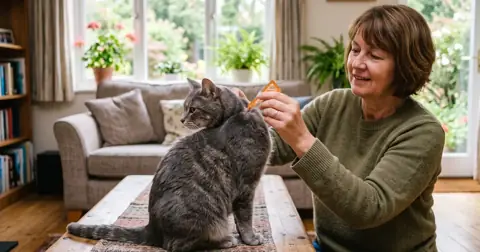
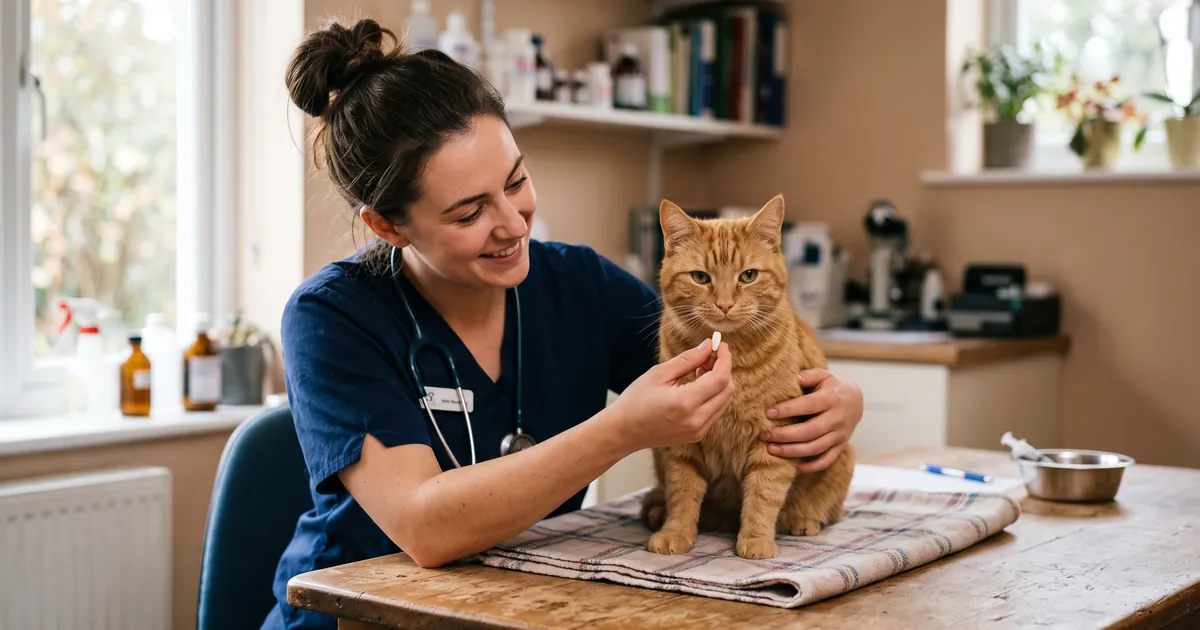
Worming tablets are the most common choice and are usually cheaper than spot-ons. They are small, often flavoured, and can be hidden in a treat or a little wet food. Tablets work from the inside within a few hours and the dead worms are usually digested, so you rarely see them.
Spot-on wormers
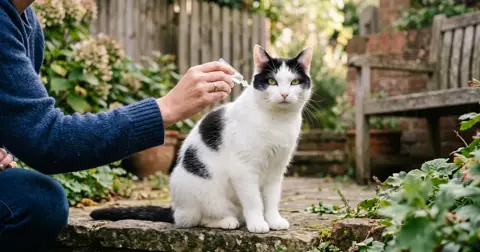
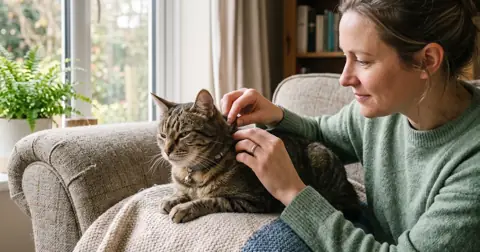
Spot-on wormers are absorbed through the skin, making them ideal for cats that are difficult to pill. They are applied like a flea spot-on at the base of the skull. Do not stroke the area until it is dry, and keep children away from it for a few hours.
Liquid wormer for cats and kittens
Liquid wormers and granules (such as fenbendazole) are mixed into food or given by syringe. They are often used for young kittens, but some need to be given for several days in a row and do not cover the flea tapeworm, so check the label.
Prescription vs non-prescription wormers
Many effective cat wormers can be bought without a prescription from pet shops, pharmacies and online retailers, although some must be supplied by a pharmacist or SQP who will ask a few questions. Wormers that also treat fleas or lungworm, such as Advocate or Bravecto Plus, are usually prescription-only, so your vet must examine your cat before supplying them. If your cat has had worms despite regular treatment, or you live with someone vulnerable, speak to your vet about a prescription plan.
How to worm a cat: step by step
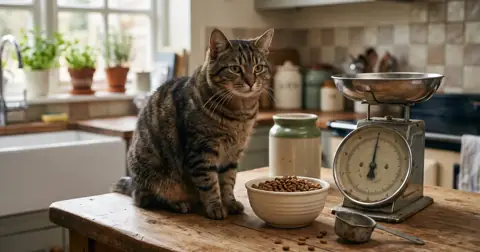
- Weigh your cat. Wormer doses depend on weight, and under-dosing is a common reason for treatment failure. Our cat weight checker shows typical weights by breed.
- Choose a product that covers the worms your cat is at risk of: roundworm and tapeworm as a minimum.
- Give tablets in food or a treat, or directly by mouth. Our guide on how to give a cat a pill shows the easiest techniques.
- Apply spot-ons to the skin at the base of the skull, parting the fur first.
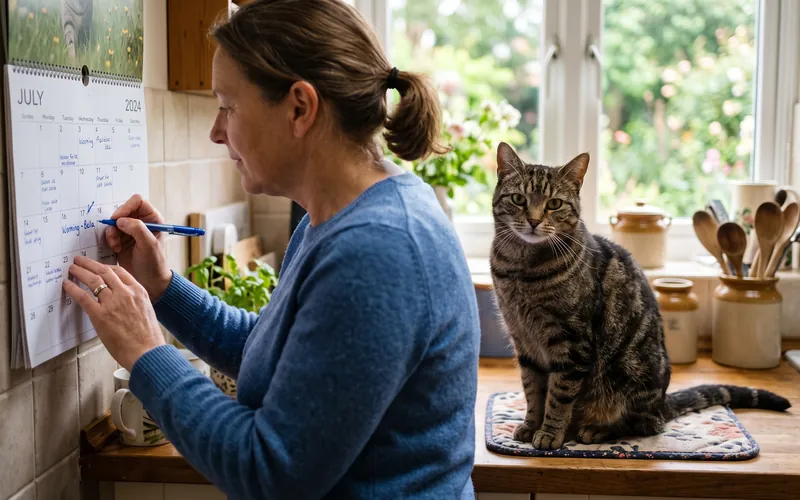
- Record the date and set a reminder for the next dose.
- Treat fleas too if your cat has them, or the flea tapeworm will come straight back.
Worming kittens
Most kittens are born with roundworm larvae picked up before birth or through their mother's milk, so worming starts early. Breeders and rescues should worm kittens every 2 weeks from about 3 weeks old until 8 weeks, then monthly until 6 months. When you collect a kitten, ask for the dates and products used so you can continue the schedule.
Use a product licensed for the kitten's age and weight. Many tablets are suitable from 6 weeks and 0.5 kg or 1 kg, and liquids can be used earlier. Weigh kittens before every dose, as they grow fast.
Worming pregnant and nursing cats
Some wormers are licensed for use in pregnant or nursing cats, while others are not. Worming the mother during late pregnancy and while nursing reduces the number of roundworms passed to her kittens. Always ask your vet before worming a pregnant cat. You can track your cat's due date with our cat pregnancy calculator.
How long does a cat wormer take to work?
Most cat wormers start killing worms within a few hours. Tablets containing praziquantel kill tapeworms within about 24 hours, and spot-ons containing emodepside are absorbed and active within a day. Wormers treat the worms present at the time of dosing: they do not stop your cat catching new worms next week. That is why repeat treatment matters, and why hunting cats need dosing more often.
Some roundworm treatments only kill adult worms, not the larvae developing in the body. This is one reason kittens are wormed every two weeks at first: each dose catches the next batch of worms as they mature.
Seeing worms after worming: is it normal?
It is common to see dead or dying roundworms in poo or vomit for a day or two after worming, especially in kittens with a heavy burden. Tapeworm segments may also appear briefly. This shows the treatment is working. Clean litter trays promptly, wash bedding at 60°C and wash your hands.
Speak to your vet if you still see live worms more than a few days after treatment, if your cat keeps vomiting, or if a kitten becomes lethargic or bloated. A heavy roundworm burden can, rarely, cause a blockage in very young kittens.
Worming a new, rescue or stray cat
Any cat that comes into your home with an unknown history should be wormed straight away with a broad-spectrum product, then put on a regular schedule. Rescue centres usually worm cats before rehoming, so ask for the date and product used. If you are caring for a cat that turns up in your garden, our guide to how to tell if a cat is a stray or feral explains how to check whether it already has an owner before giving any treatment.
If you already have other pets, keep the new cat separate for a few days, worm and flea-treat all pets on the same day, and scoop the litter tray daily. This gives every pet a clean start and stops parasites passing between them.
Raw feeding and worms
Cats fed raw meat, raw fish or offal have a higher risk of picking up worms and other parasites, as well as bacteria such as salmonella. If you feed raw food, buy commercially prepared products made for pets, freeze them as directed, and ask your vet about monthly worming. Cooked plain meat is a safer treat: our guide to whether cats can eat pork explains how to prepare meat treats safely.
Side effects of cat wormers
Wormers are generally very safe. Occasional side effects include:
- Vomiting or mild diarrhoea shortly after a tablet.
- Drooling, especially if the cat tastes a tablet or licks a spot-on.
- Temporary hair loss or a damp patch where a spot-on was applied.
- Rarely, wobbliness or trembling: contact your vet if this happens.
If your cat vomits within an hour of a tablet, it may not have absorbed the dose. Ask your vet or pharmacist whether to repeat it.
Cat worming and your family's health
Simple hygiene alongside regular cat worming protects everyone at home:
- Scoop litter trays daily, because roundworm eggs take several days to become infective.
- Wear gloves when gardening and cover sandpits when not in use.
- Wash hands after handling cats, litter or soil, especially before eating.
- Treat fleas promptly and keep up the worming schedule.
Worming is part of a wider routine of preventive care. Our guide to cat vaccination costs explains how practice health plans can include worming, flea treatment and vaccines for a monthly fee.
How much does cat worming cost?
A non-prescription worming tablet costs about £3 to £8 per dose, depending on the brand and pack size, while a spot-on wormer costs roughly £5 to £10. Prescription flea and worm combinations cost more per dose but replace two products. Buying multipacks or joining a practice health plan usually lowers the yearly cost. For a typical outdoor cat wormed four times a year, expect to spend around £15 to £40 a year on wormers alone.
Example cat worming schedule for a year
Here is how a typical plan looks for an adult cat that goes outdoors and hunts occasionally, using a monthly flea spot-on and a quarterly broad-spectrum wormer:
| Month | Flea treatment | Wormer |
|---|---|---|
| January, April, July, October | Yes | Roundworm + tapeworm tablet or spot-on |
| All other months | Yes | Only if your vet advises monthly cover (regular hunters) |
If your cat brings home prey every week, switch to monthly worming. If it becomes an indoor cat, your vet may reduce it to once or twice a year.
Tip: keep worming and flea treatment on the same day each month or quarter. One reminder is easier to remember than two.
FAQs
How often should you worm a cat?
ESCCAP UK, the parasite experts vets follow, recommends worming most adult cats at least four times a year. Cats that hunt mice, rats or birds should have tapeworm treatment monthly, and kittens need worming every 2 weeks until 8 weeks old and then monthly until 6 months. Your vet can tailor a plan to your cat's lifestyle.
Do indoor cats need worming?
Yes, but usually less often. Indoor cats can still catch worms from fleas, raw food, other pets and eggs brought in on shoes. Many vets suggest worming indoor-only cats that do not hunt one to four times a year, depending on risk.
What is the best cat wormer in the UK?
The best cat wormer is one that kills both roundworms and tapeworms and that you can actually give your cat. Popular options include praziquantel-based tablets (such as Drontal or Milpro), spot-ons such as Profender or Dronspot for cats that refuse tablets, and prescription combinations that also treat fleas.
What are the signs of worms in cats?
Many cats with worms show no signs at all. When signs appear, they include rice-like segments around the bottom or in bedding, spaghetti-like worms in vomit or poo, weight loss despite a good appetite, a dull coat, a pot-bellied appearance in kittens, diarrhoea and, with lungworm, coughing.
Can humans catch worms from cats?
Yes. The cat roundworm Toxocara cati can infect people, especially children who play in soil where cats have toileted. It is rare but can cause eye or organ damage. Regular worming, picking up litter promptly and handwashing all reduce the risk.
Can I worm my cat at the same time as flea treatment?
Usually yes. Most wormers can be given on the same day as a flea treatment, and some products do both. Check both leaflets and ask your vet if your cat takes other medicines.
Sources and further reading
This guide is for general information only and is not a substitute for advice from a vet. Medicines, doses and costs change: always follow your vet and the product leaflet. If your cat is unwell or you think it has eaten something toxic, contact your vet or an emergency vet straight away.