Plants poisonous to cats: free toxic plant checker
Search our free checker to see whether a plant, flower or food is safe, mildly toxic or dangerous for your cat, then scroll down for the full A–Z list of plants poisonous to cats. Lilies are the biggest danger in UK homes: every part, even pollen, can cause fatal kidney failure.
Is it safe for cats?
Most searched
Result
Search above
Safe, mildly toxic or dangerous?Pick a plant or food to see how toxic it is, the symptoms to look for and what to do.
A–Z list of plants and foods: safe or toxic for cats
| Name | Toxicity | What it can cause |
|---|---|---|
| African violet | Safe | Non-toxic to cats. |
| Alcohol | Dangerous | Vomiting, wobbliness, breathing problems, coma. Includes raw bread dough. |
| Aloe vera | Mildly toxic | The sap (latex) causes vomiting, diarrhoea and lethargy. |
| Alstroemeria (Peruvian lily) | Mildly toxic | Not a true lily. May cause mild vomiting and diarrhoea if chewed. |
| Amaryllis | Toxic | Bulb most toxic: vomiting, drooling, abdominal pain, tremors. |
| Antifreeze (ethylene glycol) | Dangerous | Very small amounts cause kidney failure. Early signs look like drunkenness. |
| Areca palm | Safe | Non-toxic to cats. |
| Avocado | Mildly toxic | Mainly a risk to birds and horses; in cats may cause vomiting. The stone can cause a blockage. |
| Azalea / Rhododendron | Dangerous | Vomiting, drooling, weakness, low blood pressure, heart problems. |
| Basil | Safe | Non-toxic to cats. |
| Begonia | Mildly toxic | Tubers most toxic: mouth irritation, drooling, vomiting. |
| Bleach and disinfectants | Toxic | Burns to the mouth, drooling, vomiting. Phenol-based products (that go cloudy in water) are especially toxic. |
| Bluebell | Toxic | Vomiting, diarrhoea and abdominal pain; large amounts can affect heart rhythm. |
| Blueberries | Safe | Safe in small amounts. |
| Boston fern | Safe | Non-toxic to cats. |
| Caffeine (coffee, tea, energy drinks) | Toxic | Restlessness, fast heart rate, tremors, seizures. |
| Calathea (prayer plant) | Safe | Non-toxic to cats. |
| Calla lily (Zantedeschia) | Mildly toxic | Oxalate crystals: mouth pain, drooling, vomiting, trouble swallowing. Not a true lily. |
| Carnation | Mildly toxic | Mild stomach upset and skin irritation. |
| Carrots (cooked) | Safe | Safe in small amounts when cooked and chopped. |
| Cat grass (wheat, oat, barley grass) | Safe | Safe and often enjoyed. Some cats vomit after eating grass, which is normal. |
| Catnip | Safe | Safe. Causes a harmless, temporary 'high' in many cats. |
| Cheese | Mildly toxic | Small amounts are usually tolerated, but it is high in fat and salt and can upset the stomach. |
| Chocolate | Dangerous | Theobromine and caffeine: vomiting, restlessness, fast heart rate, tremors, seizures. Dark and baking chocolate are worst. |
| Christmas cactus | Safe | Non-toxic; eating a lot may cause mild vomiting. |
| Christmas tree (pine, fir) | Mildly toxic | Needles and oils: mouth irritation, vomiting; needles can injure the gut. Tree water may contain fertiliser. |
| Chrysanthemum | Mildly toxic | Vomiting, diarrhoea, drooling, skin irritation. |
| Cinnamon | Mildly toxic | A sprinkle is unlikely to harm, but powder or oil irritates the mouth and lungs; large amounts cause vomiting. |
| Citrus (lemon, orange, lime) | Mildly toxic | The peel and oils irritate the stomach: vomiting, diarrhoea. Most cats dislike the smell. |
| Cooked bones | Toxic | Splinter easily: mouth injury, choking, gut blockage or perforation. |
| Cooked plain chicken | Safe | Safe as an occasional treat: plain, boneless and skinless. |
| Cooked plain fish | Safe | Safe in small amounts: cooked, boneless and unseasoned. |
| Cooked plain pork | Safe | Safe in small amounts if lean, plain and well cooked. Avoid ham, bacon and sausages. |
| Crocus (autumn crocus) | Dangerous | Autumn crocus (Colchicum) can cause severe vomiting, bleeding, organ damage. Spring crocus causes mild stomach upset. |
| Cyclamen | Toxic | Roots and tubers most toxic: drooling, vomiting, diarrhoea; large amounts affect the heart. |
| Daffodil (Narcissus) | Toxic | Bulbs are most toxic. Vomiting, drooling, diarrhoea, abdominal pain; large amounts can affect the heart. |
| Day lily (Hemerocallis) | Dangerous | Causes kidney failure in cats in the same way as true lilies. |
| Dieffenbachia (dumb cane) | Toxic | Oxalate crystals cause intense mouth pain, swelling, drooling and vomiting. |
| Dog food | Mildly toxic | Not toxic, but not complete for cats: lacks enough taurine, vitamin A and arachidonic acid if eaten long term. |
| Dracaena (dragon tree) | Mildly toxic | Vomiting (sometimes with blood), drooling, dilated pupils, low mood. |
| Echeveria | Safe | Non-toxic succulent. |
| Essential oils and reed diffusers | Toxic | Cats cannot break down many oils (tea tree, eucalyptus, citrus, peppermint, pine): drooling, vomiting, wobbliness, breathing problems. |
| Eucalyptus | Toxic | Drooling, vomiting, diarrhoea, weakness; essential oil is especially toxic. |
| Fat trimmings | Mildly toxic | Vomiting, diarrhoea and a risk of pancreatitis. |
| Foxglove (Digitalis) | Dangerous | Contains heart toxins: vomiting, irregular heartbeat, weakness, collapse. |
| Garlic | Toxic | Even more toxic than onion: anaemia, weakness, pale gums, vomiting. Includes garlic powder in gravies and baby food. |
| Geranium (Pelargonium) | Mildly toxic | Vomiting, low appetite, skin irritation. |
| Grapes and raisins | Toxic | Linked to kidney damage in dogs; cats are less studied but vets advise treating any amount as dangerous. |
| Haworthia | Safe | Non-toxic to cats. |
| Holly | Mildly toxic | Leaves and berries: vomiting, diarrhoea, drooling. |
| Horse chestnut (conkers) | Toxic | Conkers, leaves and bark: vomiting, diarrhoea, gut blockage; can cause tremors. |
| Hyacinth | Toxic | Bulbs are most toxic: vomiting, diarrhoea, drooling, tremors in large amounts. |
| Hydrangea | Mildly toxic | Contains cyanogenic glycosides: vomiting, diarrhoea, lethargy. Serious poisoning is rare. |
| Ibuprofen and aspirin | Dangerous | Stomach ulcers and kidney failure. |
| Ice cream | Mildly toxic | Lactose and sugar cause stomach upset; chocolate, raisin or xylitol flavours are dangerous. |
| Ivy (English ivy) | Mildly toxic | Vomiting, abdominal pain, drooling, diarrhoea. |
| Jade plant (Crassula) | Mildly toxic | Vomiting, slow heart rate, wobbliness, low mood. |
| Jonquil | Toxic | A type of narcissus: vomiting, drooling, diarrhoea; bulbs are the most toxic part. |
| Kalanchoe | Toxic | Heart toxins: vomiting, diarrhoea, abnormal heart rhythm in large amounts. |
| Laburnum | Dangerous | Seeds and pods are very toxic: vomiting, tremors, convulsions. |
| Lavender | Mildly toxic | The plant is mildly toxic (vomiting). Lavender essential oil is more dangerous. |
| Leek and chives | Toxic | Same family as onion: can cause anaemia. |
| Lilies in a bouquet (vase water) | Dangerous | Water from a vase containing lilies can cause kidney failure. |
| Lily (Lilium, true lilies) | Dangerous | Every part, including pollen and vase water, can cause sudden kidney failure within 1–3 days. Vomiting, drooling, not eating, lethargy. |
| Lily of the valley (Convallaria) | Dangerous | Contains heart toxins: vomiting, slow or irregular heartbeat, collapse, seizures. |
| Lupin | Mildly toxic | Seeds and pods most toxic: vomiting, wobbliness, drooling in larger amounts. |
| Macadamia nuts | Mildly toxic | Toxic to dogs; little data in cats, so best avoided. |
| Marigold (Calendula) | Safe | Calendula is non-toxic; some other 'marigolds' (Tagetes) may cause mild irritation. |
| Milk and cream | Mildly toxic | Most adult cats are lactose intolerant: diarrhoea, gas, stomach upset. |
| Mint | Mildly toxic | Large amounts cause vomiting and diarrhoea; mint essential oil is toxic. |
| Mistletoe | Toxic | Vomiting, diarrhoea, low heart rate and blood pressure in large amounts. |
| Money tree (Pachira) | Safe | Non-toxic to cats. |
| Monstera (Swiss cheese plant) | Mildly toxic | Oxalate crystals: mouth irritation, drooling, vomiting, difficulty swallowing. |
| Oak (acorns) | Mildly toxic | Acorns and leaves contain tannins: vomiting, diarrhoea, stomach pain. |
| Oleander | Dangerous | Very toxic heart poison: vomiting, drooling, abnormal heart rhythm, death. |
| Onion | Toxic | Raw, cooked or powdered: damages red blood cells (anaemia). Signs can take days: weakness, pale gums, red urine. |
| Orchid (Phalaenopsis) | Safe | Non-toxic to cats. |
| Paracetamol | Dangerous | Even one tablet can kill a cat: breathing difficulty, brown gums, swollen face and paws. |
| Parlour palm | Safe | Non-toxic to cats. |
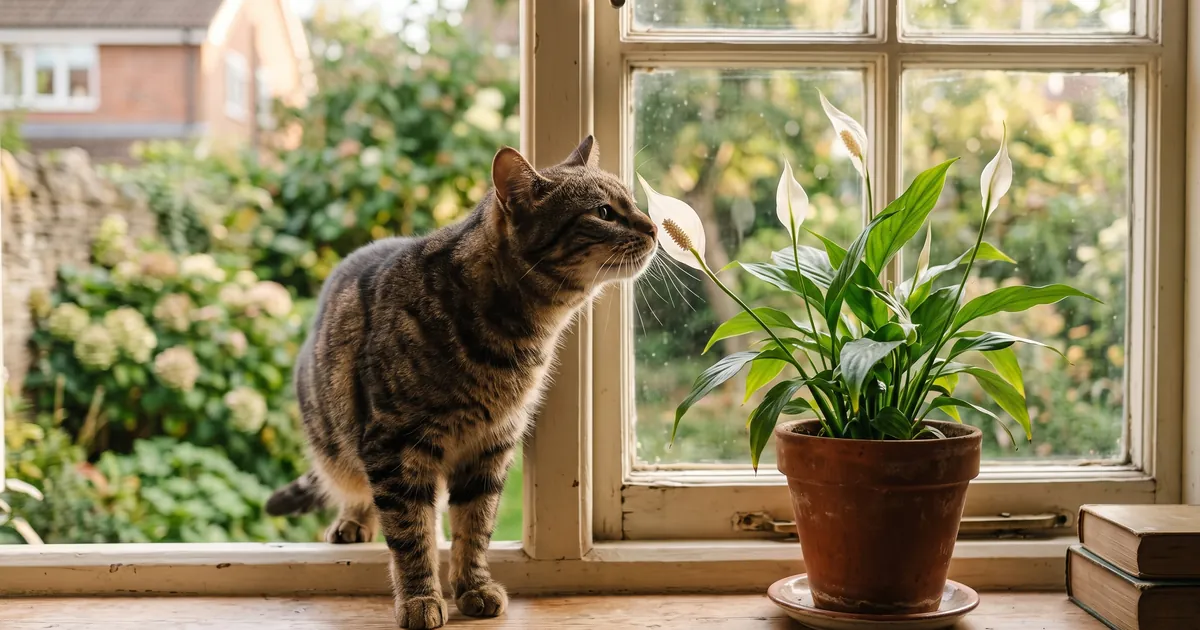
| Peace lily (Spathiphyllum) | Mildly toxic | Not a true lily. Calcium oxalate crystals irritate the mouth: drooling, pawing at the mouth, vomiting, swollen lips. |
| Peas | Safe | Safe in small amounts and used in some cat foods. |
| Peperomia | Safe | Non-toxic to cats. |
| Permethrin dog flea treatment | Dangerous | Dog spot-ons with permethrin cause twitching, tremors and seizures in cats. |
| Philodendron | Mildly toxic | Oxalate crystals: mouth pain, drooling, vomiting. |
| Plain cooked pasta | Safe | Safe in small amounts but has little nutritional value. Avoid sauces with garlic or onion. |
| Plain cooked rice | Safe | Safe in small amounts. |
| Poinsettia | Mildly toxic | Milky sap irritates the mouth and stomach: drooling, mild vomiting. Rarely serious. |
| Ponytail palm | Safe | Non-toxic to cats. |
| Potato (raw, green, sprouts) | Mildly toxic | Green parts and raw sprouts contain solanine: vomiting, diarrhoea, weakness. |
| Pothos / Devil's ivy | Mildly toxic | Oxalate crystals: mouth irritation, drooling, vomiting. |
| Pumpkin (plain, cooked) | Safe | Safe in small amounts and sometimes used for constipation or diarrhoea. |
| Rat and mouse poison | Dangerous | Bleeding (anticoagulants) or brain swelling, depending on type. Signs can appear days later. |
| Raw bread dough | Toxic | Expands in the stomach and produces alcohol: bloating, vomiting, wobbliness. |
| Raw eggs | Mildly toxic | Risk of salmonella and a protein that blocks vitamin B7 (biotin). Cooked egg is fine as a treat. |
| Raw fish | Mildly toxic | Bacteria and an enzyme that destroys thiamine (vitamin B1) if fed often. |
| Rose | Safe | Non-toxic, though thorns can injure the mouth and paws. Check for pesticides. |
| Rosemary | Safe | Non-toxic to cats. |
| Rubber plant (Ficus elastica) | Mildly toxic | Sap irritates the mouth, stomach and skin. |
| Sago palm (Cycas) | Dangerous | Seeds are especially toxic: vomiting, bloody diarrhoea, liver failure. |
| Salty foods (crisps, ham, bacon) | Mildly toxic | Too much salt causes vomiting, diarrhoea, excessive thirst; very large amounts are dangerous. |
| Slug pellets | Toxic | Metaldehyde pellets (banned in the UK since 2022) caused seizures; old stock may still be in sheds. Ferric phosphate pellets are much safer but can still upset the stomach. |
| Snake plant (Sansevieria) | Mildly toxic | Saponins: nausea, vomiting, diarrhoea. |
| Spider plant (Chlorophytum) | Safe | Non-toxic. Cats often love chewing it, which may cause a little vomiting. |
| Sunflower | Safe | Non-toxic to cats. |
| Sweet pea | Mildly toxic | Seeds can cause weakness, tremors and vomiting if eaten in quantity. |
| Tea tree (and tea tree oil) | Dangerous | Tea tree oil on skin or licked off fur causes wobbliness, weakness, tremors, low body temperature. |
| Tomato plant (leaves, stems) | Mildly toxic | Leaves and green parts: drooling, vomiting, weakness. Ripe tomato flesh is generally safe. |
| Tulip | Toxic | Bulbs contain the highest levels of toxins: vomiting, drooling, diarrhoea, depression. |
| Watermelon (no seeds or rind) | Safe | Safe in small amounts. |
| Weeping fig (Ficus benjamina) | Mildly toxic | Sap causes mouth and skin irritation, vomiting. |
| Wisteria | Toxic | Seeds and pods: vomiting, diarrhoea, dehydration. |
| Xylitol (sweetener) | Toxic | Found in sugar-free gum, sweets and some peanut butter. Dangerous for dogs; avoid with cats too. |
| Yew | Dangerous | All parts except the red flesh are very toxic: trembling, breathing problems, heart failure. |
| Yucca | Mildly toxic | Saponins: vomiting and diarrhoea. |
| ZZ plant | Mildly toxic | Oxalate crystals: mouth irritation, vomiting, diarrhoea. |
Quick answer
- Lilies (Lilium and Hemerocallis) are the most dangerous: pollen, leaves, flowers and vase water can all cause kidney failure.
- Peace lilies, monstera and pothos aren't true lilies; they irritate the mouth but are rarely serious.
- Safe houseplants include spider plants, calatheas, Boston ferns, areca palms and orchids.
- If your cat chews a toxic plant, call your vet straight away and take the plant or a photo with you.
The most dangerous plants poisonous to cats
Lilies (Lilium)
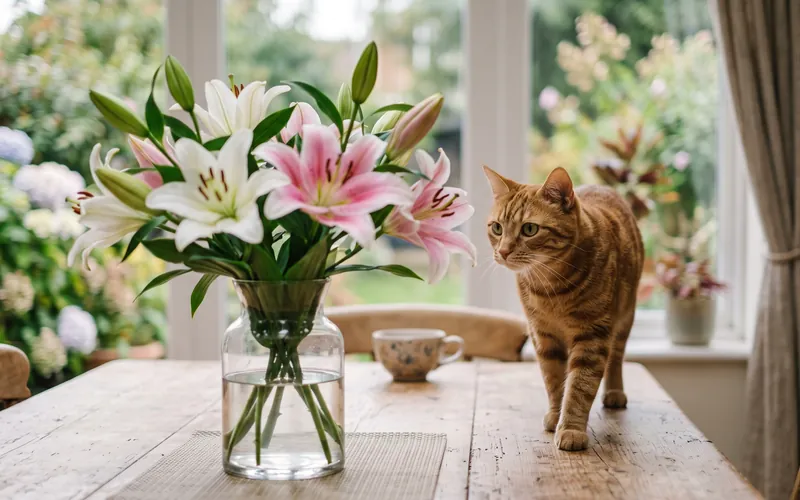
Easter, tiger, stargazer, Asiatic and Oriental lilies. Pollen, leaves, petals and vase water can cause kidney failure within 1–3 days. Emergency.
Day lilies (Hemerocallis)
Popular in UK gardens. Cause kidney failure in the same way as true lilies. Emergency.
Lily of the valley
Contains heart toxins that cause vomiting and abnormal heart rhythms. Emergency.
Foxglove
All parts contain heart-affecting chemicals. Common in UK gardens and woodland. Emergency.
Autumn crocus
Causes severe vomiting, bleeding and organ damage. Spring crocus is much milder. Emergency.
Azalea and rhododendron
Vomiting, drooling, weakness and heart problems, even from small amounts.
Daffodils, tulips and hyacinths
Bulbs are most toxic. Vomiting, drooling, diarrhoea; large amounts affect the heart.
Yew, oleander and sago palm
Very toxic. Yew affects the heart; sago palm damages the liver.
Lilies and cats: because even a little pollen licked from the fur can be fatal, International Cat Care and Cats Protection advise never having true lilies in a home with cats, including in bouquets. If your cat has touched or chewed a lily, go to a vet immediately: early treatment with fluids within hours can prevent kidney failure.
Common houseplants: safe or poisonous to cats?
| Houseplant | Safe for cats? | Notes |
|---|---|---|
| Peace lily (Spathiphyllum) | Mildly toxic | Mouth irritation, drooling; not a true lily |
| Monstera (Swiss cheese plant) | Mildly toxic | Oxalate crystals irritate the mouth |
| Pothos / devil's ivy | Mildly toxic | Mouth irritation, vomiting |
| Dieffenbachia | Toxic | Painful mouth swelling and drooling |
| Aloe vera | Mildly toxic | Vomiting and diarrhoea |
| Snake plant | Mildly toxic | Nausea and vomiting |
| Jade plant | Mildly toxic | Vomiting, wobbliness |
| ZZ plant | Mildly toxic | Mouth irritation |
| Spider plant | Safe | Cats love it; may vomit a little |
| Calathea (prayer plant) | Safe | Popular cat-safe choice |
| Boston fern | Safe | Non-toxic |
| Areca and parlour palms | Safe | Non-toxic (but not sago palm) |
| Phalaenopsis orchid | Safe | Non-toxic |
| Christmas cactus | Safe | Mild stomach upset if lots eaten |
Garden plants poisonous to cats in the UK
Highly toxic garden plants
Lilies, day lilies, foxgloves, lily of the valley, autumn crocus, yew, laburnum, oleander and azaleas pose the greatest risk. If you have cats that go outdoors, consider removing these or planting them where cats rarely go.
Mildly toxic garden plants
Hydrangeas, ivy, chrysanthemums, geraniums, lupins, sweet peas, alstroemeria and holly usually cause only stomach upset or mouth irritation. Most cats avoid them, but kittens and bored indoor cats may chew. Conkers and acorns can also cause stomach upset or blockages.
Cat-friendly garden plants
Catnip, cat grass, valerian (some cats love it), rosemary, basil, sunflowers, marigolds (calendula), roses and many grasses are considered safe. A cat-friendly corner with catnip and grass can also help keep cats away from your vegetable beds; see our guide to stopping cats pooping in your garden.
Cut flowers and bouquets
Bouquets often contain lilies, even when you didn't choose them. When you receive flowers, check for lilies and remove them before bringing the bouquet inside. Other common bouquet flowers, such as roses, sunflowers and orchids, are generally safe. Carnations, alstroemeria and chrysanthemums are mildly toxic. Tell friends and family that you have a cat, and ask florists for a lily-free arrangement.
Signs your cat has eaten a poisonous plant
- Drooling, foaming or pawing at the mouth. See our guide to why cats drool.
- Vomiting or diarrhoea.
- Not eating, lethargy or hiding.
- Swollen mouth, lips or tongue.
- Drinking and urinating more, or less (kidney damage from lilies).
- Wobbliness, trembling, seizures or collapse.
- Irregular heartbeat or breathing difficulty.
What to do if your cat eats a toxic plant
- Stay calm and move your cat away from the plant.
- Remove plant material from its mouth and fur if it's safe to do so. Wipe pollen off the coat with a damp cloth (wearing gloves) so your cat can't lick it.
- Phone your vet immediately, even if your cat seems well. For lilies, go straight to the vet.
- Identify the plant: take a sample, label or photo with you.
- Don't make your cat vomit unless your vet tells you to; never give salt water.
How to keep your cat safe from poisonous plants
- Check every new plant with our checker before buying.
- Choose cat-safe houseplants and hang toxic ones well out of reach (cats climb).
- Provide cat grass so your cat has something safe to chew.
- Never keep true lilies indoors, even as cut flowers.
- Store bulbs in sealed containers and dispose of clippings safely.
- Be careful with Christmas plants: mistletoe and holly are mildly toxic; poinsettias cause mild irritation.
Many household products are dangerous too, especially human painkillers. Read our guide on whether you can give cats paracetamol.
Foods that are toxic to cats
The checker also includes common foods. Onions, garlic, chives and leeks damage red blood cells; chocolate, caffeine and alcohol are dangerous; and grapes and raisins are best avoided. Many people foods are fine in small amounts: read our guides on whether cats can eat pork, pasta and ice cream.
FAQs
What plants are most poisonous to cats?
True lilies (Lilium species, such as Easter, tiger, stargazer and Asiatic lilies) and day lilies (Hemerocallis) are the most dangerous plants for cats, causing kidney failure. Other very toxic plants include lily of the valley, foxglove, oleander, sago palm, yew, autumn crocus, azalea and rhododendron.
Are peace lilies poisonous to cats?
Peace lilies (Spathiphyllum) are mildly toxic to cats. They aren't true lilies and don't cause kidney failure, but they contain calcium oxalate crystals that irritate the mouth, causing drooling, pawing at the mouth and vomiting. Rinse your cat's mouth with water and call your vet if signs continue.
Are spider plants safe for cats?
Yes. Spider plants are non-toxic to cats, although many cats love chewing them, which can cause a little vomiting. They're one of the safest houseplants for homes with cats.
Are hydrangeas poisonous to cats?
Hydrangeas are mildly toxic to cats. They contain substances that can cause vomiting, diarrhoea and lethargy if eaten. Serious poisoning is rare, because cats rarely eat much.
Are daffodils poisonous to cats?
Yes. Daffodils are toxic to cats, especially the bulbs. Eating them can cause vomiting, drooling, diarrhoea and abdominal pain, and large amounts can affect the heart. Store bulbs safely and keep cut daffodils out of reach.
Is aloe vera poisonous to cats?
Aloe vera is mildly toxic to cats. The sap can cause vomiting, diarrhoea and lethargy if eaten. Keep aloe plants out of reach.
Are carnations and alstroemeria harmful to cats?
Both are only mildly toxic. Carnations can cause mild stomach upset and skin irritation, and alstroemeria (Peruvian lily, not a true lily) may cause mild vomiting or diarrhoea. They're much safer than true lilies, but it's still best to keep them out of reach.
Is calathea toxic to cats?
No. Calatheas (prayer plants) are considered non-toxic to cats and are a popular cat-safe houseplant.
Are conkers poisonous to cats?
Yes. Conkers (horse chestnuts) are toxic to cats and dogs, causing vomiting, diarrhoea and abdominal pain, and they can cause a blockage if swallowed whole.
Is cinnamon bad for cats?
A light sprinkle of ground cinnamon is unlikely to harm, but cinnamon powder, sticks and oil can irritate the mouth, skin and airways, and larger amounts can cause vomiting. Cinnamon essential oil is more concentrated and should be kept away from cats.
Sources and further reading
This guide is for general information only and is not a substitute for advice from a vet. Medicines, doses and costs change: always follow your vet and the product leaflet. If your cat is unwell or you think it has eaten something toxic, contact your vet or an emergency vet straight away.
Related cat care guides
 Safe & Toxic Foods
Can cats eat ice cream? Why it's best avoided
Why most cats can't digest ice cream, which flavours are dangerous, what to do if your cat eats some, and safe frozen… Safe & Toxic Foods
Can cats eat dog food? What happens and when it's a problem
Why a nibble of dog food is fine but long-term feeding isn't, the nutrients cats miss out on and how to stop food… Safe & Toxic Foods
Can cats eat pasta? Plain pasta vs pasta dishes
Why plain pasta is harmless but low-value for cats, and why sauces with garlic, onion, cheese or bacon are risky. Safe & Toxic Foods
Can cats eat pork? What's safe and what isn't
Why plain cooked pork is fine as a treat, but raw pork, ham, bacon, sausages and salami aren't, and how much to give. Cat Health
Can cats get hayfever? Pollen allergies in cats explained
How hay fever shows up in cats, from itchy skin to sneezing, how vets diagnose pollen allergy and what helps. Cat Health