Can cats eat pasta? Plain pasta vs pasta dishes
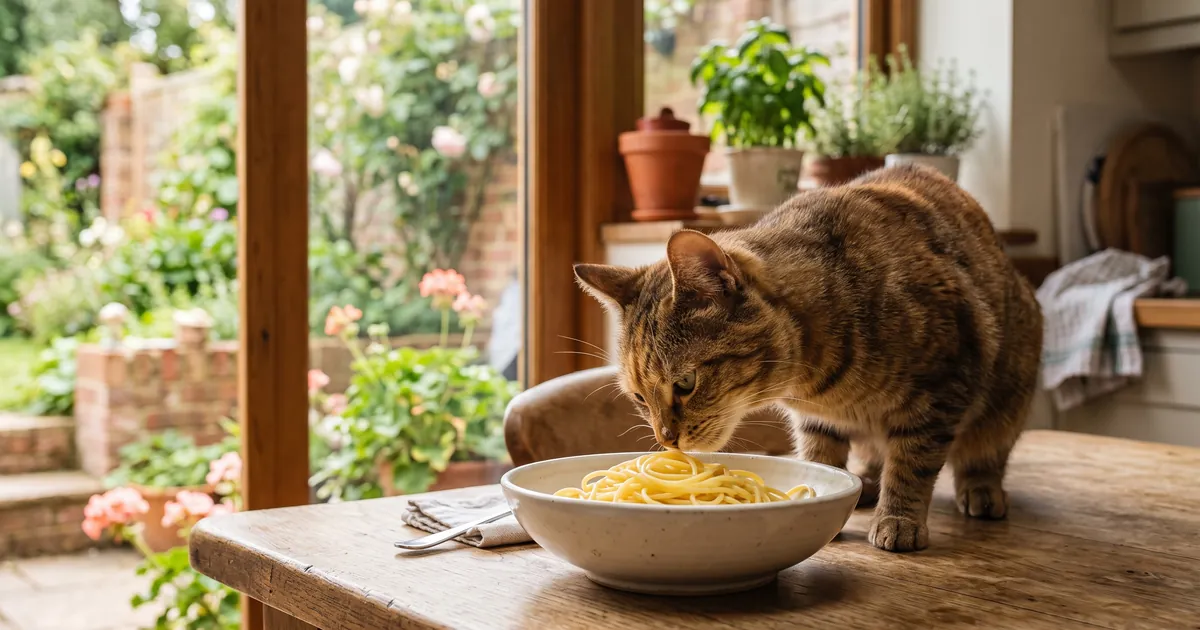
Can cats eat pasta? Plain, cooked pasta isn't toxic to cats, so a piece or two won't cause harm. But cats are carnivores and get little benefit from pasta. The real risk is what comes with it: many pasta sauces contain garlic and onion, which are toxic to cats, along with cheese, cream, bacon and salt. Here's what's safe and what to keep on your plate.
Quick answer
- Plain, cooked pasta is not toxic to cats in small amounts.
- Pasta offers cats little nutrition: they need meat-based protein, not carbohydrate.
- Most pasta sauces contain garlic, onion, salt, cheese or cream, which can make cats ill.
- If your cat eats a pasta dish with garlic or onion, call your vet.
Can cats eat pasta? The quick answer
Pasta is made from wheat flour and water (sometimes egg). None of these ingredients is toxic to cats, so plain cooked pasta won't poison your cat. But cats are obligate carnivores: their bodies are built to get energy from protein and fat, not carbohydrate. Pasta fills them up without providing the nutrients they need, so it should never replace their food.
| Type | Safe for cats? |
|---|---|
| Plain cooked pasta (no salt, oil or sauce) | Yes, a few pieces occasionally |
| Raw (uncooked) pasta | Not recommended |
| Pasta with butter or oil | Small amounts only |
| Spaghetti bolognese / ragù | No: onion, garlic, salt |
| Tomato-based sauces | No: usually onion and garlic |
| Pesto | No: garlic, salt and cheese |
| Carbonara | No: bacon, cream, cheese, raw egg |
| Macaroni cheese and creamy sauces | No: high fat and lactose |
| Garlic bread | No: garlic |
Why pasta sauces are the real danger
Onion and garlic
Onion, garlic, leeks, shallots and chives contain compounds that damage cats' red blood cells, causing a type of anaemia. Cats are more sensitive than dogs. Cooking doesn't remove the risk, and powdered garlic and onion, common in sauces and stock, are concentrated. Signs can appear a few days after eating and include weakness, pale gums, fast breathing and red or brown urine. Check any ingredient with our toxic food and plant checker.
Cheese, cream and butter
Most adult cats are lactose intolerant to some degree. Creamy and cheesy sauces can cause diarrhoea, wind and vomiting, and the high fat content can contribute to pancreatitis. Read more in our guide to whether cats can eat ice cream.
Salt
Pasta water, sauces, cheese and cured meats are often salty. Too much salt can cause vomiting, diarrhoea and excessive thirst.
Bacon, sausage and chorizo
Processed meats in pasta dishes are salty and fatty, and often seasoned with garlic. See our guide to whether cats can eat pork.
Signs of onion or garlic poisoning in cats
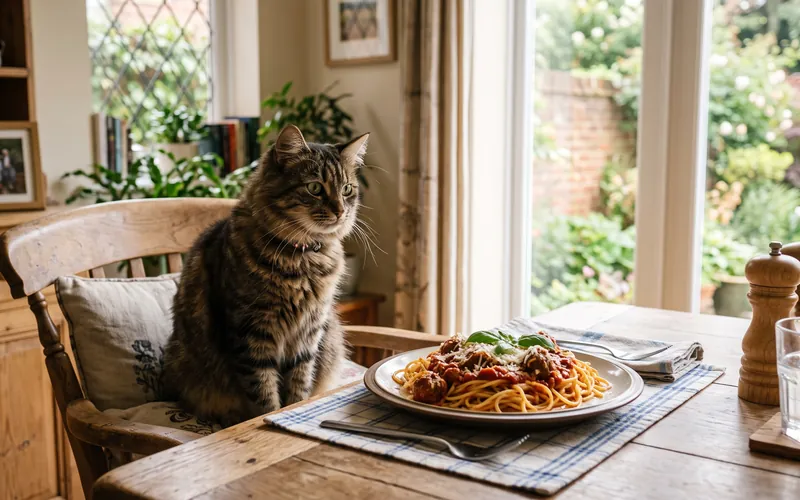
Because pasta sauces so often contain onion and garlic, it helps to know the warning signs. They can appear anywhere from a day to several days after eating:
| Timing | Possible signs |
|---|---|
| Within hours | Vomiting, drooling, diarrhoea, reduced appetite |
| 1–5 days | Weakness, lethargy, pale or yellow gums, fast breathing, fast heart rate |
| Later | Red or brown urine, collapse in severe cases |
Treatment is most effective when started early, so call your vet as soon as you know your cat has eaten onion or garlic, rather than waiting for signs.
Is plain pasta good for a cat with an upset stomach?
For cats with mild vomiting or diarrhoea, vets sometimes suggest a short period of a bland diet. For cats, that usually means a veterinary gastrointestinal food, or plain cooked chicken or white fish, sometimes with a little plain rice. Pasta isn't usually recommended, as it offers little protein. Always speak to your vet if your cat is unwell, especially if vomiting or diarrhoea lasts more than a day, there's blood, or your cat is a kitten or elderly.
Why cats beg for pasta
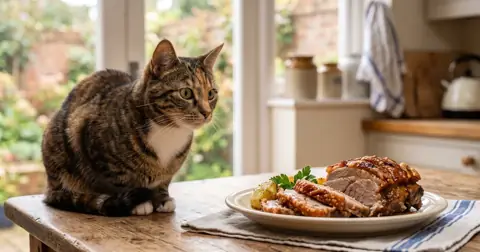
A cat circling your chair while you eat spaghetti isn't usually interested in the pasta. It's the smell of meat, cheese, butter and cream that draws it in, plus curiosity about what you're doing. Cats also learn quickly: if they get a reward once, they'll come back every mealtime. Feeding your cat its own meal at the same time as yours, or offering a toy, often stops begging.
How much pasta can a cat eat?
If you'd like to share, offer just one or two pieces of plain, cooked pasta, cut small, as an occasional treat. Treats of all kinds should make up no more than about 10% of your cat's daily calories. Cooked pasta has roughly 150 kcal per 100 g, so even a small spoonful adds up quickly for a cat that needs around 200 to 250 kcal a day. Use our cat food calculator to see your cat's needs.
Do cats need carbohydrates?
Cats have no dietary requirement for carbohydrates. In the wild, their prey contains very little. Many commercial cat foods, especially dry foods, contain some carbohydrate as a binder and energy source, and healthy cats digest moderate amounts well. But extra carbohydrate from people food can contribute to weight gain, and cats with diabetes need a carefully controlled, low-carbohydrate diet. If your cat is diabetic, don't share pasta, bread or rice without asking your vet.
What about rice, bread and potatoes?
- Plain cooked rice: safe in small amounts and sometimes recommended briefly with chicken for an upset stomach.
- Bread: plain bread isn't toxic, but it's low in nutrients. Raw bread dough is dangerous, as it expands and produces alcohol.
- Potatoes: plain cooked potato is safe in small amounts; raw or green potatoes and leaves are toxic.
- Couscous and noodles: plain versions are fine in tiny amounts; avoid instant noodles, which are salty and often flavoured with onion and garlic.
My cat ate pasta with sauce: what should I do?
- Find out what was in it: onion, garlic, cheese, cream, meat, chilli?
- Estimate how much your cat ate.
- Call your vet if the sauce contained onion or garlic, or if your cat ate a large amount, even if it seems fine.
- Watch for signs over the next few days: vomiting, diarrhoea, lethargy, pale gums, fast breathing or dark urine.
A lick of plain tomato or a single strand of plain spaghetti is very unlikely to cause problems.
Pasta and kittens
Kittens need a complete kitten food packed with protein and nutrients for growth. Pasta takes up space in their small stomachs without providing what they need, so it's best avoided. Never give kittens dishes with sauce.
Better treats than pasta
If your cat begs at mealtimes, try offering one of these instead:
- A small piece of plain cooked chicken, turkey or white fish.
- A few pieces of its usual dry food from your hand.
- A cat treat or a lick of a squeezy cat treat paste.
- A short play session with a wand toy, which many cats enjoy just as much as food.
Keeping pasta dishes away from cats
- Don't leave plates or pans unattended on worktops or tables.
- Scrape leftovers into a lidded bin.
- Store leftover sauce in sealed containers in the fridge.
- Rinse plates before putting them in the dishwasher, as cats may lick them.
Fresh, wholewheat and filled pasta
Fresh egg pasta and wholewheat pasta are just as safe as dried pasta when plain and cooked, though wholewheat adds a little more fibre. Filled pasta such as ravioli and tortellini is a different matter: fillings often contain cheese, cured meats, garlic, onion or herbs, so keep these away from your cat. Gnocchi is made with potato and flour and is safe plain, but it's usually served with buttery or garlicky sauces.
Is pasta gluten a problem for cats?
Gluten intolerance is very rare in cats. Some cats have food allergies, but these are usually to proteins such as chicken, beef or fish rather than wheat. If your cat seems sensitive to many foods, talk to your vet about a diet trial.
FAQs
Can a cat eat cooked pasta?
Yes, a small amount of plain cooked pasta, with no sauce, butter, oil, salt or cheese, is safe for most cats. It doesn't provide much nutritional value, so it should only be an occasional nibble.
Can cats eat spaghetti?
Plain cooked spaghetti is safe in tiny amounts, but spaghetti bolognese and most spaghetti dishes contain onion and garlic in the sauce, which are toxic to cats. Don't let your cat lick the plate.
Can cats eat raw pasta?
Uncooked pasta is hard and difficult to digest and could cause an upset stomach or, rarely, a blockage. Cats rarely show interest in it, but keep it out of reach.
Is pasta sauce toxic to cats?
Many pasta sauces are risky for cats. Tomato and bolognese sauces usually contain onion and garlic, which damage cats' red blood cells. Pesto contains garlic. Creamy and cheesy sauces are high in fat and lactose, which can upset a cat's stomach.
Why does my cat want to eat pasta?
Cats are usually attracted to the smell of meat, cheese, butter or cream in a pasta dish rather than the pasta itself. Some cats are simply curious about what you're eating.
Can cats eat pasta with butter or olive oil?
A tiny amount isn't dangerous, but butter and oil add fat and calories that can cause diarrhoea or weight gain. Plain pasta is better if you do share.
Sources and further reading
This guide is for general information only and is not a substitute for advice from a vet. Medicines, doses and costs change: always follow your vet and the product leaflet. If your cat is unwell or you think it has eaten something toxic, contact your vet or an emergency vet straight away.