Cat neutering cost in the UK: how much to spay or neuter a cat
The typical cat neutering cost in the UK is around £60 to £130 to castrate a male and £80 to £200 to spay a female, depending on where you live and what's included. This guide breaks down real UK prices, explains what you're paying for and shows how to get your cat neutered for less, or even for free.
Quick answer
- Castrating a male cat usually costs £60–£130; spaying a female costs £80–£200.
- Prices are higher in London and the South East and at out-of-hours or referral practices.
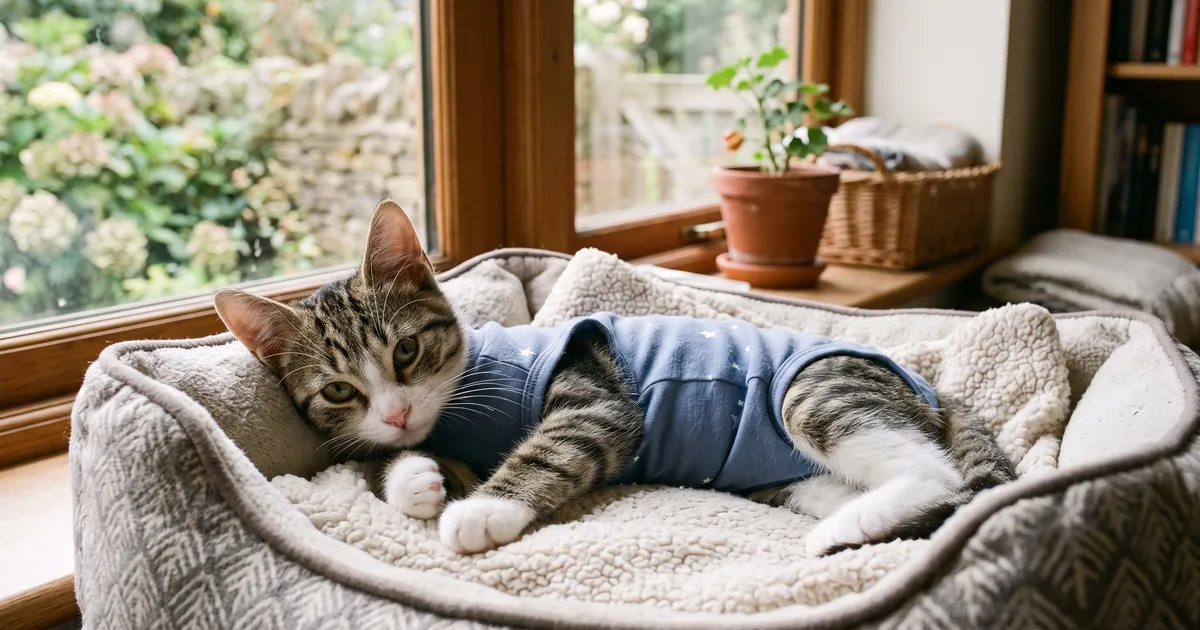
- Ask whether the price includes pain relief, a check-up afterwards and a buster collar or body suit.
- Low-cost and free neutering is available through charities such as Cats Protection, the RSPCA, PDSA and Blue Cross for eligible owners.
Average cat neutering cost in the UK (2026)
Neutering prices aren't fixed, and practices set their own fees. Based on published price lists from UK practices and charities, these are typical ranges for a healthy cat at a first-opinion vet:
| Procedure | Typical UK cost | Average |
|---|---|---|
| Male cat castration | £60–£130 | Around £90 |
| Female cat spay | £80–£200 | Around £130 |
| Spay of a cat in heat or pregnant | £120–£300+ | Varies |
| Cryptorchid castration (retained testicle) | £120–£300+ | Varies |
| Neutering through a charity scheme | Free–£50 | Depends on eligibility |
Prices are typical UK ranges at the time of writing and are a guide only. Always ask your practice for a written quote.
How much to spay a cat (female)
Spaying, also called an ovariohysterectomy or ovariectomy, removes the ovaries and usually the womb. It's done under general anaesthetic through a small incision on the left side (flank) or the underside (midline). Most cats go home the same day.
The cost of spaying a cat in the UK is usually between £80 and £200. Expect to pay towards the top of that range in London, Surrey and other high-cost areas, and towards the lower end in parts of Scotland, Wales, Northern England and Northern Ireland. Spaying can cost more if your cat:
- Is in season (in heat), because blood vessels in the reproductive tract are larger. See our guide to cats in heat.
- Is pregnant. Spaying a pregnant cat is possible but is a bigger operation and an emotional decision to discuss with your vet. Our cat pregnancy guide explains the signs.
- Is overweight or older, which can mean longer surgery and extra monitoring.
How much does it cost to neuter a male cat?
Castration removes both testicles through two tiny incisions in the scrotum. It usually takes only a few minutes under general anaesthetic, and stitches are often not needed. Neutering a male cat typically costs £60 to £130.
If one or both testicles haven't descended into the scrotum (cryptorchidism), the vet has to find them in the groin or abdomen. That operation is more like a spay, so it costs more: often £120 to £300 or above.
What's included in the price?
Comparing quotes is tricky because practices include different things. Ask whether the quoted cat neutering cost covers:
| Item | Often included? | Typical extra cost if not |
|---|---|---|
| Pre-operative health check | Usually | £0–£50 |
| General anaesthetic and monitoring | Yes | - |
| Pain relief on the day | Usually | £10–£25 |
| Pain relief to take home | Sometimes | £10–£25 |
| Pre-anaesthetic blood test | Rarely (often optional) | £40–£90 |
| Intravenous fluids | Sometimes | £30–£70 |
| Buster collar or surgical body suit | Sometimes | £8–£25 |
| Post-operative check | Usually | £0–£40 |
| Microchipping | Sometimes at a discount | £15–£30 |
A cheap headline price can end up costing as much as a more expensive quote once extras are added, so ask for the total.
Why neutering costs vary across the UK
- Location. Practices in London and the South East have higher rents and staff costs, so prices are typically 20–40% higher than in many other regions.
- Type of practice. Large corporate groups, independent practices, charity hospitals and low-cost neutering clinics all price differently.
- The cat itself. Age, weight, whether a female is in season or pregnant, and any health problems affect the time and care needed.
- Extras. Blood tests, fluids, take-home pain relief and body suits all add up.
- Health plans. Many practices offer a discount on neutering (often 10–20%) to cats on their monthly health plan.
How to get your cat neutered for less
- Check charity schemes first. Cats Protection, the RSPCA, PDSA, Blue Cross and many local rescues offer free or reduced-cost neutering for eligible owners. Read our guide to free cat neutering to see who qualifies.
- Ask about health plans. If you're paying monthly for flea, worm and vaccine cover, a neutering discount may be included. See our guide to cat vaccination costs.
- Compare two or three local practices, asking each for the full price including extras.
- Book before the first season. Spaying a kitten at around 4 months avoids the extra cost of spaying a cat in heat or pregnant.
- Combine procedures. Microchipping at the same time as neutering is often discounted, and microchipping is now a legal requirement in England.
Cat neutering cost by region
Where you live has a bigger effect on price than almost anything else. These indicative ranges are based on published practice price lists and are a starting point for comparing quotes:
| Region | Male castration | Female spay |
|---|---|---|
| London | £90–£150 | £130–£250 |
| South East and East of England | £75–£130 | £110–£200 |
| South West | £65–£120 | £95–£180 |
| Midlands | £60–£110 | £85–£170 |
| North of England | £55–£105 | £80–£160 |
| Scotland | £55–£110 | £80–£170 |
| Wales | £55–£105 | £80–£160 |
| Northern Ireland | £50–£100 | £75–£150 |
Cat neutering cost in London
London practices are usually the most expensive in the UK, and a female spay can exceed £250 at some central practices. Charity hospitals and low-cost neutering clinics in and around London can be much cheaper for eligible owners, so check them before booking.
Cat neutering cost outside the South East
In much of the North of England, Scotland, Wales and Northern Ireland, you can often find a male castration for under £80 and a spay for under £130 at independent practices. Corporate group practices tend to charge similar prices across regions, so independent vets may be cheaper in lower-cost areas.
Questions to ask before you book
A few questions will help you compare like with like and avoid surprises on the day:
- What is the total price, including anaesthetic, pain relief, take-home medicine and post-op checks?
- Is a pre-anaesthetic blood test recommended for my cat, and what does it cost?
- Will my cat have a buster collar or a body suit, and is it included?
- Does the price change if my cat is in season, overweight or older?
- Can you microchip my cat at the same time, and is there a discount?
- Is there a discount through your health plan, or for neutering more than one cat?
- Who do I call if I'm worried after hours?
Spreading the cat neutering cost
Payment plans and health plans
Some practices let you spread the cost of neutering through a monthly health plan, which also covers vaccinations, flea and worm treatment and check-ups. Others accept payment in instalments for larger bills. If money is tight, ask: practices would much rather help you neuter your cat than deal with an unplanned litter later.
Neutering more than one cat
If you have several cats, or a litter of kittens to neuter, many practices and charities offer a reduced price per cat. Rescue centres often neuter cats before rehoming, so adopting a neutered cat avoids the cost entirely. Our guide to fostering a cat explains how rescues handle neutering for the cats in their care.
Why you shouldn't delay to save money
Waiting a few months to save up can be a false economy. A female cat can come into season and become pregnant from about 4 months old, and a pregnant spay or a litter of kittens costs far more than a routine neutering operation. If you can't afford it now, contact a charity about help with the cat neutering cost straight away.
Is neutering worth the cost?
Neutering is one of the most effective ways to protect your cat's health and save money long term.
Health benefits
- Spaying prevents pregnancy, womb infections (pyometra) and greatly reduces the risk of mammary cancer, especially when done before the first season.
- Castration reduces fighting and roaming, which lowers the risk of road accidents, bite abscesses and infections such as FIV spread through bites.
Behaviour benefits
- No more calling, rolling and restlessness every few weeks in females.
- Much less urine spraying and strong-smelling urine in males. If spraying has already started, see our guide to removing cat urine smell.
- Less roaming, so cats stay closer to home. Read more about how far cats roam when they move home.
Financial benefits
One unplanned litter can cost hundreds of pounds in vet bills, food, worming, flea treatment, vaccinations and neutering for the kittens. Treating a single cat bite abscess or a pyometra emergency can cost more than the neutering operation itself.
When should you neuter your cat?
The UK's Cat Group, which includes the BVA, Cats Protection and International Cat Care, recommends neutering kittens at around 4 months of age. This is earlier than the traditional 6 months, because kittens can become pregnant from about 4 months old. Neutering at this age is safe, and kittens recover quickly.
Adult cats can be neutered at any age once they're healthy enough for an anaesthetic. If your cat is older, your vet may suggest a blood test first.
Don't wait for "one litter first". There's no health or behaviour benefit to letting a cat have a litter before spaying. It's a myth.
Neutering an older cat: cost and considerations
It's never too late to neuter a healthy adult cat. Older cats may need a few extra steps, which can raise the price:
- Blood tests to check kidney and liver function before the anaesthetic, usually £40 to £90.
- Intravenous fluids during surgery to support blood pressure and the kidneys.
- A longer recovery with closer monitoring on the day.
An older female that has had several seasons is at higher risk of womb infections and mammary tumours, so spaying her still brings real health benefits. An older tomcat that sprays and fights will usually become calmer and roam less within a few weeks, although learned habits such as spraying can take longer to fade. Talk to your vet about whether your cat's age or weight changes the plan, and use our cat years calculator to see how old your cat is in human terms.
What happens on the day of neutering
- The night before: your vet will usually ask you to remove food from midnight or early morning. Water is normally allowed. Keep your cat indoors so it doesn't eat elsewhere.
- Morning drop-off: the vet or nurse checks your cat, confirms consent and answers questions.
- Surgery: your cat has a general anaesthetic and pain relief. Castration takes minutes; spaying usually 20–45 minutes.
- Recovery: nurses monitor your cat as it wakes up.
- Collection: most cats go home the same afternoon with aftercare instructions.
Recovery and aftercare costs
Most cats recover quickly, but aftercare matters:
- Keep your cat indoors and quiet for 24–48 hours (around 10 days for a spay before full activity).
- Offer a small meal on the evening of surgery; appetite may be reduced.
- Check the wound daily for swelling, discharge or opening.
- Stop licking with a buster collar or a surgical body suit if needed.
- Attend the post-operative check, often 2–3 days and/or 10 days after surgery.
Complications are uncommon, but treating a wound infection or a reopened incision can add £40 to £150. Contact your vet if your cat is very sleepy the next day, won't eat for more than 24 hours, or if the wound looks red, swollen or wet.
Neutering and microchipping in England
Since 10 June 2024, it has been a legal requirement in England for owned cats to be microchipped by the time they are 20 weeks old, and for owners to keep their contact details up to date on a microchip database. Owners who don't comply can be fined up to £500. Many practices offer microchipping at the same appointment as neutering, often at a reduced price of around £15 to £30.
Neutering costs compared with other routine cat costs
| Routine cost | Typical UK price |
|---|---|
| Neutering (once) | £60–£200 |
| Microchipping (once) | £15–£30 |
| Kitten vaccination course | £60–£120 |
| Annual booster | £45–£75 |
| Flea and worm prevention | £60–£180 per year |
| Pet insurance | £8–£30 per month |
For the full picture of routine costs, read our guides to cat vaccination costs, cat insurance and flea treatment.
Neutering stray and feral cats
If you're feeding a cat that doesn't seem to belong to anyone, neutering it prevents more unwanted kittens. Many charities run trap, neuter and return (TNR) programmes for feral colonies, often free of charge. First, check whether the cat is owned: our guide on how to tell if a cat is a stray or feral explains how. Then contact Cats Protection, the RSPCA or a local cat rescue for help.
Neutering myths that cost owners money
- "Neutering makes cats fat." Neutered cats need fewer calories, so they can gain weight if fed the same amount. Adjust portions using our cat food calculator and you'll avoid weight gain.
- "Indoor cats don't need neutering." Unneutered indoor females still come into season repeatedly, and unneutered males often spray indoors.
- "It changes their personality." Neutering reduces hormone-driven behaviours such as calling, spraying and fighting, but your cat's personality stays the same.
- "It's too risky." Neutering is one of the most common operations vets perform, and serious complications are rare in healthy cats.
FAQs
How much does it cost to neuter a cat in the UK?
In 2026, most UK vets charge roughly £60 to £130 to castrate a male cat and £80 to £200 to spay a female. Prices vary by region and practice, and some add separate charges for pre-operative blood tests, microchipping or a protective body suit.
Why does spaying a female cat cost more than castrating a male?
Spaying is a more complex operation. The vet opens the abdomen to remove the ovaries (and often the womb), which takes longer, needs more anaesthetic time and has a slightly longer recovery. Castration is a quick procedure through two small incisions in the scrotum.
At what age should a cat be neutered?
UK cat welfare groups and most vets recommend neutering at around 4 months old, before cats can breed. Kittens can become pregnant from about 4 months, so earlier neutering prevents unplanned litters.
Can I get my cat neutered for free?
Possibly. Cats Protection, the RSPCA, PDSA, Blue Cross and other charities offer free or low-cost neutering for owners on certain benefits or low incomes, and some run local campaigns open to everyone. See our guide to free cat neutering for details.
Is it cheaper to neuter a kitten than an adult cat?
Prices are usually the same or similar, but kittens recover faster and spaying a young female before her first season is quicker. Spaying a cat that is in heat or pregnant can cost more because the operation is more complex.
Does pet insurance cover neutering?
No. Pet insurance doesn't cover routine procedures such as neutering, vaccinations or flea treatment. Some practice health plans include a discount on neutering.
Sources and further reading
This guide is for general information only and is not a substitute for advice from a vet. Medicines, doses and costs change: always follow your vet and the product leaflet. If your cat is unwell or you think it has eaten something toxic, contact your vet or an emergency vet straight away.