Cat in heat: signs, bleeding, how long it lasts and what to do
A cat in heat (also called "in season" or "calling") is ready to mate. She may yowl loudly, roll on the floor, rub against everything and try desperately to get outside. Heat usually lasts about a week and can come back every 2 to 3 weeks. Unlike dogs, cats in heat don't normally bleed.
Quick answer
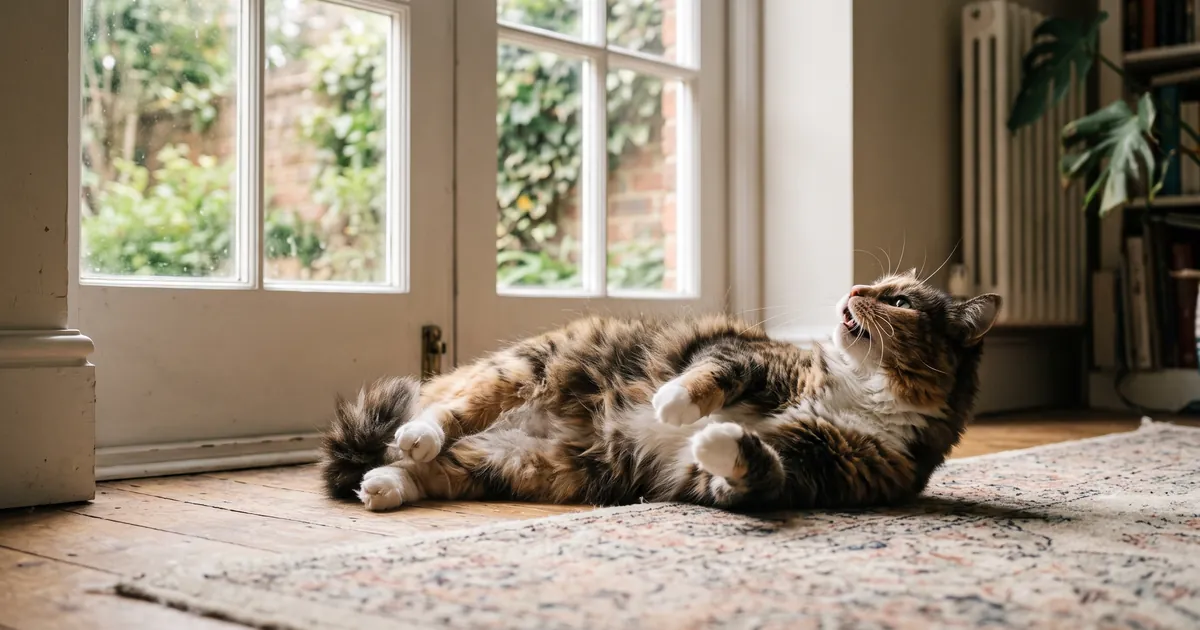
- Signs of a cat in heat: yowling, rolling, rubbing, raised bottom and treading.
- Cats in heat don't normally bleed; any blood needs a vet check.
- Heat lasts about 4–7 days and returns every 2–3 weeks if she doesn't mate.
- Male cats don't go into heat, but unneutered toms are ready to mate all year.
Signs of a cat in heat
The signs of heat can be dramatic, and many first-time owners think their cat is ill or in pain. If your female cat isn't spayed and suddenly behaves in some of these ways, she's probably in heat:
- Calling: loud, persistent yowling or howling, often at night. Siamese and other Oriental breeds are especially vocal.
- Rolling: rolling around on the floor and writhing.
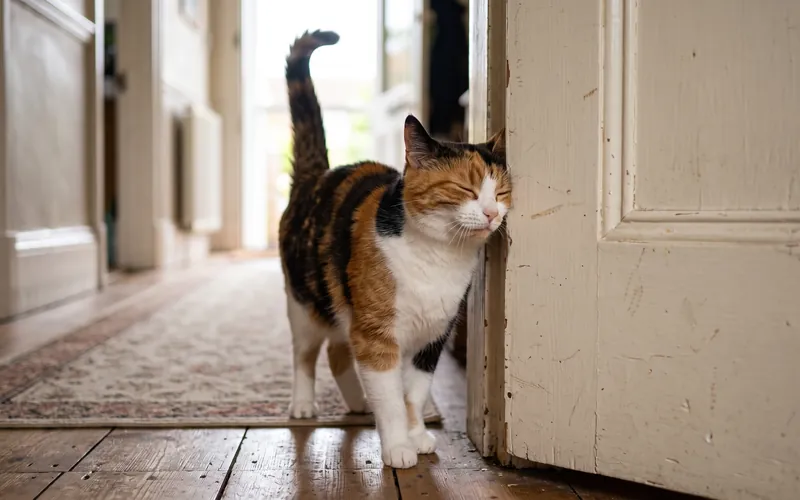
- Rubbing: rubbing her head and body against people, furniture and doorways much more than usual.
- Mating posture (lordosis): crouching with her front low, her bottom raised and her tail held to one side, especially when stroked along the back.
- Treading: paddling or stamping her back feet.
- Restlessness: pacing and unable to settle.
- Trying to escape: dashing for doors and windows to find a mate.
- More affectionate: demanding attention, or occasionally irritable.
- Spraying or licking: some cats spray urine to leave scent, and many lick their genital area more.
- Eating less: appetite often drops during heat.
Unneutered male cats nearby may gather outside your home, yowl, spray and fight, which is often how owners realise their cat is in season.
Do cats bleed when in heat?
No, cats in heat don't normally bleed. This is one of the biggest differences between cats and dogs. A female dog in season has a bloody discharge, but a female cat usually has none at all, or only a tiny amount of clear fluid that she licks away.
Blood isn't normal. If you see blood from your cat's vulva, blood in her urine or on her bedding, contact your vet. Possible causes include a urinary infection or cystitis, miscarriage, injury, or pyometra, a serious womb infection that's more common in older, unspayed cats and can be life-threatening.
How do I know if my cat is in heat or ill?
| Likely heat | Possibly illness: call your vet |
|---|---|
| Yowling and rolling, but alert and bright | Hiding, lethargic or weak |
| Bottom raised when stroked | Straining in the litter tray or passing little urine |
| Rubbing and seeking attention | Vomiting, diarrhoea or not eating for more than a day |
| No discharge | Blood or smelly discharge |
| Behaviour stops after a few days | Swollen belly, drinking more, or a high temperature |
Straining to urinate can be an emergency, especially in male cats. If you're not sure, call your vet.
How long does a cat stay in heat?
Length of heat
Usually 4–7 days, but anything from 2 to 19 days is possible.
How often
Every 2–3 weeks if she doesn't mate, for months at a time.
Breeding season
In the UK, roughly February to September, when days are longer.
Indoor cats
Cats kept under artificial light may come into heat all year.
Cats are seasonally polyoestrous: longer days trigger repeated heat cycles. In autumn and winter, many cats stop cycling for a few months. Because heat can come back so often, an unspayed cat may seem to be "always in heat" in spring and summer.
The cat heat cycle explained
- Proestrus (1–2 days): she may be more affectionate and attract males but won't mate yet. Many owners miss this stage.
- Oestrus (about a week): the "heat" itself, with calling, rolling and the mating posture. She'll accept a male.
- Interoestrus (about 1–3 weeks): if she doesn't mate, behaviour returns to normal before the next heat.
- Anoestrus (autumn and winter): a resting period of no cycling, usually from about October to January.
Cats are induced ovulators, so mating triggers the release of eggs. A cat can mate with several males during one heat, and kittens in one litter can have different fathers. If she mates, she'll usually stop calling within a day or two. Use our cat pregnancy calculator to estimate when kittens are due.
At what age do cats go into heat?
Most female kittens have their first heat at 4 to 6 months, and some as early as 3.5 months, especially kittens born early in the year. Oriental breeds such as Siamese often mature early, while large breeds like Maine Coons may start later. A kitten can get pregnant in her first season, while she's still growing herself. See when a kitten becomes a cat.
Do male cats go into heat?
Male cats don't go into heat or have cycles. Instead, an unneutered male (tom) becomes sexually mature at around 6 to 9 months and is ready to mate all year round. Signs of an entire tom include:
- Strong-smelling urine and spraying indoors and outdoors.
- Roaming over long distances, which raises the risk of road accidents.
- Fighting with other cats, causing abscesses and spreading FIV and FeLV.
- Yowling, especially when a female in heat is nearby.
- Thick, muscular cheeks ("stud jowls").
Neutering male cats reduces spraying, roaming and fighting. For the costs, see our guide to cat neutering costs.
Can you spay a cat during heat?
Yes. Many UK vets will spay (neuter) a cat while she's in heat, and it's often better than waiting and risking pregnancy. During heat, the womb and ovaries have extra blood supply, so the operation can be slightly more complex, and some vets prefer to wait until the heat ends, typically a week or two. Some practices charge a little more for cats in season.
Whatever your vet advises, keep your cat strictly indoors and away from unneutered males until she's spayed. If cost is a concern, many charities offer free or low-cost cat neutering in the UK.
Spaying a cat in heat vs waiting
| Spay during heat | Wait until heat ends |
|---|---|
| No risk of pregnancy from further heats | Slightly simpler surgery |
| Stops calling quickly | Possibly lower cost at some vets |
| Slightly higher bleeding risk | Must keep her indoors for longer |
Are cats in pain when in heat?
Being in heat isn't thought to be physically painful, but your cat is driven by strong hormones to find a mate, and the yowling and rolling can look like distress. Repeated heats without mating are tiring, and some cats lose weight. Unspayed cats also have a higher risk of pyometra and mammary (breast) tumours later in life. Spaying before the first heat greatly reduces the risk of mammary cancer.
How to calm a cat in heat
Keep her indoors
Close windows and cat flaps. A cat in heat will find a mate within minutes outside.
Play
Short, energetic play sessions with wand toys can distract her and tire her out.
Warmth
A heat pad or warm blanket can help her relax.
Pheromones
Diffusers can help some cats feel calmer; see cat calming products.
Clean up scent
Clean any spraying with an enzymatic cleaner; see removing cat urine smell.
Book neutering
The only lasting solution if you don't plan to breed.
If you have an unneutered male and female in the same home, keep them apart. Hormone injections or tablets to postpone heat are rarely used in pet cats because of side effects, including diabetes and womb infections.
Neutering at 4 months
UK vets, Cats Protection and The Cat Group recommend neutering kittens at around 4 months old, before their first heat. Early neutering prevents unwanted litters, avoids the stress of heat and reduces the risk of mammary cancer and pyometra. Book vaccinations first; see cat vaccination costs. If you've taken in a female stray that may be unspayed, see how to know if a cat is a stray, and contact a rescue for help with neutering.
FAQs
Do cats bleed when in heat?
No, cats don't normally bleed when they're in heat. Unlike dogs, female cats have little or no visible discharge during their season. Any blood from your cat's vulva, or blood in urine, isn't normal and may be a sign of a urinary infection, miscarriage or a womb infection (pyometra), so contact your vet.
How do I know if my cat is in heat?
Signs that your cat is in heat include loud yowling, rolling on the floor, rubbing against people and furniture, raising her bottom with her tail to the side when stroked, treading with her back legs, restlessness, trying to get outside and sometimes spraying urine.
How long does a cat stay in heat?
Each heat usually lasts 4 to 7 days, although it can range from 2 to 19 days. If she doesn't mate, it typically comes back every 2 to 3 weeks during the breeding season, roughly February to September in the UK.
Do male cats go into heat?
No. Male cats don't have heat cycles. Instead, unneutered males are sexually active all year from about 6 months old. When they detect a female in heat, they may yowl, roam, spray urine and fight other males.
Can you spay a cat during heat?
Yes, many UK vets will spay a cat in heat. The womb has more blood flow during heat, so some vets prefer to wait until it's over, and a few charge a little more. Keep her indoors until she's spayed, and ask your vet what they advise.
Are cats in pain when in heat?
Heat isn't thought to be physically painful for cats, but it's clearly uncomfortable and frustrating. The yowling and rolling can look like distress. If your cat seems genuinely unwell, isn't eating or is straining, see a vet.
At what age do cats go into heat?
Most female cats have their first heat at 4 to 6 months, sometimes even younger. That's why UK vets and charities now recommend neutering kittens at about 4 months, before they can get pregnant.
Sources and further reading
This guide is for general information only and is not a substitute for advice from a vet. Medicines, doses and costs change: always follow your vet and the product leaflet. If your cat is unwell or you think it has eaten something toxic, contact your vet or an emergency vet straight away.