How to stop cats pooping in your garden (humanely)
If you want to know how to stop cats pooping in your garden, the most effective approach is to make bare soil uncomfortable to dig, startle cats with harmless deterrents, and remove the smell that draws them back. Cats choose soft, freshly dug earth, so a few simple changes usually solve the problem. Here are 12 humane methods that work, what UK law says about neighbours' cats, and the things you should never use.
Quick answer
- Cats prefer soft, bare, freshly dug soil. Cover it with chicken wire, pebbles, prickly cuttings or dense planting.
- Motion-activated sprinklers are one of the most effective humane deterrents.
- Remove poo promptly and wash the area to get rid of the scent that draws cats back.
- In the UK, it's illegal to harm cats. Never use poisons, slug pellets, mothballs or chilli powder.
Why cats poop in gardens
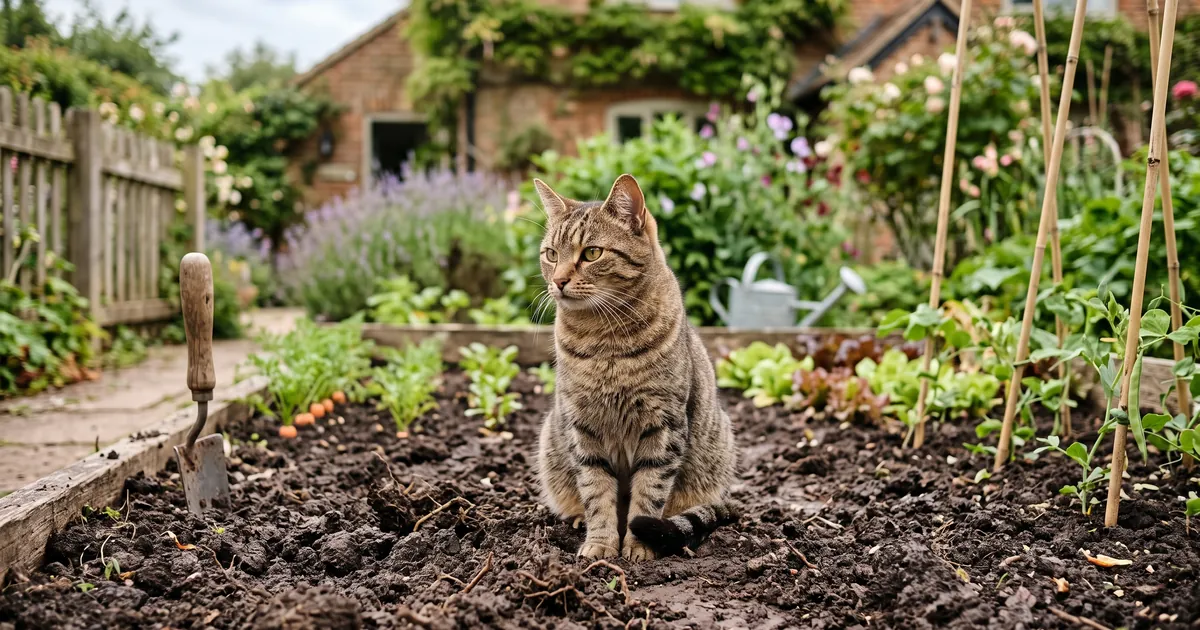
Cats instinctively bury their waste to hide their scent from predators and rivals. They look for spots that are:
- Soft and easy to dig: freshly turned vegetable beds, new borders, seed beds and sandpits are irresistible.
- Dry: dry, crumbly soil is easier to dig than wet earth.
- Quiet and sheltered: away from people, dogs and busy paths.
- Already scented: once a cat has used a spot, the smell tells it (and other cats) to come back.
Understanding this makes deterrence much easier: take away the soft, dry, quiet, scented spot, and most cats move on.
12 humane ways to stop cats pooping in your garden
1. Cover bare soil
This is the single most effective method. Cats won't dig where they can't scratch the surface. Try:
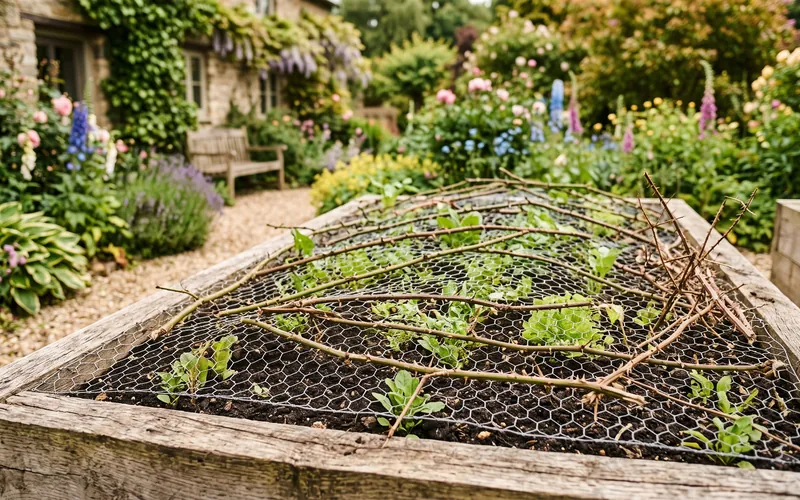
- Chicken wire or plastic garden mesh laid flat on the soil and pinned down, with holes cut for plants. Plants grow through it, and cats can't dig.
- Pebbles, gravel, slate or cobbles spread thickly over bare areas.
- Coarse bark or wood chip mulch, which is less comfortable to dig than soil.
- Plastic spike mats designed for gardens (blunt prongs that are uncomfortable but harmless).
2. Lay prickly cuttings and twigs
Scatter rose, holly, bramble or pyracantha prunings, pine cones or crisscrossed twigs over newly sown beds. Cats dislike stepping on them. It's a free, effective home remedy for vegetable beds while seedlings establish.
3. Plant densely
Cats look for gaps of bare soil. Planting closely, using ground-cover plants and keeping borders full leaves no space to dig.
4. Use a motion-activated sprinkler
Motion-activated sprinklers detect movement and release a short burst of water. They startle cats without hurting them, and most cats learn quickly to avoid the area. They're one of the most effective deterrents for lawns and large beds. Remember to switch them off before you walk past.
5. Keep soil damp
Watering problem areas in the evening makes the soil less appealing, because cats prefer dry earth for digging.
6. Clean up and remove the scent
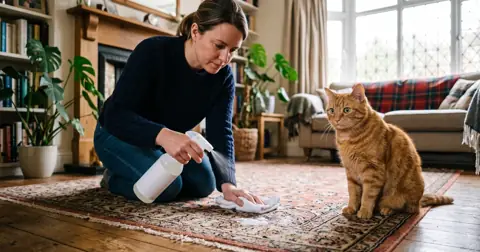
Pick up any poo wearing gloves, then wash the area with water and an enzyme-based cleaner or a solution of biological washing powder. This removes the scent that draws cats back. Avoid ammonia-based cleaners, which smell like urine to cats and can attract them. Our guide to removing cat urine smell explains enzyme cleaners in more detail.
7. Try scent deterrents (with care)
Some cats dislike certain smells. Options to try include:
- Fresh orange, lemon or lime peel scattered on the soil.
- Used coffee grounds sprinkled thinly (also good for soil).
- Strong-smelling herbs planted around the edges.
- Commercial cat repellents designed for gardens, used as directed.
Results vary, and scents need refreshing, especially after rain. Avoid essential oils, mothballs, creosote and chilli or pepper powders, which can harm cats and wildlife.
8. Consider ultrasonic deterrents
Ultrasonic devices emit a high-pitched sound when they detect movement. Some gardeners find them helpful; others see little effect. Aim the device at the exact spot cats use, and be aware it may affect your own pets.
9. Make a "cat toilet" area
If cats are going to visit anyway, give them a better option. Choose a quiet corner away from your vegetables and children's play areas, dig over a patch of loose soil or sand, and plant some catnip nearby. Many cats will use this instead of your beds, and it's easy to clean.
10. Protect seed beds and sandpits
Cover newly sown beds with fleece, netting or cloches until plants establish. Always cover children's sandpits when not in use, as they're a favourite toilet spot and a health risk.
11. Block access points
Watch where cats enter the garden, often over a low fence or through a gap under a gate, and make it less convenient with trellis, plants or a fence topper. Remember that cats are good climbers, so complete exclusion is difficult.
12. Talk to your neighbour
A friendly conversation often helps. Your neighbour may not realise their cat is causing a problem, and might be happy to provide an outdoor litter area in their own garden. Keep it polite: in the UK, cats are free to roam and owners aren't legally responsible for where their cat goes.
What not to use
- Poisons, slug pellets and chemicals: these can kill cats, dogs, hedgehogs and birds.
- Mothballs: toxic to cats and other animals.
- Chilli powder, pepper or curry powder: can cause painful eye and skin injuries.
- Essential oils: many are toxic to cats.
- Traps, air guns or anything that harms a cat: illegal under the Animal Welfare Act 2006.
- Glass shards or sharp spikes that can injure cats, children or wildlife.
Check any plant or product with our toxic plant and food checker.
UK law: neighbours' cats in your garden
Under UK law, cats are considered free-roaming animals. Unlike dogs, cat owners aren't generally liable for their cats trespassing or fouling on other people's land. You can take reasonable humane steps to deter cats, but it's an offence to cause unnecessary suffering to a cat or to trap or poison it. If you find an injured or apparently stray cat, contact a vet or the RSPCA. Our guide to whether a cat is stray or feral explains how to check.
Health risks of cat poo in the garden
Cat faeces can carry roundworm eggs and Toxoplasma gondii, a parasite that can infect people. Most healthy adults have no symptoms, but toxoplasmosis can be serious in pregnancy and for people with weakened immune systems. To stay safe:
- Wear gloves when gardening and wash hands afterwards.
- Wash fruit and vegetables from the garden thoroughly.
- Cover sandpits and remove faeces promptly.
- Pregnant women should avoid handling cat faeces and soil where cats toilet.
Regular worming of pet cats reduces the number of eggs in the environment. If it's your own cat, see our cat worming guide.
If it's your own cat pooping in the garden
Outdoor cats naturally toilet in the garden. To keep them away from vegetable beds and play areas:
- Create a designated toilet patch with soft soil or sand in a quiet corner.
- Protect beds with mesh or prickly cuttings.
- Provide an indoor litter tray too, especially in bad weather and at night.
- Keep your cat wormed and flea-treated.
If your cat suddenly starts toileting indoors or in odd places, it may be stressed or unwell. See our guide to calming a stressed cat and check with your vet.
Which method should I try first?
| Problem area | Best first methods |
|---|---|
| Vegetable beds and seed beds | Mesh or prickly cuttings, fleece covers, damp soil |
| Borders and flower beds | Dense planting, bark mulch, pebbles |
| Lawn | Motion-activated sprinkler, cleaning the spot |
| Children's sandpit | Cover when not in use |
| Whole garden | Combine barriers, a sprinkler and a cat toilet area |
Be patient: it can take a couple of weeks for cats to change their habits, especially if a spot has been used for a long time.
FAQs
What is the best way to stop cats pooping in my garden?
The most reliable method is to cover or fill bare soil so cats can't dig: use chicken wire or garden mesh laid flat, pebbles, bark, prickly cuttings or dense planting. Combine this with a motion-activated sprinkler and clean up existing poo and its smell. Using several methods together works best.
What smells stop cats pooping in the garden?
Many cats dislike citrus, strong herbs and coffee grounds, but scent deterrents only work for some cats and need replacing often. Avoid essential oils, mothballs, ammonia and chilli, which can harm cats or other wildlife. Physical barriers usually work better than smells.
Do ultrasonic cat deterrents work?
Some owners find ultrasonic deterrents helpful, but results are mixed. They work best when positioned to cover the exact problem area and combined with other methods. They may also affect your own pets, and some cats ignore them after a while.
Can I stop my neighbour's cat coming into my garden?
In the UK, cats are free to roam, and owners aren't legally responsible for their cats trespassing. You can use humane deterrents and politely talk to your neighbour, but you must not harm or trap the cat. Harming a cat is an offence under the Animal Welfare Act 2006.
What home remedies stop cats pooping in the garden?
Simple home remedies include laying twigs, pine cones or prickly rose and holly cuttings on soil, covering beds with old wire racks or netting, scattering citrus peel, watering dry soil (cats prefer dry earth) and creating a dedicated 'cat toilet' area away from your plants.
Is cat poo in the garden dangerous?
Cat faeces can contain roundworm eggs and Toxoplasma, which can infect people. Always wear gloves when gardening, wash fruit and vegetables, cover children's sandpits, and wash hands after handling soil. Pregnant women should take extra care and ideally avoid handling cat faeces.
Sources and further reading
This guide is for general information only and is not a substitute for advice from a vet. Medicines, doses and costs change: always follow your vet and the product leaflet. If your cat is unwell or you think it has eaten something toxic, contact your vet or an emergency vet straight away.