How to stop a cat scratching carpet (and doors and sofas)
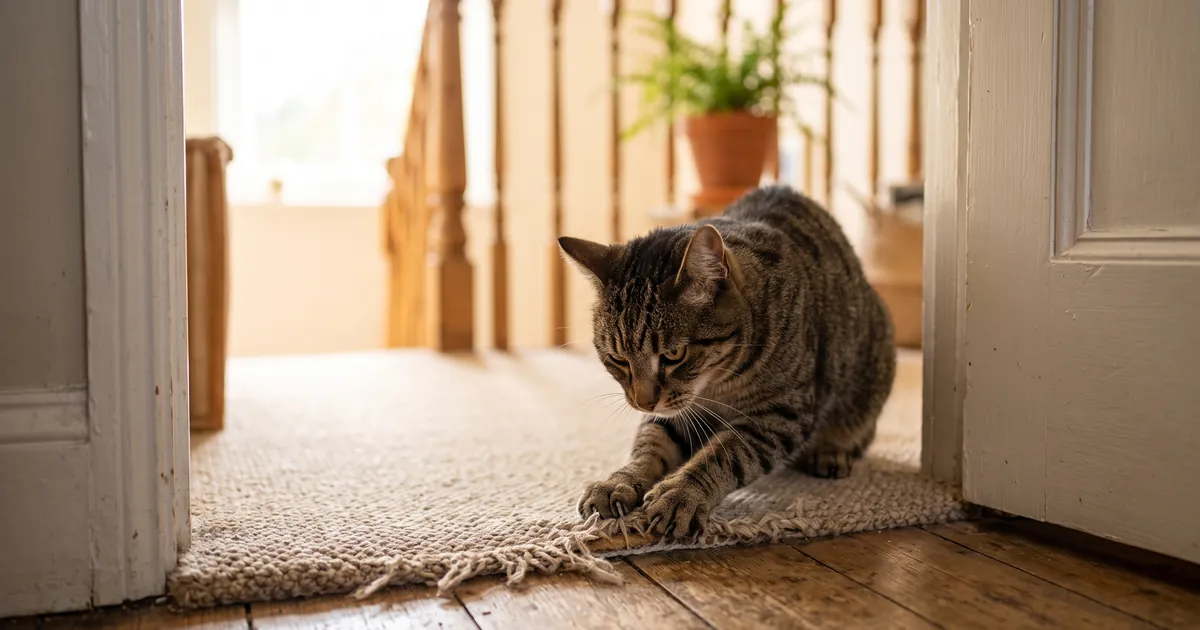
Scratching is natural and necessary for cats, so the key to how to stop a cat scratching carpet is not to stop scratching altogether, but to redirect it. Cats that scratch carpets usually prefer horizontal surfaces, so a flat scratcher in the right spot, combined with making the carpet less appealing, often solves the problem within weeks. Here's how, plus fixes for doors and leather furniture.
Quick answer
- Cats scratch to sharpen claws, stretch and leave scent. You can redirect it, not stop it.
- Carpet scratchers usually like horizontal surfaces: try a flat cardboard or sisal mat.
- Place scratchers exactly where your cat scratches, often doorways and by beds.
- Cover the spot temporarily, reward use of the scratcher, and never punish or declaw (declawing is illegal in the UK).
Why cats scratch carpets
Scratching serves several important purposes:
- Claw care: scratching removes the worn outer layer of the claws, revealing sharp new claws underneath.
- Scent marking: glands between the toes leave scent, marking territory. Visible scratch marks are a signal too.
- Stretching: cats stretch their back, shoulders and legs while scratching, often after waking up.
- Emotional release: cats often scratch when excited, frustrated or greeting you.
Carpets are popular because they're soft, textured and grip well. Many cats scratch carpet at doorways, along walls and near where they sleep, because these are important territory spots.
How to stop a cat scratching carpet: step by step
- Find out your cat's preferred style. Does it scratch lying flat (horizontal), stretching up a wall (vertical), or both?
- Buy the right scratcher. For carpet-scratchers, a flat or slightly angled cardboard or sisal mat is often the answer.
- Place it exactly where your cat scratches, even directly over the damaged patch at first.
- Make the carpet less appealing by covering the spot with a rug, a plastic carpet protector or double-sided sticky tape.
- Attract your cat to the scratcher with catnip, silvervine, a wand toy dragged across it, or a scratching pheromone product.
- Reward every use with praise and a treat.
- Move the scratcher gradually once your cat uses it reliably, a few centimetres a day, if you need it somewhere else.
- Trim claws every few weeks to reduce damage.
Choosing the right scratcher
| Type | Best for | Tips |
|---|---|---|
| Flat cardboard scratcher | Cats that scratch carpet and rugs | Cheap and popular; replace when worn |
| Sisal mat or rug | Carpet-scratchers who like texture | Can lie flat or hang on a wall |
| Angled ramp scratcher | Cats that like both directions | Good near doorways |
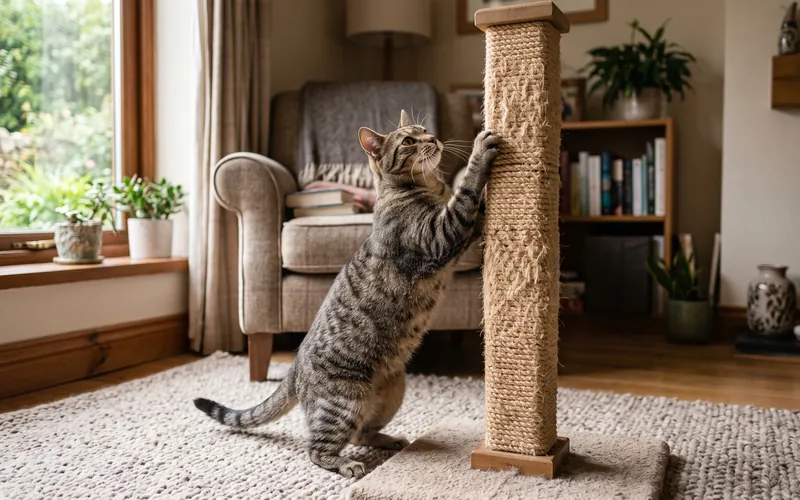
| Tall vertical post | Cats that scratch sofas, walls or doors | At least 80–90 cm tall, heavy base so it doesn't wobble |
| Cat tree with sisal posts | Multi-cat homes, climbing cats | Doubles as a perch and bed |
| Corner or wall-mounted scratchers | Cats that scratch wall corners | Fit at the height your cat reaches |
A good scratcher should be sturdy, rough enough to grip and big enough for your cat to stretch fully. Wobbly, short posts are often ignored.
Where to put scratchers
- Doorways and room entrances, where cats like to mark territory.
- Next to beds and sleeping spots, because cats scratch after waking.
- Beside the furniture or carpet patch your cat currently uses.
- In main living areas, not hidden in a spare room; scratching is partly a social signal.
- One scratcher per cat plus one in multi-cat homes, in different rooms.
Making carpet less appealing
- Lay a rug or runner over the scratched spot, ideally with a scratcher on top.
- Use clear plastic carpet protectors at doorways (sold for door thresholds).
- Stick double-sided tape on small areas; most cats dislike the sticky feel.
- Place furniture or a plant pot over the spot temporarily.
These are temporary measures while your cat learns to use the scratcher. Once the new habit is established, you can usually remove them.
Trimming your cat's claws
Trimming the sharp tips every few weeks reduces carpet and furniture damage. Use cat claw clippers, press gently on the toe to extend the claw, and cut only the clear tip, well away from the pink quick. If you're unsure, ask your vet nurse to show you. Older cats often need more frequent trims, because they scratch less and claws can grow into the pads.
How to stop a cat scratching leather furniture
Leather sofas and chairs are tempting because the surface gives satisfyingly under the claws. To protect them:
- Cover the arms and back with throws or clear furniture protector sheets.
- Apply double-sided tape designed for furniture to the favourite spots.
- Place a tall, heavy sisal post right next to the scratched area.
- Use a scratching attractant spray on the post and reward your cat for using it.
- Play with your cat near the post, dragging a toy up it.
How to stop a cat scratching at a door
Door scratching is usually about wanting something: to get in, get out or get your attention, often at night or early morning.
- Don't open the door in response to scratching, as it teaches your cat that scratching works.
- Meet the need: if your cat wants to be with you, consider letting it sleep in the room; if it wants outside access, consider a cat flap.
- Tire your cat out with an evening play session and a meal before bed.
- Protect the door with a clear door protector panel and place a scratcher nearby.
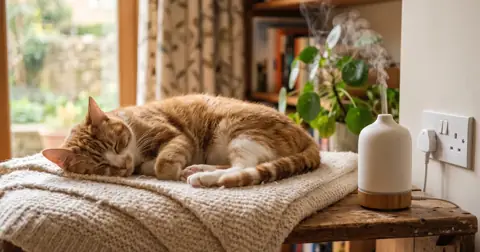
- Use a pheromone diffuser if your cat seems anxious. See cat calming products.
What not to do
- Don't punish your cat, shout, or spray it with water. It damages trust and often makes cats scratch when you're not around.
- Don't declaw. Declawing amputates the end of each toe. It's banned in the UK and causes pain and long-term problems.
- Don't remove all scratching opportunities: cats need to scratch.
When scratching is a sign of stress
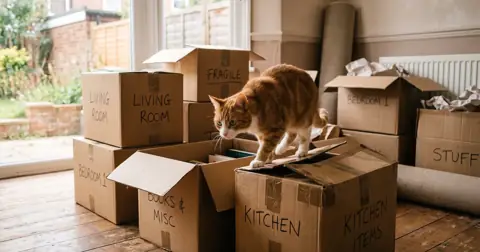
A sudden increase in scratching, especially near doors and windows, can be a sign that your cat feels its territory is threatened, for example by a new pet, a new baby, a house move or a neighbourhood cat outside. Address the cause where possible, add extra scratchers and hiding places, and consider a pheromone diffuser. Cats that have just moved often scratch more as they mark their new home; our guide to keeping a cat in after moving explains how to help them settle.
Scratching in older and arthritic cats
Older cats sometimes scratch less, or switch from tall posts to carpets and rugs, because stretching up hurts their joints. If your senior cat has started scratching the carpet, try a low, flat scratcher and check whether it might be stiff or sore. Arthritis is very common in older cats and is treatable: see our guide to Metacam and pain relief for cats. Cats that scratch less also need their claws checked more often, because overgrown claws can curl into the paw pads.
How long does it take to stop a cat scratching carpet?
Most cats start using a well-placed scratcher within a few days to two weeks, especially when it's rewarded. Changing a long-established habit can take longer. Be patient and consistent, and keep scratchers in place permanently: cats will always need somewhere to scratch.
Kittens and scratching
Start early. Give kittens a scratcher from the day they arrive, place it near where they sleep and play, and reward them for using it. Kittens learn habits quickly, so it's much easier to teach good scratching from the start than to change it later.
FAQs
How do I stop my cat scratching the carpet?
Put a horizontal scratcher, such as a cardboard or sisal mat, directly over or beside the spot your cat scratches. Make the carpet less appealing temporarily with a rug, plastic protector or double-sided tape, reward your cat with treats when it uses the scratcher, and use catnip or silvervine to attract it. Trimming claws reduces damage.
Why does my cat scratch the carpet and not the scratching post?
Many cats prefer to scratch horizontally, like carpet, rather than up a vertical post. The post may also be too short, too wobbly or in the wrong place. Try a flat scratcher or a sturdier, taller post placed where your cat already scratches.
How do I stop my cat scratching at the door?
Cats often scratch doors to get attention or access. Avoid opening the door when your cat scratches, as it rewards the behaviour. Provide a scratcher near the door, play with your cat before bedtime, use a door protector panel, and consider whether your cat simply wants access, which a cat flap or open door could solve.
How do I stop my cat scratching leather furniture?
Cover the areas your cat scratches with a throw, sticky tape or a furniture protector, and place a tall, sturdy scratching post right next to the sofa. Reward your cat for using the post. Leather often attracts cats because it feels satisfying to dig into, so a sisal post with a similar texture can help.
Is it cruel to stop a cat scratching?
Stopping scratching altogether would be harmful, because it's an essential behaviour. Redirecting it to suitable scratchers is not cruel. Declawing is banned in the UK because it's painful and harmful.
Do nail caps stop cats scratching?
Soft plastic nail caps glued over the claws can reduce damage, but many vets and behaviourists don't recommend them, as they can interfere with normal claw shedding and grooming and some cats find them uncomfortable. Redirecting scratching is usually better.
Sources and further reading
This guide is for general information only and is not a substitute for advice from a vet. Medicines, doses and costs change: always follow your vet and the product leaflet. If your cat is unwell or you think it has eaten something toxic, contact your vet or an emergency vet straight away.