Why does my cat bite me? Reasons and how to stop it
If you're wondering why does my cat bite me, you're not alone. Most cat bites aren't aggression at all: they're gentle "love bites", play that's gone a bit far, or a signal that your cat has had enough stroking. Occasionally biting is a sign of fear or pain. This guide explains each reason, the body language to watch for and how to stop your cat biting.
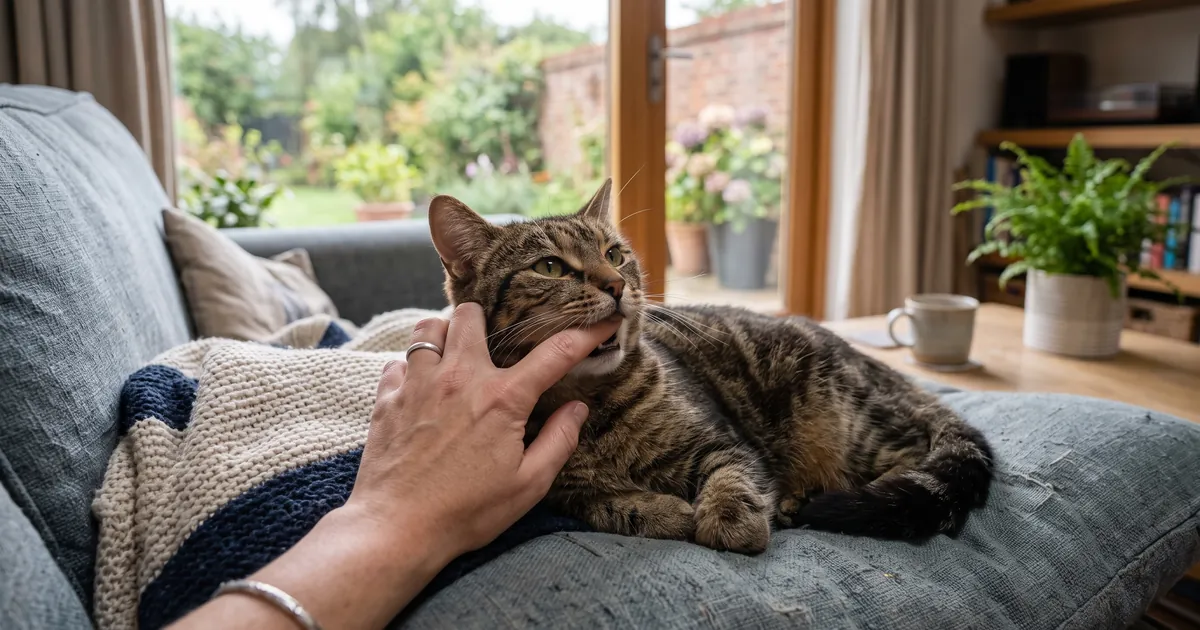
Quick answer
- Gentle nibbles during cuddles are often affection or grooming (a "love bite").
- Biting during stroking is often over-stimulation: watch for a twitching tail, rippling skin and flattened ears.
- Kittens and young cats bite in play, especially if they've learned hands are toys.
- A cat that suddenly starts biting may be in pain or stressed, so see your vet.
Why does my cat bite me? The main reasons
| Type of bite | What it looks like | What it means |
|---|---|---|
| Love bite | Gentle nibble, often with licking, during cuddles | Affection or grooming |
| Over-stimulation bite | Sudden nip during stroking, then jumps away | "That's enough now" |
| Play bite | Pouncing on hands or feet, bunny-kicking, wild eyes | Hunting play |
| Attention bite | Nip at ankles or hands, then runs off | "Play with me" or "feed me" |
| Fear bite | Hissing, flattened ears, crouched body, then bites | Feels trapped or threatened |
| Pain bite | Bites when a certain area is touched or when picked up | Sore or unwell |
| Redirected bite | Bites a person after seeing another cat or a sudden noise | Frustration directed at the nearest target |
Love bites: why does my cat bite me gently?
Cats that live together groom each other with licks and small nibbles. Some cats extend this to their favourite people, giving gentle bites that don't break the skin, often while purring and kneading. These "love bites" are a sign of trust. If you don't enjoy them, gently stop the interaction and offer a toy or stroke instead.
Why does my cat bite me and then lick me?
Bite-and-lick is classic grooming behaviour: a cat nibbles to work through the fur, then licks. It can also be a mild signal of over-stimulation. Watch whether the bites are getting harder; if so, it's time to stop stroking.
Petting-induced biting (over-stimulation)
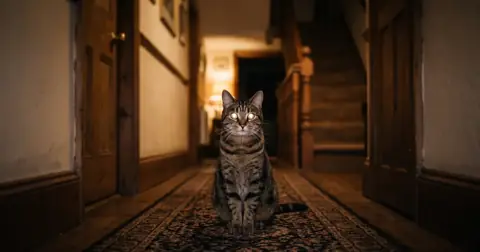
Many owners are puzzled when a cat that's purring on their lap suddenly bites. This is called petting-induced aggression. Repeated stroking can become uncomfortable or over-arousing for some cats, especially along the back and near the tail. Warning signs usually appear seconds before a bite:
- The tail starts swishing, thumping or the tip flicks.
- The skin along the back ripples or twitches.
- Ears turn sideways or flatten.
- The cat stops purring, goes still or looks at your hand.
- Pupils dilate.
Stop stroking at the first sign and let your cat decide whether to stay. Keep sessions short and focus on the cheeks, chin and base of the ears, where most cats like to be touched.
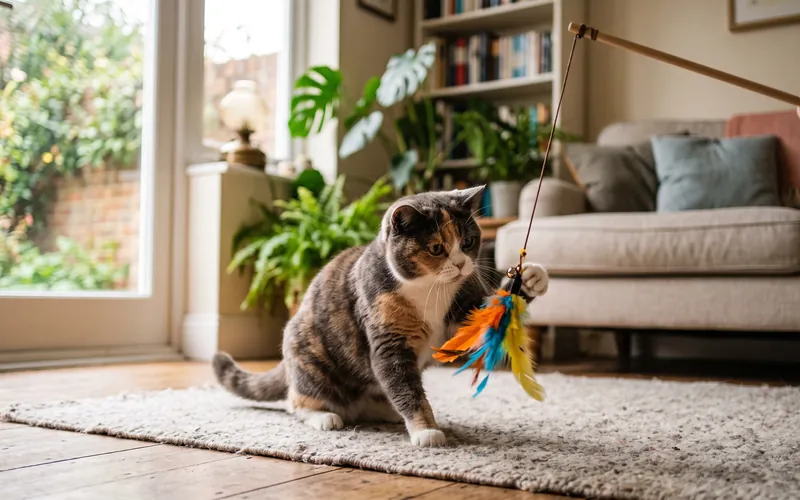
Play biting
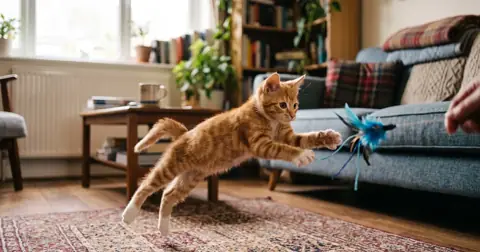
Cats are hunters, and play is practice for catching prey. Kittens and young cats often pounce on moving hands and feet, grab with their front paws and kick with their back legs. It's normal, but it hurts, and it can become a habit if hands are used as toys.
- Never play with your hands or feet. Use wand toys, kickers and balls instead.
- Schedule play: two or three 10–15 minute sessions a day, especially in the evening.
- Let your cat "catch" the toy at the end, and follow with a meal or treat.
- Stop the game calmly if teeth touch skin; walk away for a minute.
High-energy cats may need more play and enrichment. Read our guide to whether cats can have ADHD.
Attention-seeking bites
Some cats learn that nipping ankles gets an instant reaction, whether that's food, play or even being told off. Avoid reacting with excitement. Instead, reward calm behaviour, keep meal and play times regular, and provide puzzle feeders and toys to fill the day. Cats left alone for long periods may benefit from extra enrichment or a midday visit.
Fear and defensive biting
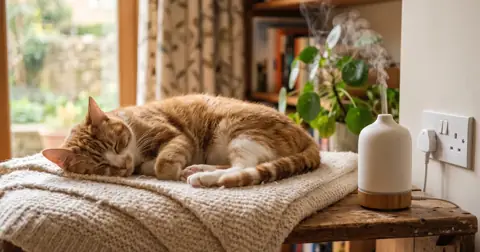
A frightened cat may bite if it feels cornered, is picked up against its will, or is approached by strangers or children. Signs of fear include hiding, a crouched posture, a tucked tail, flattened ears, hissing and growling. Give fearful cats space, let them approach in their own time, and provide hiding places and high perches. Pheromone diffusers can help; see cat calming products.
Pain-related biting
A cat that bites when touched in a particular place, when picked up, or that has started biting suddenly may be in pain. Common causes include arthritis, dental disease, injuries, abscesses and urinary problems. Older cats with arthritis may snap when their back or hips are stroked. Book a vet check for any new or unexplained biting. Our guide to pain relief for cats explains how arthritis is treated.
Redirected aggression
If your cat sees another cat through the window, hears a sudden loud noise, or smells an intruder, it can become highly aroused and lash out at the nearest person or pet. These bites can be severe and seem to come from nowhere. If your cat is staring out of the window with a puffed-up tail, leave it alone until it calms down. Blocking the view, using a microchip cat flap and deterring visiting cats can help.
Biting in multi-cat homes and after changes
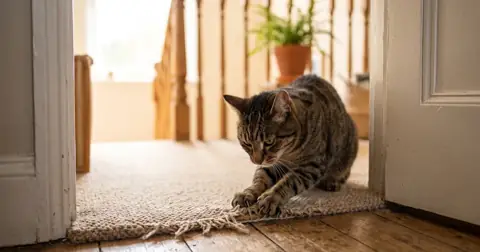
Cats that are stressed by tension with another cat, a house move, a new baby or building work are more likely to bite. Stress lowers a cat's tolerance, so a cat that normally enjoys a long cuddle may now nip after a few strokes. Give each cat its own resources (food, water, litter tray, bed and hiding place), keep routines steady and introduce changes gradually. If you've recently moved, our guide to keeping a cat in after moving explains how to help your cat settle. Cats under stress sometimes show it in other ways too, such as scratching or spraying; see our guides to scratching and cleaning urine marks.
How to stop a cat biting you
- Learn your cat's body language and stop before the bite.
- Keep stroking short, focused on the head and cheeks.
- Let your cat choose when to come for attention and when to leave.
- Never use hands or feet as toys.
- Provide daily play with wand toys to satisfy the hunting drive.
- Don't punish: shouting, tapping the nose or spraying water increases fear and can make biting worse.
- Freeze and withdraw calmly if your cat bites; pulling away fast can trigger a stronger grab.
- See your vet if biting is new, frequent or severe.
Teaching children to avoid cat bites
- Let the cat come to them, rather than chasing or picking it up.
- Stroke gently on the head and cheeks, never the belly or tail.
- Stop when the tail swishes or the cat moves away.
- Never disturb a sleeping or eating cat.
- Always supervise young children with cats.
What to do if your cat bites you
Cat bites are small but deep, and they often become infected. Wash the bite straight away under running water with soap for several minutes. If the skin is broken, particularly on the hand or over a joint, or if the area becomes red, swollen, hot or painful, contact your GP or NHS 111. People with weakened immune systems should seek advice for any bite that breaks the skin.
FAQs
Why does my cat bite me gently?
Gentle bites that don't break the skin are often 'love bites'. Cats groom each other with small nibbles, and some cats do the same to their owners. Gentle bites can also mean your cat is getting over-stimulated, so watch its body language.
Why does my cat bite me and then lick me?
Biting and licking together is usually grooming behaviour. Cats nibble and lick each other to groom and bond. It can also be a mild warning that your cat has had enough stroking. If the bites get harder, stop stroking and let your cat move away.
Why does my cat bite me out of nowhere?
Bites that seem to come out of nowhere usually have early warning signs that are easy to miss, such as a twitching tail tip, rippling skin, a still body or ears turning back. Other causes include play, redirected aggression after seeing another cat through the window, and pain. A sudden change in behaviour needs a vet check.
How do I stop my cat biting me?
Learn your cat's warning signs and stop stroking before it bites, keep stroking sessions short and focused on the head and cheeks, never use hands or feet as toys, offer wand toys and regular play sessions, and don't punish your cat. If biting is new or severe, see your vet.
Why do kittens bite so much?
Kittens learn to control their bite by playing with littermates. Kittens separated early, or encouraged to play with hands, often bite harder. Redirect play onto toys and stop the game calmly whenever teeth touch skin.
Should I see a doctor after a cat bite?
Cat bites can easily become infected because cats' teeth make deep puncture wounds. Wash the bite well with soap and running water. If the skin is broken, especially on the hand, or the area becomes red, swollen, hot or painful, contact your GP or NHS 111.
Sources and further reading
This guide is for general information only and is not a substitute for advice from a vet. Medicines, doses and costs change: always follow your vet and the product leaflet. If your cat is unwell or you think it has eaten something toxic, contact your vet or an emergency vet straight away.