Can cats have ADHD? Understanding hyperactive cats
Can cats have ADHD? Not in the way people do. ADHD is a human diagnosis, and vets don't diagnose it in cats. But some cats are genuinely hyperactive, impulsive or easily distracted, and there's usually a reason: age, breed, boredom, stress or occasionally a medical condition. Here's what's really going on with a "hyper" cat and how to help it settle.
Quick answer
- ADHD isn't a recognised diagnosis in cats, and there's no evidence cats are autistic.
- Most "hyper" cats are young, high-energy breeds or under-stimulated.
- Sudden hyperactivity in an older cat can be hyperthyroidism or another medical problem.
- Daily play, puzzle feeders and a predictable routine help most energetic cats.
Can cats have ADHD? What the science says
ADHD is diagnosed in people using criteria about attention, hyperactivity and impulsivity in daily life, school and work. Vets and animal behaviourists don't diagnose ADHD in cats, and there's no validated way to do so. Research into similar conditions in dogs exists, but there's very little in cats.
That doesn't mean your cat's behaviour isn't real. Some cats truly are restless, impulsive and seem unable to settle. The useful question isn't "does my cat have ADHD?", but "why is my cat behaving like this, and how can I help?"
Common reasons cats seem hyperactive
| Reason | Typical signs |
|---|---|
| Age (kittens and young cats) | Constant play, climbing, pouncing; peaks under 2 years |
| High-energy breed | Bengals, Abyssinians, Siamese, Oriental Shorthairs, Devon Rex |
| Boredom and under-stimulation | Night-time activity, destructive play, attention-seeking |
| Irregular routine | Restless before meals, early-morning waking |
| Stress or anxiety | Pacing, over-grooming, hiding, vocalising |
| Medical problems | Sudden change, weight loss, yowling, skin twitching |
Kittens and young cats
Kittens are designed to be busy. Play teaches them to hunt, climb and interact with other cats. A healthy kitten may sleep deeply, then race around for half an hour, attack your feet and climb the curtains. Most cats calm down noticeably between 1 and 2 years old. Kittens raised without littermates, or those encouraged to play with hands, may be rougher; see our guide to why cats bite.
High-energy breeds
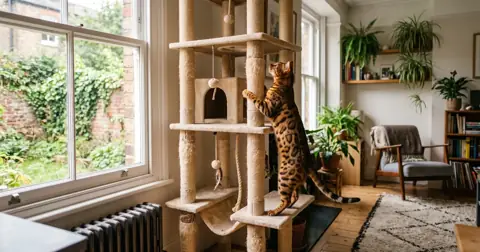
Some breeds have been selected for an active, curious, people-focused personality. The Bengal, Abyssinian, Siamese, Oriental Shorthair and Devon Rex are known for high energy and intelligence. These cats need plenty of mental and physical exercise every day, and can become frustrated, noisy or destructive without it.
The zoomies (frenetic random activity periods)
Many cats have sudden bursts of wild running, leaping and skidding, often in the evening, at dawn or straight after using the litter tray. These "zoomies" are normal ways of releasing pent-up energy, especially in indoor cats. They're rarely a concern unless your cat injures itself or they're happening constantly.
Medical causes of hyperactivity
Hyperthyroidism
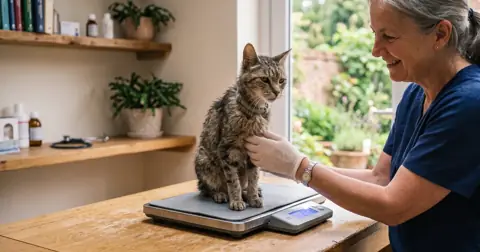
An overactive thyroid is common in cats over 10 years old. It causes restlessness, increased appetite, weight loss, night-time yowling and a fast heart rate. A simple blood test can diagnose it, and treatment works well. See our guide to Thyronorm for cats.
Feline hyperaesthesia syndrome
This poorly understood condition causes episodes of rippling skin along the back, tail twitching, sudden bolting, vocalising and sometimes attacking the tail or flanks. It may involve the skin, muscles, nerves or behaviour. Your vet will rule out skin, spine and nerve problems first, as treatment depends on the cause.
Pain, itching and other conditions
Fleas, allergies, pain and some neurological problems can make cats restless or agitated. Older cats with cognitive decline may pace and yowl at night.
If your cat's hyperactivity is new, getting worse, or comes with weight loss, changes in thirst or appetite, skin twitching or night-time yowling, book a vet check before assuming it's behavioural.
Can cats have autism?
You may have seen the internet joke that "all cats have autism". It became popular because some typical cat behaviours resemble traits associated with autism in people: sensitivity to noise and touch, strong preference for routine, avoiding direct eye contact and intense focus on certain activities. But these are simply how cats are wired as a species. There's no scientific evidence that cats can be autistic, and autism is a human diagnosis.
Understanding normal cat behaviour helps you meet your cat's needs: predictable routines, choice and control over interactions, quiet spaces and gentle introductions to new things.
How to help a hyperactive cat
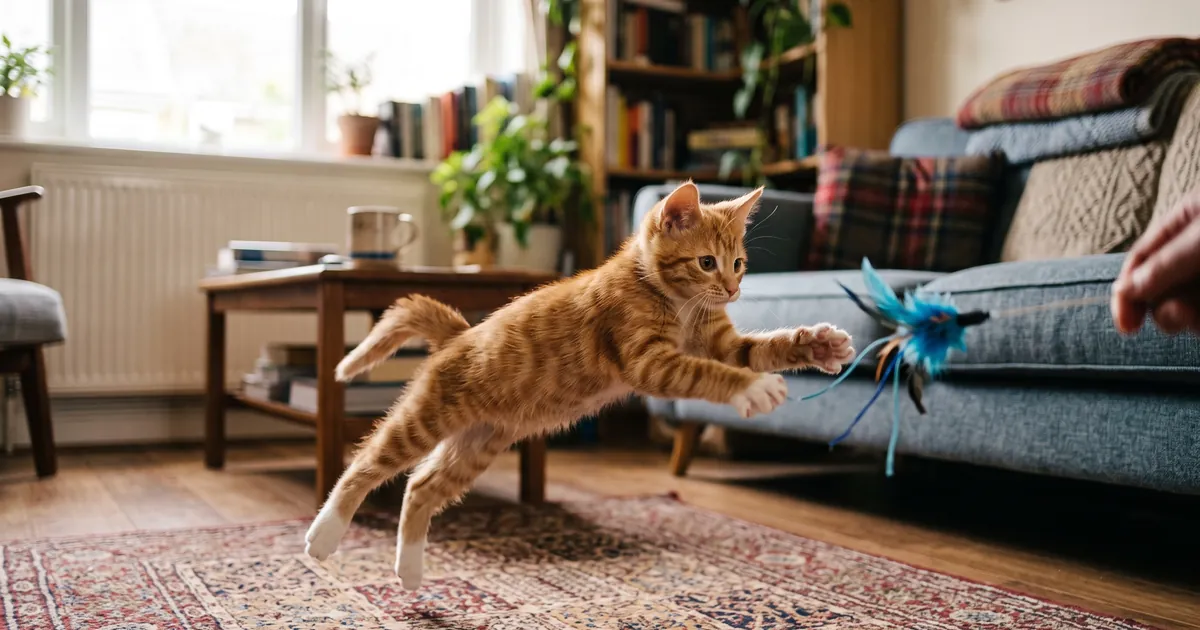
- Play every day: two or three 10–15 minute sessions with a wand toy that mimics prey, ending with a "catch".
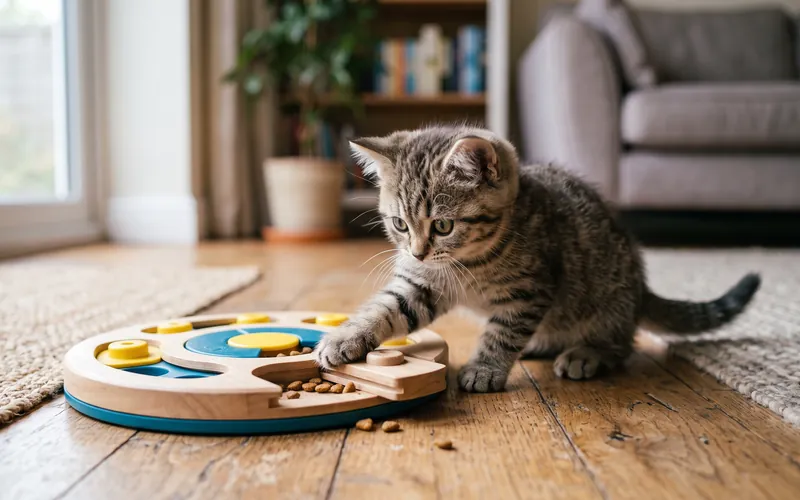
- Use puzzle feeders and scatter dry food so your cat works for its meals.
- Keep a routine: regular feeding, play and bedtime help cats settle.
- Feed before bed after an evening play session; many cats sleep after hunting and eating.
- Provide climbing and perching spaces: cat trees, shelves and window perches.
- Rotate toys weekly to keep them interesting.
- Consider safe outdoor access or a catio for indoor cats.
- Try clicker training: many cats enjoy learning tricks for treats, which is great mental exercise.
- Reduce stress with hiding places and pheromone diffusers if needed. See cat calming products.
Signs your cat is bored, not "ADHD"
Many cats labelled hyperactive are simply under-stimulated, especially indoor cats living in quiet homes. Signs of boredom include:
- Bursts of wild activity in the evening or at night.
- Knocking things off shelves and tables.
- Chewing plants, cables or fabric.
- Attacking ankles or ambushing people as they walk past.
- Constant meowing for attention or food.
- Over-grooming or overeating.
- Scratching furniture and carpets more than usual.
The good news is that boredom is easy to fix with the right routine.
A simple daily enrichment plan for energetic cats
| Time | Activity |
|---|---|
| Morning | Short play session (5–10 minutes), then breakfast in a puzzle feeder |
| During the day | Window perch, cat tree, a few hidden treats or a scatter-feed of dry food; rotate toys |
| Early evening | Main play session (10–15 minutes) with a wand toy that moves like prey |
| Before bed | Final short play, then the evening meal so your cat settles to sleep |
Adapt it to your cat. Young cats and active breeds may need more; older cats may prefer shorter, gentler games. Count treats as part of daily food using our cat food calculator so extra snacks don't lead to weight gain.
Hyperactivity at night
Cats are naturally most active at dawn and dusk, so an energetic cat that keeps you awake at night is following its instincts. A late-evening play session followed by a meal, and not rewarding early-morning demands with food, usually shifts the pattern within a couple of weeks. Our guide on whether cats can see in the dark explains why cats are so confident at night. If night-time restlessness is new in an older cat, see your vet, as it can be a sign of hyperthyroidism, high blood pressure or cognitive changes.
Should I get a second cat?
Owners of very lively cats often wonder whether a companion would help. A playful young cat may enjoy a companion of a similar age and energy level, and two kittens adopted together often entertain each other. But adding a cat isn't always the answer: some cats prefer to live alone, and a poorly matched pair can increase stress. Talk to a rescue about the personalities involved before deciding. If you do add a cat, introduce them slowly over a couple of weeks, with separate resources for each.
When to get professional help
If your cat's behaviour is causing injuries, constant conflict or distress, ask your vet for a referral to a qualified clinical animal behaviourist. They can assess your cat's environment and routine and create a tailored plan. In some cases, your vet may also prescribe medication alongside behaviour changes.
FAQs
Can cats really have ADHD?
No. ADHD (attention deficit hyperactivity disorder) is a human neurodevelopmental diagnosis. There's no equivalent recognised condition in cats. Some cats are very energetic or impulsive, but this is usually due to age, breed, environment or a medical cause rather than ADHD.
Can cats have autism?
There's no scientific evidence that cats can be autistic. Some cat behaviours, such as sensitivity to noise, love of routine and avoiding eye contact, are simply normal cat behaviour. The popular idea that 'all cats have autism' is a meme, not a medical fact.
Why is my cat so hyperactive?
Common reasons include being young (kittens and cats under about 2 are naturally very active), belonging to a high-energy breed, not having enough play or stimulation, being fed at irregular times, and stress. In older cats, sudden hyperactivity can be caused by hyperthyroidism.
What are cat zoomies?
Zoomies, or frenetic random activity periods, are short bursts of running, jumping and pouncing, often in the evening or after using the litter tray. They're normal, especially in young cats and indoor cats with energy to burn.
When will my kitten calm down?
Most kittens become calmer between 1 and 2 years old, though personality and breed play a big part. Regular play and enrichment help kittens burn off energy in a healthy way.
Should I take my hyperactive cat to the vet?
Yes, if the hyperactivity is new, your cat is losing weight, eating or drinking much more, yowling at night, over-grooming, or showing skin twitching and sudden bolting. These can be signs of medical problems such as hyperthyroidism or feline hyperaesthesia syndrome.
Sources and further reading
This guide is for general information only and is not a substitute for advice from a vet. Medicines, doses and costs change: always follow your vet and the product leaflet. If your cat is unwell or you think it has eaten something toxic, contact your vet or an emergency vet straight away.