Thyronorm for cats: treating hyperthyroidism
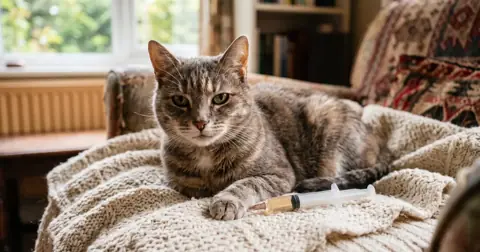
Thyronorm for cats is a liquid medicine that controls hyperthyroidism, one of the most common conditions in older cats. It contains thiamazole, which reduces the amount of thyroid hormone the body makes. This guide explains how Thyronorm works, how to give it, the side effects and monitoring involved, and how it compares with tablets, radioactive iodine treatment and diet.
Quick answer
- Thyronorm contains thiamazole (methimazole) and controls an overactive thyroid; it doesn't cure it.
- It's a prescription-only liquid, usually given once or twice a day for life.
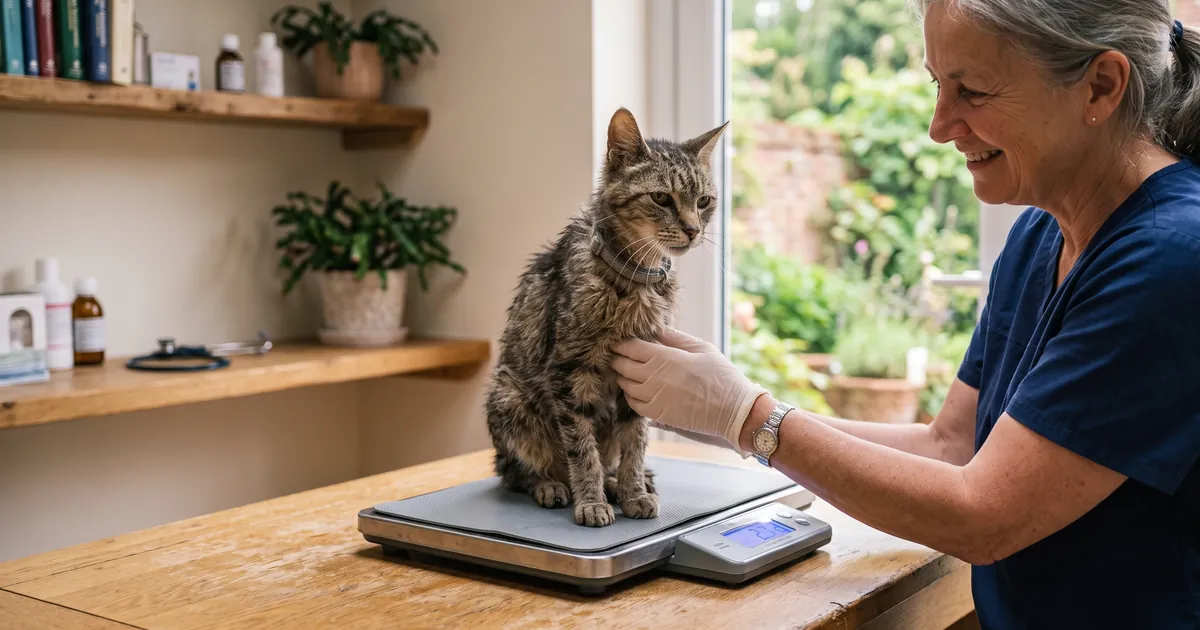
- Your cat needs blood tests after about 3 weeks, then regularly, to check thyroid levels and kidney function.
- Alternatives include Felimazole tablets, Vidalta, an iodine-restricted diet, and radioactive iodine, which can cure the condition.
What is hyperthyroidism in cats?
Hyperthyroidism means the thyroid glands in the neck produce too much thyroid hormone. It's usually caused by a benign (non-cancerous) growth of the thyroid tissue and is one of the most common hormone conditions in cats over about 10 years old. Thyroid hormone controls metabolism, so too much of it speeds everything up.
Signs of hyperthyroidism
- Weight loss despite a good or increased appetite.
- Restlessness, hyperactivity or yowling, especially at night.
- Vomiting and diarrhoea, or large, frequent stools.
- Drinking and urinating more.
- A fast heart rate, panting or heart murmur.
- An unkempt, greasy or matted coat.
- Sudden blindness from high blood pressure (in some cases).
Your vet diagnoses hyperthyroidism with a blood test measuring total T4. Hyperthyroidism also raises blood pressure and strains the heart, so your vet may check these too. See our guide to normal cat heart rate and blood pressure.
How Thyronorm for cats works
Thyronorm contains thiamazole (also called methimazole), an antithyroid drug that blocks the production of thyroid hormone. It controls the condition while your cat takes it, but doesn't remove the overactive thyroid tissue, so treatment is usually lifelong. Thyroid levels typically fall within 2 to 3 weeks of starting treatment.
Thyronorm is a prescription-only veterinary medicine. It comes as a 5 mg/ml flavoured oral solution with a dosing syringe, in bottles such as Thyronorm for cats 100 ml.

How to give Thyronorm
- Draw up the exact dose your vet has prescribed using the syringe supplied.
- Give it directly into the side of your cat's mouth, or drip it onto a small amount of food your cat will finish.
- Be consistent: give it the same way (with or without food) and at the same times each day.
- Twice-daily doses should be about 12 hours apart.
- Wash the syringe and your hands afterwards.
Handling safety: thiamazole can be harmful to unborn babies. If you're pregnant or trying to conceive, wear gloves when giving Thyronorm and handling your cat's litter and vomit, and wash your hands well. Ask your vet or GP if you have concerns.
Thyronorm dose and monitoring
Your vet starts with a low dose and adjusts it based on blood tests. A typical monitoring plan is:
| When | What's checked |
|---|---|
| Before starting | T4, kidney function, blood count, blood pressure |
| About 3 weeks after starting | T4 and kidney function; dose adjusted |
| 3 weeks after each dose change | T4 and kidney function |
| Once stable | Every 3–6 months: T4, kidneys, blood pressure, weight |
Your cat's weight is one of the best indicators that treatment is working. Track it at home with our cat weight checker.
Thyronorm for cats 100 ml: how long does a bottle last?
Thyronorm is sold in 30 ml and 100 ml bottles. How long a bottle lasts depends on your cat's dose: a cat on 2.5 mg twice daily uses 1 ml a day, so a 100 ml bottle lasts around three months, while a 30 ml bottle lasts about a month. Check the leaflet for how long the bottle can be used once opened, and order a repeat prescription a week or two before you run out so there's no gap in treatment. Missed doses let thyroid levels rise again quickly.
Thyronorm side effects in cats
Most side effects appear in the first three months. They include:
- Vomiting and reduced appetite: the most common.
- Lethargy.
- Itching and scratching of the face and neck, sometimes causing sores.
- Liver changes, causing yellowing of the gums or eyes (jaundice).
- Blood changes, such as low white blood cells or platelets, which can cause bruising, bleeding or infections.
Contact your vet if you notice any of these. Serious side effects are uncommon, and your vet may lower the dose, switch to a different treatment or recommend radioactive iodine.
Symptoms of too much Thyronorm in cats
If the dose is too high, thyroid levels drop below normal (iatrogenic hypothyroidism). Signs include lethargy, weight gain, a dull coat and reduced appetite. Low thyroid levels can also worsen kidney function. That's why regular blood tests matter: your vet will reduce the dose if T4 falls too low.
Hyperthyroidism and kidney disease
An overactive thyroid increases blood flow to the kidneys, which can hide existing kidney disease. Once hyperthyroidism is treated, kidney values sometimes rise, revealing chronic kidney disease that was already there. This doesn't mean the treatment has damaged the kidneys, but it does mean your vet needs to balance both conditions carefully. Many cats need a diet adapted for kidney health; see our guide to renal diets for cats.
Thyronorm vs Felimazole vs Vidalta
| Thyronorm | Felimazole | Vidalta | |
|---|---|---|---|
| Active ingredient | Thiamazole | Thiamazole | Carbimazole (converted to thiamazole in the body) |
| Form | Flavoured liquid | Small sugar-coated tablets | Prolonged-release tablets |
| Typical dosing | Once or twice daily | Once or twice daily | Once daily |
| Can doses be finely adjusted? | Yes, easily | By tablet strength | Less easily (tablets shouldn't be split) |
| Best for | Cats that refuse tablets; fine dose control | Cats that take tablets well | Owners wanting once-daily dosing |
All are prescription-only. If your cat won't take tablets, our guide on how to give a cat a pill may help, or a liquid may be easier.
Other treatments for hyperthyroidism
Radioactive iodine treatment for cats
Radioactive iodine (I-131) is given as a single injection at a specialist centre. It destroys the overactive thyroid tissue while sparing normal tissue, curing hyperthyroidism in around 95% of cats. Cats stay at the centre for a period (often one to four weeks) until their radiation level is low enough to go home, and need some precautions for a short time afterwards. In the UK it typically costs £1,500 to £3,000. Although expensive upfront, it can work out cheaper than lifelong medication and blood tests, and many insurers contribute.
Surgery
Removing the affected thyroid gland(s) can cure the condition. It's less commonly done now, because of anaesthetic risks in older cats and possible effects on the nearby parathyroid glands.
Iodine-restricted diet
A prescription diet very low in iodine (such as Hill's y/d) can control hyperthyroidism by limiting the iodine the thyroid needs to make hormone. It only works if your cat eats nothing else at all, including treats and hunted prey, so it suits strictly indoor, single-cat homes.
Cost of treating hyperthyroidism
A bottle of Thyronorm typically costs £20 to £60 depending on size, and regular blood tests cost £60 to £150 each. Over a year, medication and monitoring together often come to £400 to £900. Insurance usually covers hyperthyroidism if it developed after the policy began. See our guide to cat insurance.
Living with a hyperthyroid cat
- Give doses on time and keep a medication diary.
- Weigh your cat every couple of weeks at first, then monthly.
- Watch appetite, thirst, energy and coat condition.
- Keep up blood tests and blood pressure checks.
- Feed a high-quality senior diet unless your vet recommends a prescription food.
Most hyperthyroid cats regain weight, look sleeker and settle down within a few weeks of starting treatment.
FAQs
What are the side effects of Thyronorm in cats?
Most cats tolerate Thyronorm well. Possible side effects include vomiting, reduced appetite, lethargy and, less commonly, itching and scratching of the face, liver changes or changes in blood cell counts. Side effects are most likely in the first few months. Contact your vet if you notice any of them.
What are the symptoms of too much Thyronorm in cats?
Too much thiamazole can lower thyroid hormone below normal (hypothyroidism). Signs include lethargy, weight gain, a dull coat and reduced appetite, and kidney values may worsen. Regular blood tests let your vet adjust the dose before this becomes a problem.
Can I give Thyronorm with food?
Yes. Thyronorm can be given directly into the mouth or on a small amount of food. Try to give it the same way and at the same times each day, because food can affect how the medicine is absorbed.
What is the difference between Thyronorm and Felimazole?
Both contain thiamazole. Thyronorm is a flavoured liquid, which makes it easier to adjust doses and give to cats that won't take tablets. Felimazole is a small sugar-coated tablet in several strengths.
Is radioactive iodine treatment for cats worth it?
Radioactive iodine cures hyperthyroidism in most cats with a single treatment, avoiding daily medicine for life. It involves a stay at a specialist centre and a higher upfront cost, but can work out cheaper over several years. Your vet will check that your cat's kidneys and heart are suitable first.
How long can a cat live with hyperthyroidism?
With effective treatment, many cats with hyperthyroidism live for several more years with a good quality of life. Untreated, the condition causes weight loss, heart disease and high blood pressure.
Sources and further reading
This guide is for general information only and is not a substitute for advice from a vet. Medicines, doses and costs change: always follow your vet and the product leaflet. If your cat is unwell or you think it has eaten something toxic, contact your vet or an emergency vet straight away.