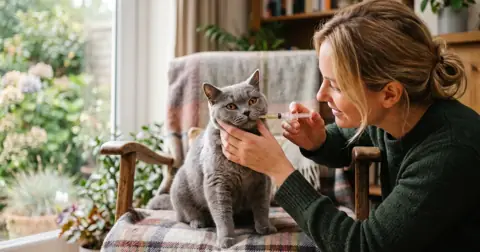
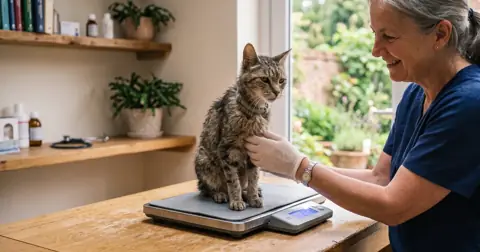
How to give a cat a pill: step-by-step methods
Knowing how to give a cat a pill makes treatment far less stressful for both of you. Many cats will take tablets hidden in food or a pill pocket, and almost any cat can be pilled with the right technique. This guide walks you through six methods, from easiest to hardest, plus tips for spitters, wrigglers and cats that drool after medicine.
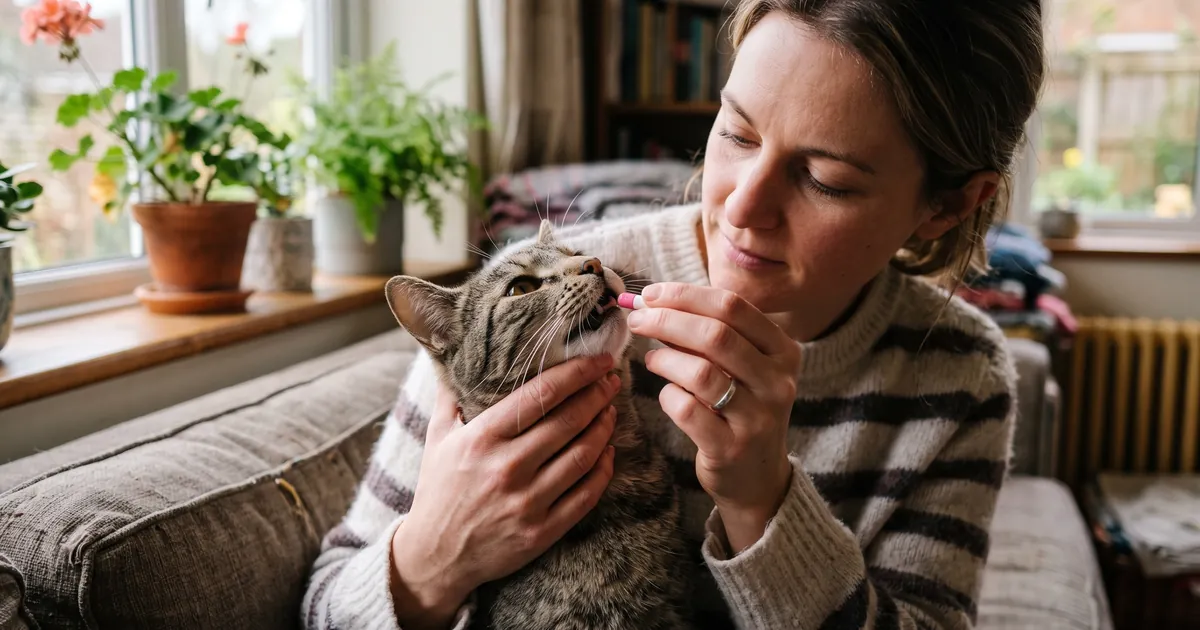
Quick answer
- Try food first: a tiny piece of pâté, a pill pocket or pill putty such as Easypill.
- For the direct method, tilt the head up, open the jaw and drop the pill at the back of the tongue.
- Always follow a pill with water or food so it doesn't stick in the food pipe.
- Ask your vet about liquids, chewable tablets or long-acting injections if pilling is impossible.
How to give a cat a pill: before you start
- Check the label: can the tablet be given with food, split or crushed?
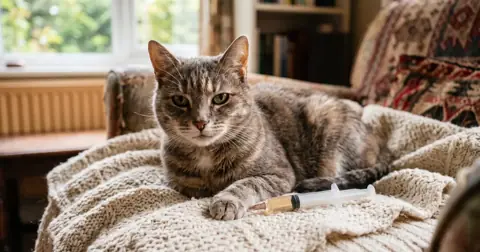
- Prepare everything first: the tablet, a treat, a syringe of water and a towel.
- Stay calm: cats pick up on tension. Choose a quiet time, not straight after a stressful event.
- Use the same place and routine each time, followed by something your cat enjoys.
Method 1: Hide the pill in food
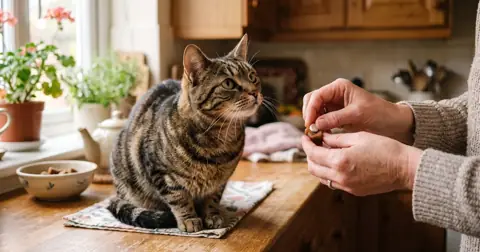
Many cats will take a pill hidden in a small amount of something delicious:
- A pea-sized piece of pâté-style wet food or a meaty treat paste.
- A small piece of cooked chicken or fish (no seasoning).
- A dab of cat treat paste in a squeezy tube.
The trick is the three-treat method: give one plain treat, then the treat with the pill, then another plain treat straight away. Your cat eats quickly in anticipation of the next one and doesn't inspect the middle one. Avoid mixing pills into a whole bowl of food, because your cat may leave some and miss part of the dose.
Method 2: Pill pockets and pill putty
Pill pockets are soft, hollow treats designed to wrap around a tablet. Pill putties such as Easypill cat putty come as a mouldable paste: you pinch off a small piece and squash it around the tablet. Products such as Pill Assist work in a similar way. They're strongly flavoured, which hides the smell and taste of medicine.
- Use the smallest amount that fully covers the tablet.
- Handle the treat with clean fingers, so it doesn't smell of medicine.
- Combine with the three-treat method for the best results.
- Count pill treats as part of your cat's daily food, especially if it's on a diet. Our cat food calculator helps you adjust.
Method 3: The direct method
If your cat won't take pills in food, giving a pill directly is quick once you've practised it.
- Position your cat on a table or your lap, or kneel on the floor with your cat between your knees, facing away from you.
- Hold the head from above with your non-dominant hand: thumb on one cheekbone and fingers on the other.
- Tilt the head back gently so the nose points upward. The lower jaw often drops open slightly.
- Open the mouth by pressing down on the small front teeth of the lower jaw with the middle finger of your other hand, holding the pill between your thumb and index finger.
- Drop the pill as far back on the tongue as possible, in the centre, past the hump of the tongue.
- Close the mouth, keep the head tilted up briefly and stroke the throat or blow lightly on the nose to encourage swallowing. Watch for a lick of the lips.
- Follow with water or food straight away (see below).
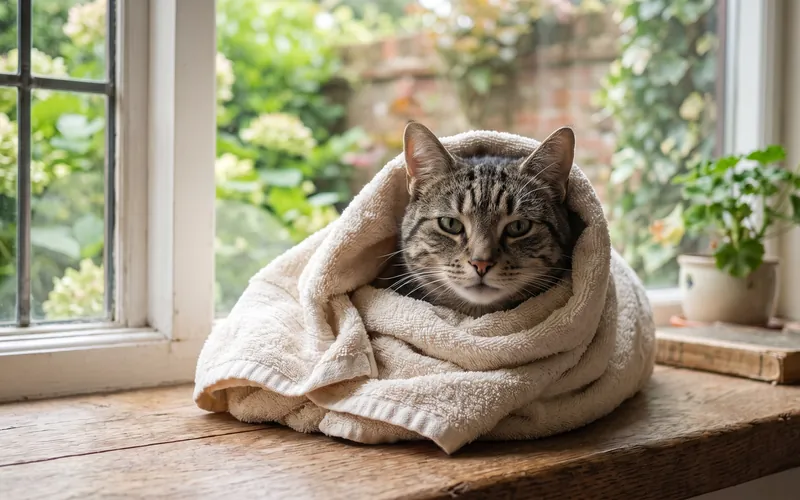
Method 4: The towel wrap (cat burrito)
For cats that scratch or wriggle, a towel keeps everyone safe:
- Lay a large towel on a table or the floor.
- Place your cat in the middle, facing forward.
- Wrap one side snugly over the body and tuck it under, then the other side, so all four paws are inside and only the head shows.
- Hold the wrapped cat against your body and use the direct method.
The towel should be snug but not tight. Many cats calm down once wrapped, because they feel secure.
Method 5: A pill popper (pill giver)
A pill popper is a plastic syringe-like tool with a soft tip that holds the pill. You place the tip at the back of the mouth and push the plunger, so your fingers never go inside. They're useful if you're worried about being bitten, or if your cat has a small mouth. Use the soft tip gently and don't push it into the throat.
Method 6: Ask about alternatives
If none of these work, talk to your vet. Options may include:
- Liquid versions of the same medicine, given by syringe.
- Chewable or palatable tablets that many cats eat as treats.
- Spot-on alternatives, for example for worming. See our guide to spot-on cat worming.
- Long-acting injections, such as a two-week antibiotic, for some conditions.
- Compounded medicines, made into a flavoured liquid or treat by a specialist pharmacy where appropriate.
Always follow a pill with water or food
Tablets given dry can stick in a cat's oesophagus (food pipe). Some, especially doxycycline and clindamycin, can cause painful inflammation and scarring that makes swallowing difficult. After every pill, give about 5 ml (one teaspoon) of water from a syringe into the side of the mouth, or offer a little wet food straight away. Read more in our guide to antibiotics for cats.
Splitting and crushing tablets
Some tablets are scored so they can be split for smaller cats. Use a pill splitter for an accurate dose. Don't split or crush tablets unless your vet or the leaflet says it's safe, because:
- Coated tablets may irritate the stomach or taste very bitter once broken.
- Prolonged-release tablets (such as some thyroid medicines) release the drug too fast if crushed.
- Crushed tablets mixed into a large meal may not be eaten completely.
Tips for difficult cats
- Practise without pills: gently open your cat's mouth and give a treat, so handling is associated with good things.
- Coat the pill in a tiny smear of butter or treat paste to help it slide down (only a little).
- Get help: one person holds, one person pills.
- Be quick and confident: hesitating gives your cat time to resist.
- Stop if your cat panics and try again later, rather than chasing it around the house.
- Reward afterwards with a favourite treat, play or a brush, so the next session is easier.
Giving liquid medicine
Liquid medicines are given with a syringe into the side of the mouth, in the gap behind the canine teeth. Tilt the head slightly upward, insert the syringe tip from the side and squeeze slowly, giving your cat time to swallow. Never squirt liquid quickly into the back of the throat, as your cat could inhale it. Medicines such as Thyronorm and Metacam are given this way.
Giving worming and flea tablets
The same techniques apply to worming and flea tablets, which are often small and flavoured. See our guides to cat worming tablets and flea tablets for cats for product-specific tips.
When to call your vet
- Your cat vomits within an hour of a tablet.
- You've missed several doses, or can't give the medicine at all.
- Your cat has difficulty swallowing, gags or drools after pills, or regurgitates food.
- You're worried you've given the wrong dose.
Your vet team can demonstrate pilling techniques in the consulting room: just ask.
FAQs
What is the easiest way to give a cat a pill?
The easiest way is to hide it in a small amount of tasty food, a pill pocket or pill putty. Offer a plain treat first, then the treat with the pill, then another plain one, so your cat eats quickly without examining it. If your cat finds the pill, try the direct method or a pill popper.
Do pill pockets work for cats?
Pill pockets and pill putty (such as Easypill) work well for many cats. They're soft, strongly flavoured treats that wrap around a tablet to hide its smell and taste. Use as little as possible so your cat eats it in one bite.
How do I give my cat a pill without getting scratched?
Wrap your cat snugly in a towel with only its head showing (a 'cat burrito'), or kneel on the floor with your cat between your knees, facing away from you. A pill popper also keeps your fingers out of the mouth.
Can I crush my cat's pill into food?
Only if your vet or the leaflet says it's safe. Some tablets are coated to protect the stomach or to control release, or taste very bitter when crushed. If crushed into food, use a small amount so your cat eats it all.
Why does my cat foam at the mouth after a pill?
Many tablets taste bitter. If a cat bites into one or it dissolves on the tongue, the cat may drool or foam. It's usually harmless and stops quickly. Offer a little food or water. Next time, try placing the pill further back or using a pill pocket.
What if my cat spits out the pill?
Pick it up and try again if it's still intact. If it has dissolved or broken, ask your vet whether to give another. Try placing it further back on the tongue, and close the mouth gently while stroking the throat.
Sources and further reading
This guide is for general information only and is not a substitute for advice from a vet. Medicines, doses and costs change: always follow your vet and the product leaflet. If your cat is unwell or you think it has eaten something toxic, contact your vet or an emergency vet straight away.