Lysine for cats: does it really help cat flu?
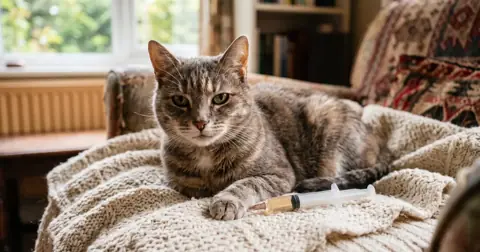
Lysine for cats is a popular supplement for cats with feline herpesvirus, a common cause of cat flu and eye problems. Products such as Enisyl-F paste and Kaminox are widely sold in the UK. But the scientific evidence has changed, and many vets now doubt that lysine works. Here's what lysine is, what the research shows and what else helps cats with herpesvirus.
Quick answer
- L-lysine is an amino acid once thought to slow feline herpesvirus (FHV-1).
- Recent research reviews have not found good evidence that lysine prevents or treats cat flu.
- It's generally safe, and some vets still suggest it for individual cats.
- Proven measures include vaccination, reducing stress and prescription antiviral medicines when needed.
What is lysine?
L-lysine is an essential amino acid: a building block of protein that cats get from meat in their diet. As a supplement, it's given in higher amounts than a cat would normally eat, in the hope of slowing the feline herpesvirus.
Why lysine was thought to help
Feline herpesvirus (FHV-1) needs another amino acid, arginine, to multiply. The theory was that extra lysine competes with arginine, making it harder for the virus to replicate. Laboratory studies in the late 1990s and early 2000s, and some small studies in cats, appeared to support this, and lysine became a very common recommendation for cats with herpesvirus.
Feline herpesvirus and cat flu
FHV-1 is one of the two main causes of cat flu. After the first infection, most cats carry the virus for life in a dormant (latent) state. Stress, illness, a house move, a new pet or a stay in a cattery can reactivate it, causing flare-ups of:
- Sneezing and nasal discharge.
- Watery or sticky eyes and conjunctivitis.
- Corneal ulcers and squinting.
- Reduced appetite.
See our guides to cat cold symptoms and cat eye problems for more on these signs.
What the evidence says about lysine for cats
Over time, larger and better-designed studies have questioned whether lysine works:
- Some studies in shelter cats found no reduction in cat flu, and at least one suggested cats given lysine may have had more signs of infection.
- Research showed that cats' bodies may not create the arginine shortage that the original theory relied on.
- A 2015 systematic review of the published research concluded that there was no scientific evidence that lysine supplements prevent or treat feline herpesvirus infection.
As a result, many vets in the UK no longer routinely recommend lysine, although some still suggest it for individual cats with recurring flare-ups, on the basis that it's safe and some owners feel it helps. It's a reasonable thing to discuss with your vet, but it shouldn't replace treatments with stronger evidence.
Lysine products for cats in the UK
| Product | Form | Notes |
|---|---|---|
| Enisyl-F | Paste (e.g. 100 ml) | L-lysine paste; can be licked off a paw or mixed with food |
| Kaminox | Liquid | L-lysine with vitamins and other nutrients |
| Various lysine powders and treats | Powder, chews | Check they're made for cats and follow the label |
These products are sold as nutritional supplements, not licensed medicines, so they don't have to prove effectiveness in the same way as veterinary medicines.
How to give lysine to a cat
- Choose a product made for cats and check the label for the dose by weight.
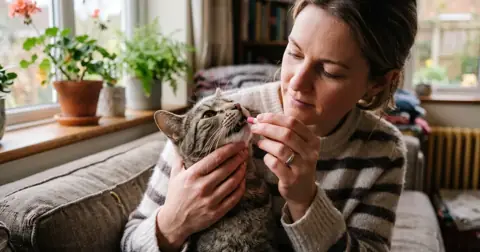
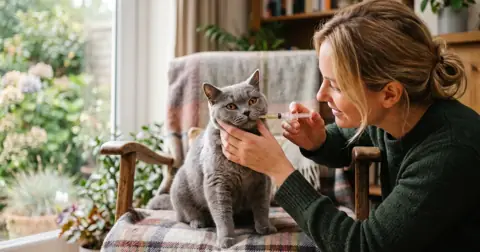
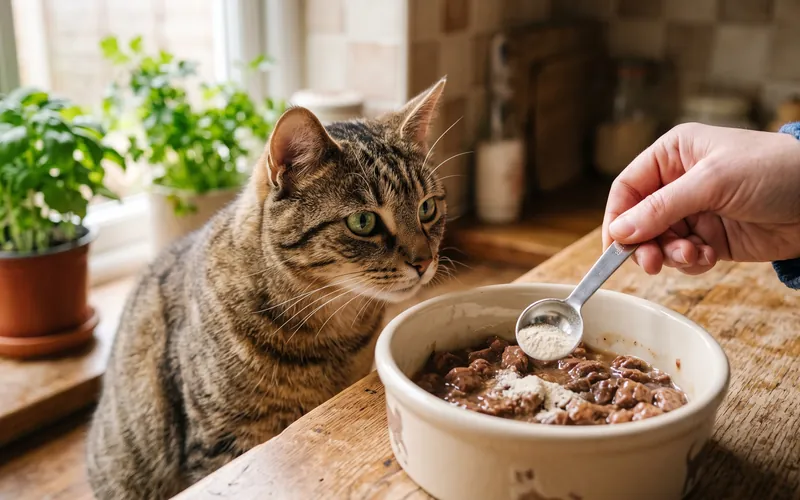
- Pastes: offer from your finger, dab a little on a front paw, or mix with a teaspoon of wet food.
- Liquids and powders: mix into a small portion of wet food your cat will finish.
- Be consistent: supplements are usually given daily, and some owners use them for a few weeks around stressful events.
Don't use human lysine tablets or capsules. They're dosed for people and may contain flavourings, sweeteners or other ingredients that aren't suitable for cats.
Is lysine safe for cats?
Cat-specific lysine supplements are generally considered safe at the recommended dose. Occasional mild side effects include soft stools or a slight stomach upset. Tell your vet if your cat has kidney disease or is on other medicines before starting any supplement. If your cat refuses food containing lysine, don't let the supplement stop it eating: a cat with cat flu needs every calorie.
What actually helps cats with herpesvirus
Vaccination
Vaccines don't always stop infection, but they greatly reduce how ill cats become. Keep your cat's boosters up to date; see our guide to cat vaccination costs.
Reducing stress
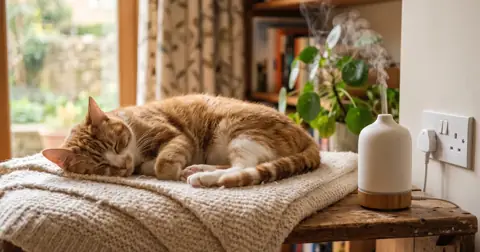
Stress is the main trigger for herpesvirus flare-ups. Keep routines predictable, provide hiding places and high perches, give each cat its own food, water and litter tray, and introduce changes gradually. Pheromone diffusers may help some cats. Read our guide to cat calming products.
Antiviral medicines
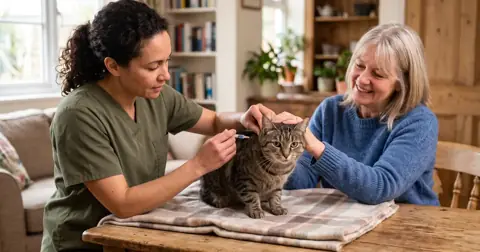
For severe flare-ups, especially with eye ulcers, vets can prescribe antiviral medicines such as famciclovir tablets or antiviral eye drops. These have much better evidence than lysine.
Supportive care at home
- Clean eyes and nose gently with cotton wool and cooled boiled water.
- Use steam from a hot shower to ease a blocked nose.
- Offer strong-smelling, warmed food to encourage eating.
- Keep your cat warm, indoors and well hydrated.
Prompt treatment of complications
Eye ulcers, secondary bacterial infections and dehydration need vet care. Contact your vet if your cat squints, stops eating, has thick discharge or seems unwell.
Lysine for kittens
Kittens are the cats most likely to become seriously ill with herpesvirus, because their immune systems are still developing and they may not have finished their vaccinations. Some lysine products are labelled as suitable for kittens, but kittens with cat flu need a vet check rather than supplements alone: they dehydrate quickly, can develop eye ulcers that threaten their sight, and may stop eating within a day. Keep kittens warm, clean their eyes and nose gently, and contact your vet early.
Lysine in multi-cat homes and rescues
Herpesvirus spreads easily where many cats live together, and stress from crowding triggers flare-ups. Lysine was once widely added to food in rescue shelters, but studies in shelters didn't show a benefit, and some suggested it might make things worse. In multi-cat homes, the measures that help most are vaccination, separate resources for each cat (food, water, litter trays, beds and hiding places), quarantining new arrivals, and isolating cats with active signs until they recover.
When a herpesvirus flare-up needs a vet
- Squinting, a closed eye or a cloudy eye.
- Not eating for more than 24 hours (12 hours for kittens).
- Thick yellow or green discharge from the eyes or nose.
- Breathing with the mouth open, or noisy, effortful breathing.
- Lethargy, hiding or fever.
- Mouth ulcers or drooling, which may mean calicivirus rather than herpesvirus.
Should I try lysine for my cat?
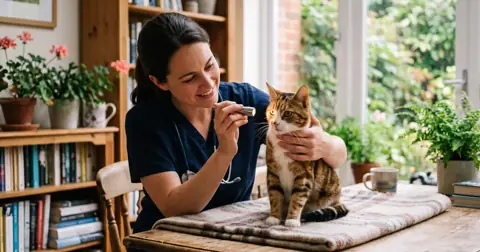
If your cat has recurring herpesvirus flare-ups and you'd like to try lysine, talk to your vet first. It's unlikely to do harm, but it's important not to rely on it in place of treatments that work, or to delay a vet visit for squinting, eye ulcers or a cat that won't eat. Focus first on reducing stress, keeping vaccinations up to date and having a plan with your vet for flare-ups.
Lysine and other supplements
Owners of cats with chronic cat flu sometimes try several supplements at once. Some, such as omega-3 fatty acids, have general health benefits; see our guide to salmon oil for cats. Probiotics may support gut health during antibiotic courses. Always tell your vet what supplements your cat is taking, so they can check for interactions and avoid wasted money on products without benefit.
How much does lysine for cats cost?
A tube of Enisyl-F paste or a bottle of Kaminox typically costs £10 to £25 and lasts several weeks to a couple of months depending on your cat's dose. Because lysine is a supplement rather than a medicine, it isn't usually covered by pet insurance.
FAQs
Does lysine work for cats?
The evidence is mixed. Early laboratory and small studies suggested lysine might reduce herpesvirus activity, but later studies and a systematic review found no clear benefit for preventing or treating feline herpesvirus, and one shelter study suggested it may not help at all. Some vets still recommend it for individual cats because it's safe.
What is Enisyl-F used for?
Enisyl-F is a lysine paste for cats, often sold in 100 ml tubes. It's used as a nutritional supplement for cats with feline herpesvirus, particularly those with recurring eye and nose flare-ups.
What is Kaminox for cats?
Kaminox is a liquid supplement for cats containing L-lysine along with vitamins and other nutrients. It's marketed to support cats with respiratory and eye problems linked to herpesvirus.
Is lysine safe for cats?
Lysine supplements made for cats are generally considered safe at the recommended doses. Occasionally cats have mild stomach upset. Avoid human lysine products, which may contain other ingredients or flavourings that aren't suitable for cats.
How much lysine should I give my cat?
Follow the dosing instructions on the cat product you're using, or your vet's advice. Doses differ between pastes, liquids and powders. Don't give large amounts in the hope of a stronger effect.
What else helps cats with herpesvirus?
Vaccination reduces how severe cat flu becomes. Reducing stress helps prevent flare-ups. During flare-ups, vets may prescribe antiviral medicines (such as famciclovir), eye drops, and supportive care such as steam, eye cleaning and tempting food.
Sources and further reading
This guide is for general information only and is not a substitute for advice from a vet. Medicines, doses and costs change: always follow your vet and the product leaflet. If your cat is unwell or you think it has eaten something toxic, contact your vet or an emergency vet straight away.