Flea treatment for cats: the complete UK guide
The best flea treatment for cats is one that kills fleas quickly, fits your cat's lifestyle and is used on time, every time, alongside treating your home. This guide compares every type of cat flea treatment sold in the UK, from shop-bought spot-ons to prescription products from your vet, and explains exactly how to get rid of an infestation for good.
Quick answer
- Treat every cat and dog in the home at the same time, and keep going monthly (or as the product says) for at least 3 months.
- Prescription treatments from your vet (e.g. isoxazoline spot-ons and tablets) are usually the fastest and most reliable; pet-shop products can still work well when used correctly.
- About 95% of a flea problem lives in your home as eggs, larvae and pupae, so vacuum daily and wash bedding at 60°C.
- Never use a dog flea treatment on a cat: products containing permethrin can kill cats.
How to tell if your cat needs flea treatment
Many cats with fleas show only mild signs, so it is worth checking regularly rather than waiting for scratching. The most common signs are:
- Scratching, over-grooming or nibbling at the base of the tail, the back of the neck or the belly.
- Small scabs along the back and neck (vets call this miliary dermatitis), often caused by flea allergy.
- Bald or thinning patches from over-grooming.
- Tiny black specks in the fur: this is flea dirt, which is digested blood.
- Itchy red bites on people in the home, often around the ankles.
To check, stand your cat on a white towel or sheet of kitchen paper and comb the fur along its back with a fine-toothed flea comb. Tip anything you collect onto damp white paper. If the black specks spread out into red-brown smudges, it is flea dirt and your cat has fleas. Our guide to combined flea and worm treatment for cats explains flea combing step by step.
Tapeworm warning: cats swallow fleas while grooming, and fleas carry the common flea tapeworm. If your cat has fleas, it is likely to need a tapeworm treatment too. See our cat worming guide.
Types of flea treatment for cats
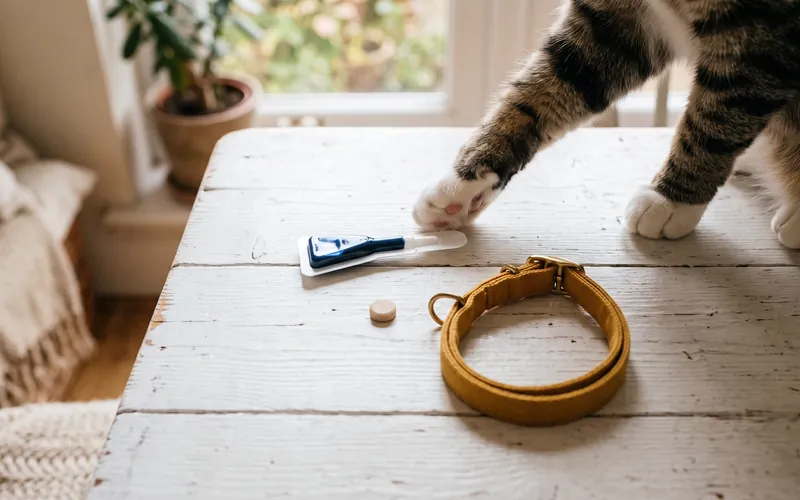
Flea treatments for cats come in four main forms. Each works in a slightly different way, and the best choice depends on how easy your cat is to handle and what else you need to protect against.
Spot-on flea treatment for cats
A spot-on is a small pipette of liquid that you squeeze onto the skin at the back of the neck, where your cat cannot lick it. The active ingredient spreads through the oils in the skin or is absorbed into the bloodstream. Spot-ons are the most popular cat flea medicine in the UK because they are quick to apply and most last a month. Popular spot-ons include Frontline, Advantage, Advocate, Stronghold and Bravecto.
Flea tablets for cats
Tablets and chewables are swallowed and work from inside the body: fleas die when they bite. They cannot be washed off, so they suit cats that swim, get bathed or share a home with young children who cuddle them. Some act within hours and last a month, while Capstar kills fleas within 30 minutes but only works for about a day. Read more in our guide to flea tablets for cats.
Flea collars
Modern veterinary-style collars release a low, steady dose of insecticide over several months. The Seresto collar, for example, protects against fleas and ticks for up to 8 months. Collars must have a safety release buckle and be fitted correctly. Our guide to flea collars for cats covers which collars work and which to avoid.
Flea injections
A six-monthly injection of lufenuron (sold as Program) is available from vets. It does not kill adult fleas: instead it stops eggs from hatching, so it is used for prevention alongside an adult flea killer.
Flea treatment for cats compared
The table below compares the main active ingredients you will find in UK cat flea treatments. Brand names change, so check the active ingredient on the box.
| Active ingredient (example brands) | Form | Kills fleas within | Lasts | Also covers | Prescription? |
|---|---|---|---|---|---|
| Fipronil (Frontline, Effipro, Fiprotec) | Spot-on, spray | 24–48 hours | Up to 5 weeks | Ticks, lice | No |
| Imidacloprid (Advantage) | Spot-on | 12–24 hours | 4 weeks | Lice | No |
| Imidacloprid + moxidectin (Advocate, Prinovox) | Spot-on | 12–24 hours | 4 weeks | Roundworm, ear mites, some lungworm | Yes |
| Selamectin (Stronghold) | Spot-on | About 24 hours | 4 weeks | Ear mites, roundworm, lice | Yes |
| Fluralaner (Bravecto) | Spot-on | Within 12 hours | 12 weeks | Ticks | Yes |
| Nitenpyram (Capstar) | Tablet | 30 minutes | About 24 hours | Nothing else | No |
| Imidacloprid + flumethrin (Seresto collar) | Collar | Within 24–48 hours | Up to 8 months | Ticks | No |
| Combination products (e.g. NexGard Combo, Felpreva, Broadline) | Spot-on | Within 24 hours | 1–3 months | Ticks and worms including tapeworm | Yes |
Speeds and durations are typical figures from product information. Always follow the leaflet in the pack for your product and your cat's weight.
Prescription vs shop-bought flea treatment
In the UK, flea treatments fall into different legal categories. Some can be sold anywhere, some must be sold by a pharmacist or a trained Suitably Qualified Person (SQP), and the strongest products are prescription-only (POM-V), which means a vet must have examined your cat recently.
Vet prescribed flea treatment for cats
Vets often prescribe newer drugs from the isoxazoline group (fluralaner, sarolaner, esafoxolaner and lotilaner). They kill fleas quickly, last up to 12 weeks in some cases, and are less likely to be affected by the reduced effectiveness that many UK vets have seen with older ingredients. Prescription combinations can also cover worms, ear mites and ticks in one dose, which reduces the number of products you need.
Many practices include flea treatment in a monthly health plan, which can work out cheaper than buying separately. If you would rather buy online, you can ask your vet for a written prescription, which usually carries a small fee.
Best UK flea treatment for cats you can buy without a prescription
Shop-bought spot-ons containing imidacloprid or fipronil can work well for prevention when they are applied correctly every month. Common reasons they appear to "fail" are:
- Applying the liquid onto the fur instead of the skin.
- Bathing the cat or letting it get soaked within 48 hours.
- Using a dose for the wrong weight band.
- Treating only one pet when there are several in the house.
- Not treating the home, so new fleas keep hatching for weeks.
How to apply spot-on flea treatment correctly
- Weigh your cat and choose the pack for that weight. Kitchen or bathroom scales work: weigh yourself holding your cat, then without.
- Part the fur at the back of the neck, at the base of the skull, until you can see skin.
- Squeeze the whole pipette onto the skin in one spot (or two spots close together for larger volumes).
- Stop your cat licking it, and keep other pets from grooming each other until it is dry.
- Do not bathe your cat for at least 48 hours, and write the date in your calendar for next time.
If your cat struggles, wrapping it gently in a towel can help. Our guide on how to give a cat a pill has handling tips that work for spot-ons too.
How long does flea treatment take to work on cats?
Most products start killing adult fleas within 8 to 48 hours, depending on the ingredient. But owners often think a treatment is not working because they still see fleas for several weeks. That is normal and is caused by the flea life cycle:
- Adult fleas on your cat make up only about 5% of the total population.
- The other 95% are eggs, larvae and pupae in carpets, sofas, bedding and floor cracks.
- Pupae can sit dormant for months and hatch when they sense warmth and vibration.
- Each new flea that jumps onto a treated cat is killed, usually before it can lay eggs.
Keep treating every pet on schedule for at least three months to break the life cycle completely.
How to get rid of fleas in your home
Treating your home is just as important as treating your cat. Without it, fleas will keep reappearing.
- Vacuum every day for two to three weeks, especially under furniture, along skirting boards and in the car. Empty the vacuum outside straight away.
- Wash bedding, throws and cushion covers at 60°C. Do the same for your own bedding if your cat sleeps on it.
- Use a household flea spray that contains an insect growth regulator (which stops eggs and larvae developing). Follow the label carefully and keep cats and fish out of the room until it is dry.
- Treat every pet, including dogs and rabbits, with a product licensed for that species. Our guide to whether dogs can get cat fleas explains why.
Flea bombs: foggers do not reach under furniture or into carpets very well, and some contain permethrin. If you use one, remove all pets, cover fish tanks and air the room thoroughly before letting your cat back in.
How often should cats have flea treatment?
In the UK, most vets recommend year-round flea prevention for every cat, because fleas breed indoors through the winter thanks to central heating. As a guide:
| Treatment type | How often |
|---|---|
| Most spot-ons and monthly tablets | Every 4 weeks |
| Fluralaner spot-on (Bravecto) | Every 12 weeks |
| Seresto collar | Replace every 7–8 months |
| Capstar tablet | Only when needed, to kill adult fleas fast |
If you also need to deworm, our guide to flea and wormer products for cats explains how to combine the two so you never miss a dose.
Flea treatment for cats and dogs in the same home
Cat fleas (Ctenocephalides felis) are by far the most common flea on UK dogs as well as cats, so every furry pet in the house needs treating at the same time. If you treat only the cat, the dog keeps fleas breeding and reinfests the cat within days.
The important rule is to use a product licensed for each species. Several brands sell both a cat and a dog version, but the doses and sometimes the ingredients differ. Dog products containing permethrin are especially dangerous: a cat can be poisoned simply by grooming or sleeping next to a dog treated in the last 72 hours. Keep pets apart until a dog's spot-on is completely dry, and store dog and cat products separately so they are not mixed up.
Rabbits, guinea pigs and ferrets can also carry cat fleas. Ask your vet for a product that is safe for them, because some cat treatments (such as fipronil) are dangerous to rabbits.
How much does flea treatment for cats cost in the UK?
Prices vary by brand, pack size and where you buy, but as a rough guide for one adult cat:
| Option | Typical cost |
|---|---|
| Shop-bought monthly spot-on (fipronil or imidacloprid) | £4–£8 per month |
| Prescription monthly spot-on or tablet | £8–£15 per month, plus a prescription fee if bought online |
| Prescription 12-week spot-on | £25–£40 per dose (£8–£13 a month) |
| Seresto collar | £25–£40 per collar (lasts up to 8 months) |
| Practice health plan including flea, worm and vaccine cover | £10–£20 per month |
Buying a larger multipack usually lowers the monthly price. If money is tight, charities such as the PDSA offer reduced-cost treatment to eligible owners, and our guide to cat vaccination costs explains how health plans can bundle routine care.
Flea treatment for kittens, pregnant and older cats
Kittens
Kittens are especially vulnerable because a heavy flea burden can cause anaemia. Many products are licensed only from 8 weeks of age or a minimum weight, while a few (such as some fipronil sprays) can be used earlier. For very young kittens, comb fleas off daily, treat the mother cat and the home, and ask your vet before using any product.
Pregnant and nursing cats
Only some products are licensed for pregnant or nursing cats. Check the leaflet and ask your vet, who can also advise on worming the queen and her kittens. Our cat pregnancy calculator and guide covers care through each stage.
Elderly or unwell cats
Cats with kidney disease, thyroid problems or a low body weight may need a gentler product or an adjusted schedule. Tell your vet about any medicines your cat takes before starting a new flea treatment.
Natural flea treatment for cats: what works and what is dangerous
Owners often look for a natural cat flea treatment to avoid chemicals. Unfortunately, most home remedies do not work, and some are harmful.
- Flea combing works for removing fleas and monitoring, and is safe for all ages. On its own it rarely clears an infestation.
- Garlic is toxic to cats and can cause anaemia, even in small amounts.
- Essential oils such as tea tree, eucalyptus, citrus and peppermint can poison cats, including through diffusers. Check any "natural" product against our toxic plant and food checker.
- Apple cider vinegar and diatomaceous earth have no good evidence and can irritate the skin and lungs.
If you want to minimise chemicals, ask your vet about longer-lasting products (fewer doses a year) and combine them with combing, vacuuming and washing.
Side effects of cat flea treatment and when to call a vet
Licensed flea treatments are safe for most cats when used correctly, but some cats react. Common, usually mild effects include:
- A greasy or damp patch, or temporary hair loss, where a spot-on was applied.
- Drooling or foaming if the cat licks the spot-on (it tastes bitter).
- Mild itching or redness at the application site.
Contact your vet immediately if your cat has twitching, tremors, wobbliness, seizures, vomiting or difficulty breathing after any flea product, and take the packet with you. These signs are most often caused by a dog product containing permethrin, but any medicine can cause a reaction.
Itchy cat after flea treatment?
Some cats keep scratching for a few weeks because of flea allergy dermatitis: an allergic reaction to flea saliva. Even one bite can trigger days of itching, so it is vital to keep these cats on uninterrupted prevention. If the itching continues after fleas are under control, your vet will look for other causes such as mites, food allergy or skin infection. Our guide to hairball remedies is also worth reading if over-grooming is causing furballs.
FAQs
What is the best flea treatment for cats in the UK?
There is no single best product for every cat. Prescription spot-ons and tablets from your vet (such as fluralaner, sarolaner or esafoxolaner-based products) kill fleas fastest and last longest, which makes them the most reliable choice for an infestation. For ongoing prevention, a shop-bought product such as an imidacloprid spot-on can work well if it is applied correctly every month. Your vet can recommend the best option for your cat's age, weight and lifestyle.
How long does flea treatment take to work on cats?
Most modern treatments start killing adult fleas within 8 to 24 hours (Capstar tablets work within 30 minutes). However, you will usually keep seeing some fleas for 4 to 8 weeks, because new fleas keep hatching from pupae in your home and jump onto your cat, where they are then killed.
How often should I give my cat flea treatment?
Most spot-ons and tablets are given every 4 weeks (monthly). Some prescription products last 12 weeks, and a Seresto collar lasts up to 8 months. Cats need flea treatment all year round in the UK because central heating lets fleas breed through the winter.
Can I use dog flea treatment on my cat?
No. Many dog spot-ons contain permethrin, which is extremely toxic to cats and can cause tremors, seizures and death. Even contact with a recently treated dog can harm a cat. If this happens, wash the product off with washing-up liquid and warm water and contact a vet straight away.
Do indoor cats need flea treatment?
Yes, usually. Fleas and eggs come into the home on clothes, shoes, other pets and visitors' pets. Indoor cats are at lower risk, so some owners treat less often, but a single infestation can take months to clear, so most vets recommend regular prevention.
Is there a natural flea treatment for cats that works?
Daily combing with a fine-toothed flea comb is the only natural method with good evidence, and it is best used alongside a licensed treatment. Garlic is toxic to cats, and many essential oils (including tea tree, eucalyptus and citrus oils) can poison them, so avoid natural flea remedies based on these.
Sources and further reading
This guide is for general information only and is not a substitute for advice from a vet. Medicines, doses and costs change: always follow your vet and the product leaflet. If your cat is unwell or you think it has eaten something toxic, contact your vet or an emergency vet straight away.