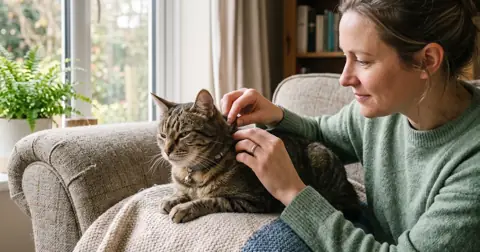
Flea collars for cats: do they work and are they safe?
Flea collars for cats range from cheap supermarket collars that do very little to veterinary-grade collars such as Seresto that protect against fleas and ticks for up to eight months. This guide explains which flea collars work, how to fit one safely, and when a spot-on or tablet is the better choice.
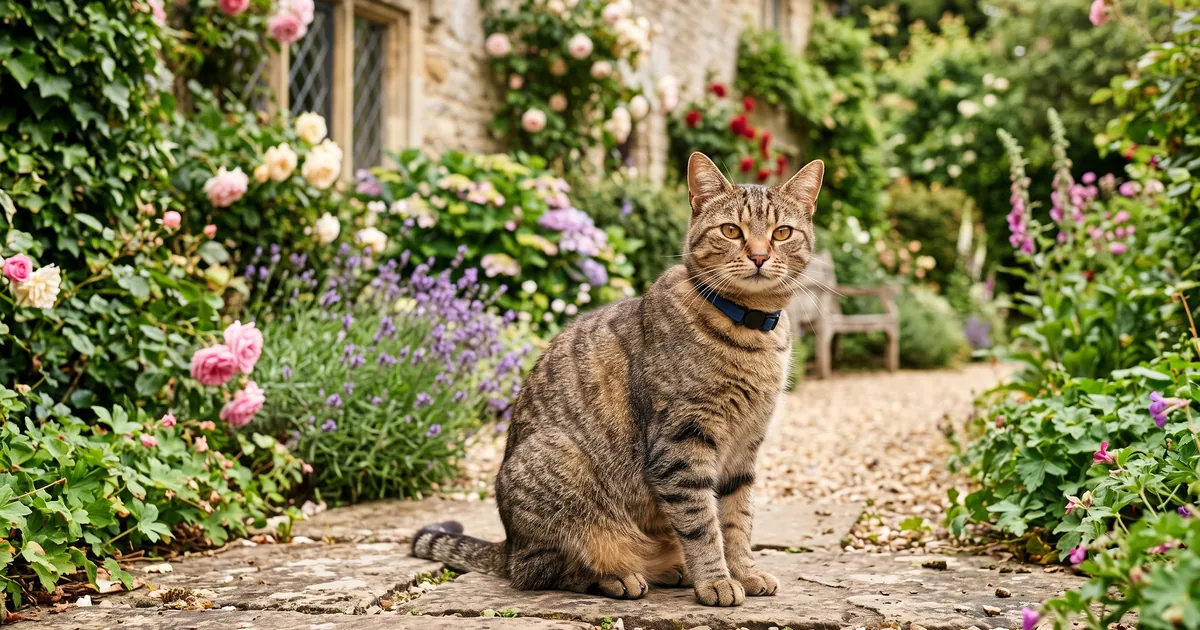
Quick answer
- Seresto (imidacloprid + flumethrin) is the most effective flea collar for cats in the UK, lasting up to 8 months for fleas and ticks.
- Many cheap flea collars release too little insecticide to clear an infestation.
- Always choose a collar with a safety (breakaway) release and use the two-finger fit rule.
- Never put a dog flea collar on a cat.
How flea collars for cats work
A flea collar is impregnated with an insecticide that is released slowly and spreads across the skin and coat. There are two main types:
- Slow-release veterinary collars such as Seresto release a low, steady dose of active ingredient into the skin's oil layer, protecting the whole body for months.
- Basic or "natural" collars rely on a weaker insecticide or on plant oils that mostly act around the head and neck. They rarely protect the rear end of the cat, where fleas tend to gather.
For comparison with spot-ons and tablets, see our guide to flea treatment for cats.
Seresto flea collar for cats
The Seresto collar contains imidacloprid (the flea-killing ingredient in Advantage) and flumethrin, a pyrethroid that kills and repels ticks. Flumethrin is a different chemical from permethrin and, at the low dose in the collar, is considered safe for cats.
| Seresto cat collar | Details |
|---|---|
| Kills fleas | Yes, within about 24 hours of fitting; new fleas killed for up to 8 months |
| Ticks | Kills and repels for up to 8 months |
| Flea larvae in the home | Helps reduce them |
| Worms | No |
| Minimum age | 10 weeks |
| Water | Water resistant, but frequent soaking may shorten protection |
| Safety | Built-in release mechanism |
| Prescription | No |
Seresto usually costs £25 to £40, which works out at around £4 to £5 a month over 8 months: similar to a monthly spot-on.
Are Seresto collars safe?
Seresto is licensed by the UK Veterinary Medicines Directorate. In 2021, US media reported large numbers of incident reports linked to the collar. Regulators reviewed the data and the collar remains licensed in the UK and Europe. As with any medicine, a small number of cats react. Watch for redness, hair loss or scabs under the collar, drooling, vomiting or lethargy, and remove the collar and call your vet if they appear.
Do cheap flea collars for cats work?
Supermarket and budget collars typically cost £3 to £10. Many release only small amounts of insecticide, and some "natural" collars rely on essential oils, which can be harmful to cats. In practice:
- They may reduce the number of fleas around the neck but rarely clear an infestation.
- Protection often fades well before the date on the packet.
- Essential-oil collars (such as tea tree, eucalyptus or citrus) can irritate the skin or poison cats. Check any ingredient in our toxic plant and food checker.
If you already have fleas in the home, a cheap collar is not enough. Use an effective spot-on, tablet or veterinary collar on every pet, and treat the home.
How to fit a flea collar on a cat safely
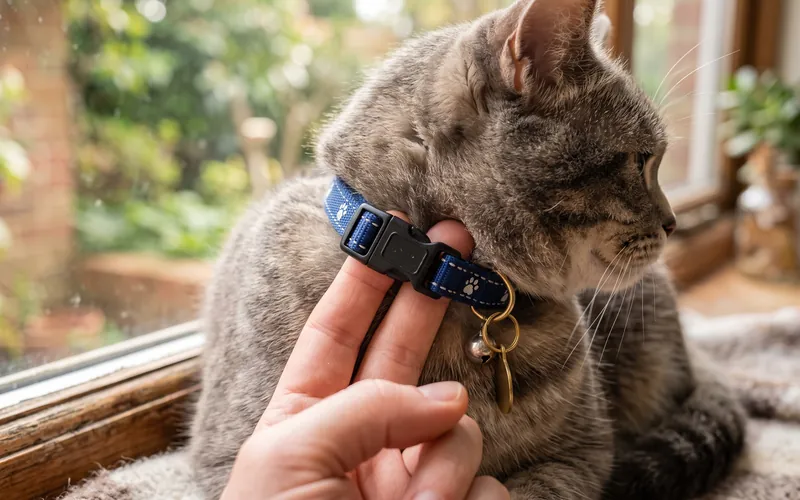
- Check the safety buckle. The collar must open if pulled hard, so your cat can escape if it catches on a branch.
- Remove the collar from its packaging and pull out any plastic connectors or strips inside the pack.
- Place it around the neck and thread the end through the buckle.
- Use the two-finger rule: you should be able to slide two fingers flat between the collar and the neck. Too loose and your cat can get a paw or jaw caught; too tight and it rubs.
- Trim the excess, leaving about 2 cm beyond the buckle in case your cat grows.
- Check weekly for rubbing, redness or a change in fit, especially for growing kittens.
Never use a dog flea collar on a cat. Many dog collars contain ingredients that are toxic to cats, and the dose is much higher. Cats sharing a home with dogs should not sleep pressed against a dog's treated collar.
Flea collars vs spot-ons vs tablets
| Seresto collar | Monthly spot-on | Flea tablet | |
|---|---|---|---|
| How long it lasts | Up to 8 months | 4 weeks (some 12 weeks) | 24 hours to 1 month |
| Ticks | Yes | Some | Some prescription tablets |
| Worms | No | Some prescription spot-ons | Rarely |
| Affected by water | Somewhat | In the first 48 hours | No |
| Risk of catching on objects | Yes, reduced by safety buckle | No | No |
| Prescription needed | No | Depends on product | Depends on product |
A collar suits cats that hate spot-ons and won't take tablets, and owners who struggle to remember monthly doses. A spot-on or flea tablet may suit cats that lose collars, cats with sensitive neck skin, or homes where a collar isn't practical.
Flea collars and outdoor cats
Outdoor cats are more likely to lose collars or snag them, so a safety release is essential. Some owners report their cat coming home without its collar every few weeks, which gets expensive with an £30 collar. If that happens, switch to a spot-on.
A brightly coloured collar can also help reduce hunting by making a cat more visible to birds. Our guide to whether cats kill rabbits and birds explains other ways to protect wildlife. Remember that hunting cats need more frequent tapeworm treatment: see our cat worming guide.
Flea collars for kittens
Seresto is licensed from 10 weeks old. Kittens grow quickly, so check the fit every few days and loosen the collar as needed, trimming only a little excess at a time. For kittens younger than 10 weeks, use a product licensed for their age, such as certain fipronil sprays, and comb daily with a flea comb. Your vet can recommend the safest choice at the first vaccination appointment.
Flea collar side effects in cats
Most cats wear flea collars without problems. Possible side effects include:
- Redness, scabs, itching or hair loss under the collar.
- Drooling or vomiting if the cat chews the collar or a companion cat chews it.
- Rarely, lethargy, wobbliness or behaviour changes.
Remove the collar, wash the neck area with mild soap and water, and contact your vet if you notice any of these. Keep spare collars sealed in their packaging and away from children.
Can I use a flea collar with other flea treatments?
Using two flea products at once is not usually necessary and can increase the risk of side effects. If fleas persist while your cat wears a collar, ask your vet before adding another product. In the first weeks of an infestation, your vet may suggest a fast-acting tablet such as Capstar alongside the collar, which kills adult fleas quickly but doesn't stay in the body.
Remember that a collar doesn't treat worms. Cats with fleas usually need a tapeworm treatment, and our guide to flea and wormer products for cats shows how to combine the two.
How to tell if a flea collar is working
Comb your cat weekly with a fine flea comb and look for live fleas and flea dirt. In a home that had an infestation, expect to keep seeing occasional fleas for 4 to 8 weeks while pupae hatch, even with an effective collar. If you are still finding live fleas after two months, despite treating the home and every pet, the collar may not be working well for your cat: switch to a different product and speak to your vet.
FAQs
Do flea collars for cats work?
Some do. Veterinary-grade collars such as Seresto have good evidence and protect against fleas and ticks for months. Many cheap or 'natural' flea collars release too little active ingredient to stop an infestation, and some only repel fleas around the neck.
What is the best flea collar for cats in the UK?
The Seresto collar is the best-studied flea collar for cats in the UK. It contains imidacloprid and flumethrin, kills fleas and ticks, and lasts up to 8 months. It is sold without a prescription but costs more than basic collars.
Is the Seresto collar safe for cats?
Seresto is licensed by the UK Veterinary Medicines Directorate and is considered safe when used as directed. Side effects such as skin irritation or hair loss under the collar can happen. Concerns raised in the US about incident reports were reviewed, and the collar remains licensed in the UK. Remove it and contact your vet if your cat seems unwell.
How long do flea collars last on cats?
A Seresto collar lasts up to 8 months for fleas and ticks. Basic collars usually claim 3 to 5 months, but protection often fades sooner. Collars may work less well if your cat often gets soaked.
Can kittens wear flea collars?
Seresto is licensed for kittens from 10 weeks of age. Many other collars have a minimum age of 12 weeks. Check the packaging, and never cut down an adult or dog collar for a kitten.
Are flea collars safe for cats that go outside?
Any collar carries a small risk of catching on branches or fences. A safety release buckle that opens under pressure greatly reduces the risk of strangulation or a trapped leg. Check the fit weekly.
Sources and further reading
This guide is for general information only and is not a substitute for advice from a vet. Medicines, doses and costs change: always follow your vet and the product leaflet. If your cat is unwell or you think it has eaten something toxic, contact your vet or an emergency vet straight away.