Flea and wormer for cats: combined treatment made simple
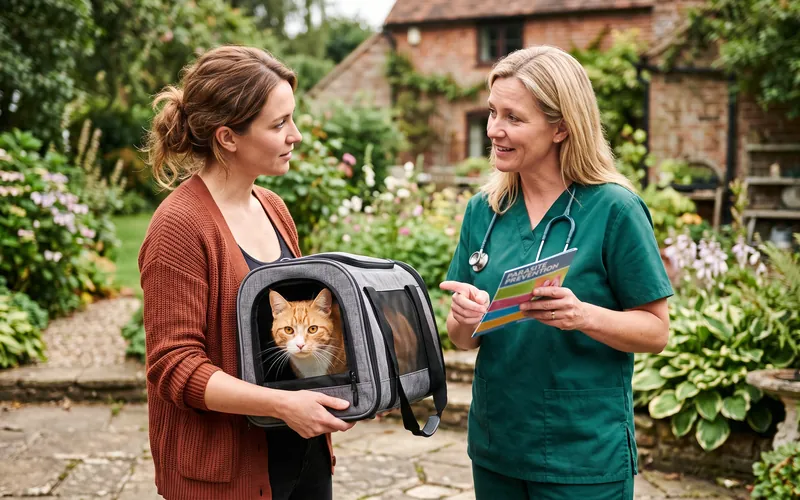
Using a flea and wormer for cats on the same schedule is the easiest way to keep your cat protected all year. Fleas spread tapeworm, so the two go hand in hand. This guide compares combined flea and worm treatments, shows you how to check for fleas with a flea comb, and gives you a simple plan to follow.
Quick answer
- Fleas carry the flea tapeworm, so a cat with fleas usually needs a tapeworm treatment too.
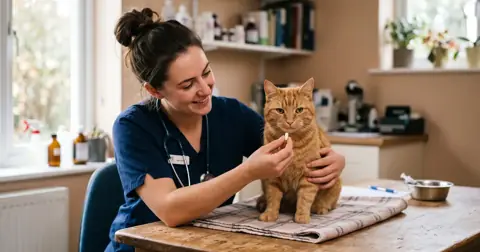
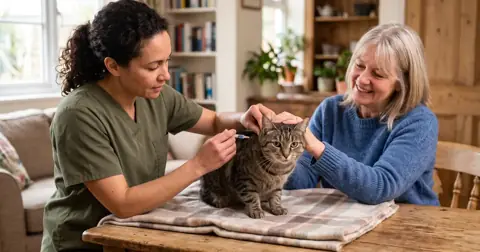
- Some prescription spot-ons treat fleas and worms in one dose (e.g. Broadline, NexGard Combo, Felpreva, Advocate).
- Non-prescription option: a flea spot-on plus a separate wormer, given on the same day.
- Use a flea comb weekly to catch problems early.
Why fleas and worms should be treated together
Fleas and worms are separate parasites, but they are closely linked. The common flea tapeworm (Dipylidium caninum) spends part of its life inside fleas. When your cat grooms and swallows an infected flea, the tapeworm hatches in its gut. That means a cat with fleas often has tapeworm too, and the tapeworm keeps coming back until the fleas are gone.
Treating fleas and worms on the same day each month or quarter also makes life simpler. One reminder covers both, so you're less likely to miss a dose. For a full overview, see our hub guides to flea treatment for cats and cat worming.
Best combined flea and worm treatment for cats
Combination products save time, but no single product covers every parasite. Here is what the main options in the UK protect against:
| Product (active ingredients) | Fleas | Ticks | Roundworm | Tapeworm | Lungworm | How often |
|---|---|---|---|---|---|---|
| Broadline (fipronil, (S)-methoprene, eprinomectin, praziquantel) | Yes | Yes | Yes | Yes | Yes | Monthly |
| NexGard Combo (esafoxolaner, eprinomectin, praziquantel) | Yes | Yes | Yes | Yes | Yes | Monthly |
| Felpreva (tigolaner, emodepside, praziquantel) | Yes | Yes | Yes | Yes | Yes | Up to 13 weeks for fleas |
| Advocate (imidacloprid, moxidectin) | Yes | No | Yes | No | Yes | Monthly |
| Stronghold / Stronghold Plus (selamectin ± sarolaner) | Yes | Plus only | Yes | No | Plus: some | Monthly |
| Bravecto Plus (fluralaner, moxidectin) | Yes | Yes | Yes | No | Yes | Every 12 weeks |
All of these are prescription-only (POM-V), so your vet must examine your cat before supplying them. Licensed claims vary between products and are updated over time, so check the current leaflet. Read more in our guides to Advocate, Stronghold and Bravecto.
Non-prescription flea and worm treatment for cats
If you'd rather buy from a pet shop or online without a prescription, combine:
- A flea spot-on such as Frontline or Advantage, every 4 weeks, plus
- A broad-spectrum wormer covering roundworm and tapeworm, such as Drontal tablets or the Dronspot spot-on, at least every 3 months (monthly for hunters).
How to use a flea comb on your cat
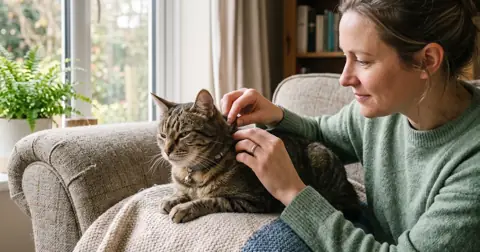
A fine-toothed metal flea comb is the cheapest, safest tool for checking your cat for fleas, and regular combing helps remove fleas between treatments.
- Choose a calm moment and stand your cat on a white towel or sheet.
- Comb from head to tail along the back, then around the neck, base of the tail and belly, where fleas like to hide.
- Check the comb after every stroke for fleas (small, brown, fast-moving insects) or black specks.
- Dip the comb into a bowl of hot soapy water to drown any fleas you catch.
- Test the specks on damp white kitchen paper (see below).
Combing cats for fleas is especially useful for kittens too young for most treatments, and for cats with flea allergy, where catching fleas early prevents days of itching.
Flea dirt on your cat: how to tell
Flea dirt is flea droppings: digested blood that looks like tiny black grains of pepper in the fur, often near the base of the tail. To tell flea dirt from ordinary dirt:
- Comb or rub some of the specks onto damp white kitchen paper.
- Wait a few seconds.
- If the specks spread into reddish-brown smears, it's flea dirt. Your cat has fleas, even if you can't see any.
Finding flea dirt means it is time to treat your cat, every other pet and your home, and to give a tapeworm treatment.
Flea spray, flea bombs and flea injections
Flea spray for cats
There are two very different types of flea spray. On-animal sprays, such as fipronil sprays licensed for cats, are applied to your cat's coat and can be used on kittens from a few days old. Household sprays are for carpets, furniture and bedding, never for your cat. Good household sprays contain an insect growth regulator that stops eggs and larvae developing for up to a year.
Flea bombs and your cat
Flea bombs release insecticide into a room. They are not usually needed if you vacuum thoroughly and use a household spray, because foggers don't reach under furniture or deep into carpets. If you do use one, remove all pets, cover fish tanks, follow the label exactly and air the room well. Many contain permethrin, which is dangerous to cats until completely dry.
Flea injection for cats
A six-monthly lufenuron injection from your vet prevents flea eggs hatching. It doesn't kill adult fleas or treat worms, so it is used alongside other products, mainly for cats that are very hard to treat at home.
A simple flea and worm schedule for your cat
| Cat | Fleas | Worms |
|---|---|---|
| Kitten (8 weeks–6 months) | Monthly, with a product licensed for its age and weight | Monthly |
| Adult outdoor cat | Monthly (or every 12 weeks with a long-acting product) | At least every 3 months |
| Adult cat that hunts often | Monthly | Monthly, including tapeworm |
| Indoor-only cat | Monthly or as advised by your vet | 1–4 times a year |
Pick a memorable date, such as the first of the month, and give both treatments together. Many practices offer health plans that include flea and worm treatment, vaccinations and check-ups for a monthly fee: see our guide to cat vaccination costs.
Treating your home at the same time
Treating your cat is only half the job. Flea eggs drop off into carpets, beds and sofas, where they hatch into larvae and then pupae. To clear them:
- Vacuum every day for two to three weeks, including under furniture, cushions and the car seats. Empty the vacuum outside.
- Wash all pet bedding and throws at 60°C, or replace very old bedding.
- Use a household flea spray with an insect growth regulator in every room your cat uses.
- Treat every cat and dog with a product suitable for its species. Our guide to whether dogs can get cat fleas explains why the dog matters.
Strong household smells can linger after a flea problem if a stressed cat has started spraying. Our guide to removing cat urine smell can help with that.
Signs your cat needs a flea and worm treatment now
- Scratching, over-grooming or scabs along the back and neck.
- Flea dirt in the fur or on bedding.
- Rice-like tapeworm segments around the bottom or in bedding.
- Worms in vomit or poo.
- Weight loss, a pot belly in kittens, or a dull coat.
- Bites on people in the home.
Kittens, elderly cats and cats with a heavy flea burden can become anaemic. Pale gums, weakness or lethargy need a vet check straight away.
Mistakes to avoid
- Using dog products on cats. Dog flea treatments containing permethrin can be fatal to cats.
- Treating only the cat that scratches. All pets carry and spread fleas.
- Stopping too soon. Keep treating for at least three months to break the flea life cycle.
- Forgetting tapeworm. Many flea treatments and some wormers don't cover tapeworm.
- Guessing the weight. Weigh your cat so the dose is right. Our cat weight checker helps.
FAQs
What is the best combined flea and worm treatment for cats?
The best combined flea and worm treatments for cats are prescription spot-ons that cover fleas, roundworms and tapeworms in one product, such as Broadline, NexGard Combo or Felpreva. Advocate covers fleas and roundworms but not tapeworm. Your vet will choose based on your cat's age, weight, lifestyle and whether ticks are a concern.
Can I give flea treatment and wormer at the same time?
Yes, in most cases you can give a flea treatment and a wormer on the same day. Check both leaflets for any warnings and ask your vet or pharmacist if your cat takes other medicines.
How do I know if my cat has flea dirt?
Comb your cat over damp white kitchen paper. Flea dirt looks like tiny black specks or commas. When it lands on wet paper it dissolves into red-brown smudges, because it is digested blood. Ordinary dirt stays black.
Is there a flea injection for cats?
Vets can give a lufenuron injection every six months. It stops flea eggs hatching but does not kill adult fleas, so it is usually combined with another treatment. There is no injection that covers worms as well.
Do flea sprays work on cats?
Fipronil sprays licensed for cats work and can be used on young kittens. Household flea sprays are for carpets and furniture, not for spraying on your cat. Never use a household or dog spray directly on a cat.
Are flea bombs safe if I have cats?
Flea bombs (foggers) can be used if all pets are removed, fish tanks covered and the room aired thoroughly before pets return. Many contain permethrin, which is toxic to cats while wet. Targeted household sprays are often more effective because they reach under furniture.
Sources and further reading
This guide is for general information only and is not a substitute for advice from a vet. Medicines, doses and costs change: always follow your vet and the product leaflet. If your cat is unwell or you think it has eaten something toxic, contact your vet or an emergency vet straight away.