Maine Coon cat: the complete UK guide
The Maine Coon cat is the UK's favourite gentle giant: a big, shaggy, sociable breed known for its tufted ears, bushy tail and dog-like devotion. In the UK, a registered Maine Coon kitten typically costs £800 to £1,500. This guide covers size, personality, care, the health tests responsible breeders use, and how to find a Maine Coon for sale or for rescue.
Quick answer
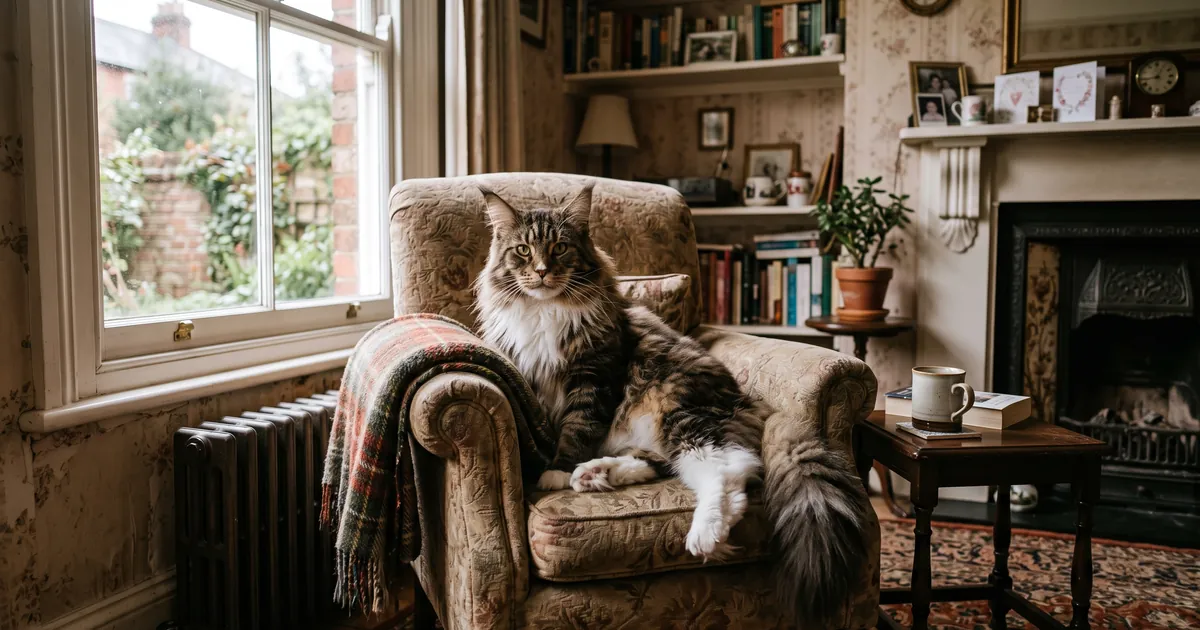
- One of the largest domestic cat breeds: males often 6.5–9 kg, females 5.5–7 kg.
- Friendly, sociable and playful; good with families and other pets.
- UK kittens typically cost £800–£1,500 from a registered breeder.
- Ask breeders for HCM, SMA and PK deficiency DNA tests, heart scans and hip scores.
Maine Coon cat at a glance
| Trait | Maine Coon |
|---|---|
| Size | Very large |
| Weight | Males 6.5–9 kg+, females 5.5–7 kg |
| Coat | Semi-long, shaggy, water-resistant, with a ruff |
| Grooming | 2–3 times a week |
| Energy | Medium; playful well into adulthood |
| Temperament | Friendly, sociable, gentle, often chatty with chirps and trills |
| Lifespan | Around 12–15 years |
| UK kitten price | £800–£1,500 |
Where does the Maine Coon come from?
The Maine Coon is one of the oldest natural breeds in North America, developed in the harsh climate of the US state of Maine. Its thick coat, tufted ears, large snowshoe-like paws and long, bushy tail are adaptations to cold winters. Legends link it to Viking ship cats or to Marie Antoinette's pets, but it most likely descends from long-haired cats brought by settlers and sailors. Maine Coons were popular show cats in the 1800s and are now among the most popular pedigree breeds in the UK.
Size and appearance
Maine Coons are big, muscular cats with a rectangular body, large paws, tufted ears and a long, plumed tail. They mature slowly, often taking three to five years to reach their full size and coat. A male Maine Coon can easily weigh twice as much as an average domestic cat. Check your cat's weight against breed ranges with our cat weight checker.
Maine Coon colours and patterns
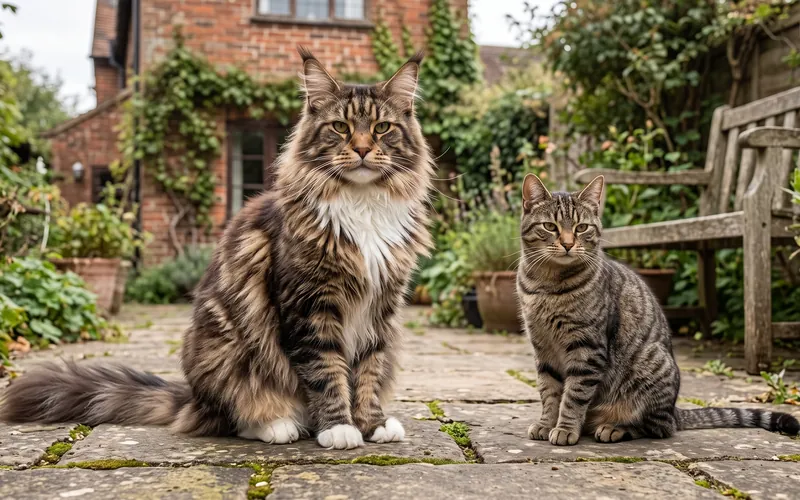
Maine Coons come in many colours. The classic look is the brown tabby, but you'll also see:
- Tabby patterns: classic (blotched), mackerel and ticked, in brown, red, blue, silver and cream.
- Tortoiseshell (tortie) Maine Coons: mixed black and red/orange, almost always female.
- White Maine Coons: striking, but white cats with blue eyes may be deaf, so ask about hearing tests.
- Solid colours: black, blue, red and cream.
- Silver and smoke varieties, and patterns with white.
Maine Coon personality
Maine Coons are often described as dog-like. They tend to:
- Follow their people from room to room.
- Enjoy company without being overly demanding.
- Get on well with children, other cats and cat-friendly dogs.
- Chirp and trill rather than meow loudly.
- Stay playful into adulthood, sometimes fetching toys.
- Show interest in water, patting at taps and bowls.
They're gentle giants, but every cat is an individual. Meeting the kitten's parents is the best guide to temperament.
Caring for a Maine Coon
Grooming
The coat is surprisingly easy to manage for a long-haired breed, but needs combing two or three times a week to prevent tangles, especially behind the ears, under the legs and on the belly and "britches". Extra grooming during spring and autumn moults helps prevent hairballs. Our guide to cat hairball remedies explains more.
Space and exercise
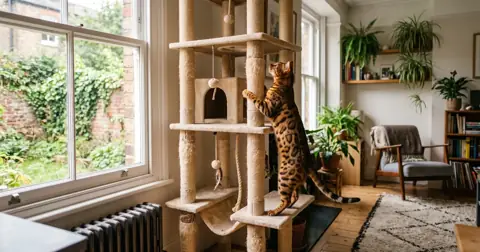
Choose extra-large, very sturdy cat trees, large litter trays and big carriers. Maine Coons enjoy climbing and play, and many enjoy a secure garden or catio. If you're fitting a cat flap, you'll need a large one. See our guide to cat flap installation.
Diet
Maine Coons need a complete, high-quality diet suited to their life stage. Because they grow slowly, many breeders keep them on kitten food for longer. Use our cat food calculator and adjust as your cat grows.
Parasite treatment
Large cats need the right weight band for flea and worm products. Many Maine Coons need "large cat" sizes, such as Dronspot large cat.
Maine Coon kittens: growth and what to expect
Maine Coon kittens grow steadily for years rather than months. A typical kitten might weigh around 1.5 to 2 kg when it goes home at 13 weeks, 4 to 5 kg by its first birthday, and continue filling out until 3 to 5 years old. During this time they need a complete, high-quality diet, lots of play and plenty of rest. Avoid encouraging very young kittens to jump down from great heights, as their joints are still developing.
Maine Coon kittens are curious and confident, so kitten-proof your home: secure windows and balconies, tidy away cables and string, and check houseplants with our toxic plant checker. Neutering is usually done at around 4 months, as for other cats, although some breeders include specific advice in their contracts.
Maine Coon crosses
Many cats in UK rescues are described as Maine Coon crosses because of a long coat, large size or tufted ears. These cats can share some Maine Coon traits, such as a friendly personality and a bushy tail, but size and temperament are less predictable. They can make wonderful pets and usually cost much less to adopt.
Maine Coon health problems
| Condition | What it is | How breeders screen |
|---|---|---|
| Hypertrophic cardiomyopathy (HCM) | Thickening of the heart muscle, which can lead to heart failure | DNA test for the MyBPC3 A31P mutation and regular heart scans (echocardiograms) |
| Spinal muscular atrophy (SMA) | Loss of nerve cells controlling muscles, causing weakness | DNA test |
| Hip dysplasia | Abnormal hip joints leading to arthritis | Hip X-ray scoring |
| Pyruvate kinase (PK) deficiency | A type of anaemia | DNA test |
| Dental and gum disease | Common in many cats | Regular dental checks |
A DNA test only detects one known HCM mutation, so regular heart scans of breeding cats remain important. Learn about heart rates and warning signs in our guide to normal cat heart rate and blood pressure. Maine Coons can cost more to insure because of these conditions; see our guide to cat insurance.
Maine Coon cat price in the UK
| Option | Typical cost |
|---|---|
| Registered pet kitten from a health-testing breeder | £800–£1,500 |
| Show or breeding quality | £1,500+ |
| Rehomed adult Maine Coon | £100–£250 adoption fee |
| Maine Coon cross from a rescue | £50–£150 adoption fee |
Ongoing costs are higher than for a smaller cat: more food, larger litter trays, bigger equipment and higher insurance premiums. Budget for vaccinations and neutering too; see cat vaccination costs.
Finding Maine Coon cats for sale in the UK
- Contact breed clubs listed by the GCCF for breeder lists, including in Scotland, Wales and Northern Ireland.
- Ask for health test certificates for both parents (HCM DNA and heart scans, SMA, PK deficiency, hip scores).
- Visit and see the kittens with their mother in a clean home environment.
- Check paperwork: registration, vaccination card, microchip details, worming and flea history, and a contract.
- Expect to collect at around 13 weeks old, with insurance cover arranged.
Avoid scams and kitten farms. Be wary of very cheap "Maine Coon" kittens, sellers who won't let you visit or see the mother, or kittens offered for delivery. Third-party sales of kittens under 6 months are illegal in England, so buy directly from the breeder.
Maine Coon rescue and rehoming in the UK
Maine Coons sometimes need new homes because of owners' changing circumstances. Breed clubs run rescue and rehoming schemes, and general charities such as Cats Protection and the RSPCA sometimes have Maine Coons or Maine Coon crosses. Adopting an adult means you know its size and personality. Our guide on how to foster a cat explains how rescues work.
Is a Maine Coon right for you?
A Maine Coon could be ideal if you want a friendly, sociable, family-friendly cat, have space for big equipment, and don't mind regular grooming. It may not suit you if you want a very independent cat, have very limited space, or are on a tight budget for food and insurance. See how it compares with other breeds in our guide to the best indoor cat breeds.
FAQs
How much is a Maine Coon cat in the UK?
A GCCF-registered Maine Coon kitten from a health-testing breeder usually costs £800 to £1,500, and occasionally more for show or breeding quality. Adopting an adult Maine Coon from a rescue usually costs £100 to £250.
How big do Maine Coon cats get?
Adult males typically weigh 6.5 to 9 kg and females 5.5 to 7 kg, with some individuals heavier. Including the tail, many measure close to a metre long. Maine Coons grow slowly and may not reach full size until 3 to 5 years old.
Are Maine Coons good indoor cats?
Yes, they can be, as long as they have space, tall sturdy cat trees and plenty of play. Many Maine Coons enjoy secure outdoor access or a catio too.
What health problems do Maine Coons have?
The main inherited concerns are hypertrophic cardiomyopathy (HCM), spinal muscular atrophy (SMA), hip dysplasia and pyruvate kinase deficiency. Responsible breeders DNA test, heart scan and hip score their breeding cats.
How do I find a Maine Coon for sale in the UK?
Look for breeders registered with the GCCF or another recognised registry, ideally via breed clubs. Visit the kittens with their mother, ask for health test certificates for both parents, and expect kittens to go home at around 13 weeks, vaccinated, microchipped and registered.
Is there a Maine Coon rescue in the UK?
Yes. Breed clubs run rescue and rehoming schemes for Maine Coons, and general rescues such as Cats Protection and the RSPCA sometimes have Maine Coons or Maine Coon crosses looking for homes.
Sources and further reading
This guide is for general information only and is not a substitute for advice from a vet. Medicines, doses and costs change: always follow your vet and the product leaflet. If your cat is unwell or you think it has eaten something toxic, contact your vet or an emergency vet straight away.