Normal cat heart rate and blood pressure explained
A normal cat heart rate is usually 140 to 220 beats per minute at the vet, and often lower, around 120 to 140, when a cat is relaxed at home. Normal cat blood pressure is a systolic reading below about 140 mmHg. Here's how to check your cat's pulse and breathing at home, what the numbers mean and why vets check blood pressure in older cats.
Quick answer
- Heart rate: 140–220 bpm at the vet; often 120–140 bpm when relaxed or asleep at home.
- Breathing rate: 20–30 breaths per minute at rest; over 40 needs a vet.
- Blood pressure: systolic below 140 mmHg is normal; 160 or above is high (hypertension).
- Cats over about 7–10 years should have their blood pressure checked at least yearly.
Normal cat heart rate
| Situation | Typical heart rate (beats per minute) |
|---|---|
| Adult cat relaxed or asleep at home | About 120–140 (can be lower when deeply asleep) |
| Adult cat at the vet (stressed) | 140–220 |
| Kitten | 200–260 |
| After play or exercise | Temporarily higher; should settle within minutes |
Cats' heart rates vary a lot with their emotional state. A cat that's calm at home can have a heart rate 50 or more beats lower than when it's on the vet's table. That's why a single high reading at the vet doesn't necessarily mean a heart problem.
How to check your cat's heart rate at home
- Wait until your cat is relaxed, ideally lying down or dozing.
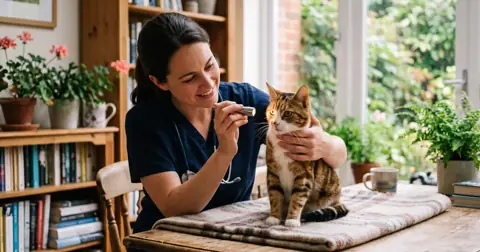
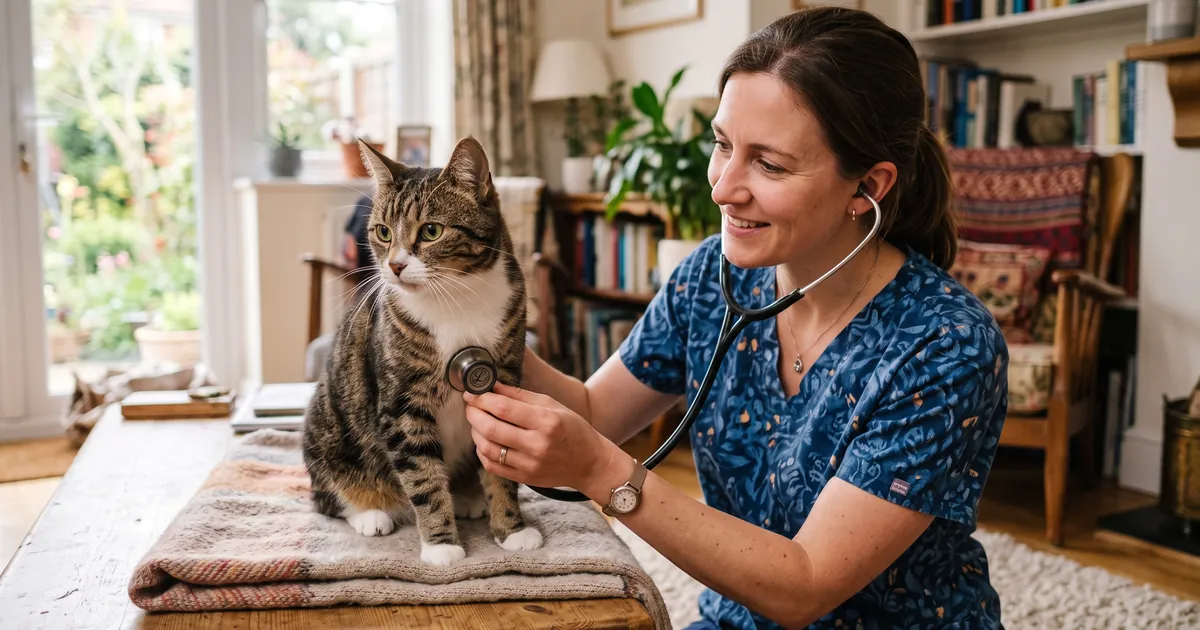
- Find the heartbeat: place your palm on the left side of the chest, just behind the elbow of the front leg. Alternatively, feel for the femoral pulse with two fingers high on the inside of the back leg, where it meets the body.
- Count the beats for 15 seconds, using a phone timer.
- Multiply by four to get beats per minute.
- Repeat on a few different days to learn what's normal for your cat.
Knowing your cat's normal heart rate and breathing rate makes it much easier to spot when something changes.
Normal breathing rate in cats
Breathing rate is often a more useful home check than heart rate, and vets frequently ask owners with cats with heart disease to record it. Count each rise and fall of the chest as one breath while your cat is resting or asleep:
| Breaths per minute at rest | What it means |
|---|---|
| 20–30 | Normal |
| 30–40 | Higher than usual: recheck and call your vet if it stays high |
| Over 40 | Too fast: contact your vet today |
| Open-mouth breathing, effortful breathing, blue or pale gums | Emergency |
Fast or heavy breathing has many causes, from fever and pain to asthma and heart failure. See our guide to cat cold symptoms and breathing problems.
Normal cat blood pressure
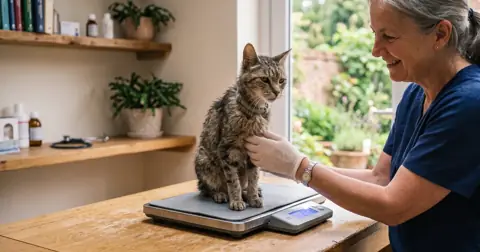
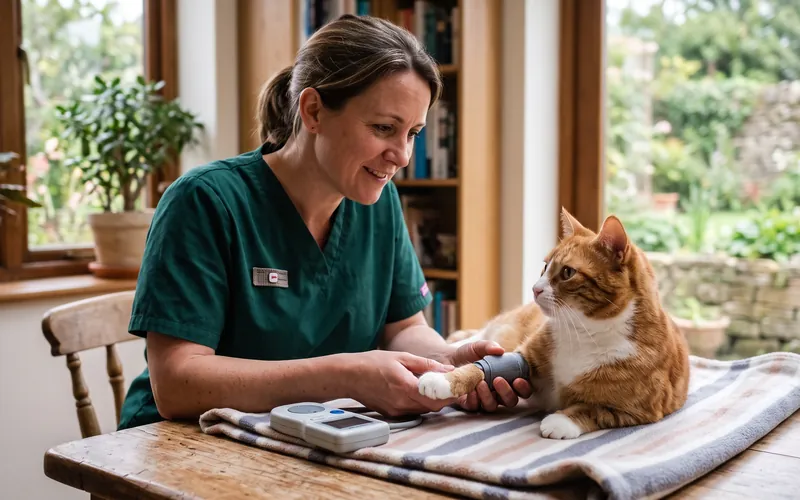
Blood pressure is the force of blood against the artery walls. In cats, vets usually measure systolic blood pressure (the peak pressure as the heart beats), using a small cuff on a front leg or the tail and a Doppler probe that lets them hear the blood flow.
| Systolic blood pressure (mmHg) | Category | Risk of organ damage |
|---|---|---|
| Below 140 | Normal | Minimal |
| 140–159 | Borderline (pre-hypertensive) | Low |
| 160–179 | Hypertensive | Moderate |
| 180 or above | Severely hypertensive | High |
These categories follow international veterinary guidelines. Because stress raises blood pressure ("white coat effect"), vets take several readings in a quiet room after your cat has settled, and may repeat measurements on another day before diagnosing hypertension.
Cat blood pressure monitors
Owners sometimes ask about buying a cat blood pressure monitor. Human digital monitors are designed for human arms and don't give accurate readings on cats. Veterinary Doppler and high-definition oscillometric machines need training to use correctly. It's best to have blood pressure measured by your vet or vet nurse, often in a dedicated nurse clinic.
High blood pressure in cats
Hypertension is common in older cats and is usually caused by another illness:
- Chronic kidney disease: the most common cause. See our guide to renal diets for cats.
- Hyperthyroidism: an overactive thyroid speeds up the heart and raises blood pressure. Read about Thyronorm for cats.
- Diabetes and some adrenal gland conditions.
- Sometimes no underlying cause is found.
Signs of high blood pressure
Hypertension is often called a silent disease, because many cats show no signs until damage occurs. When signs appear, they may include:
- Sudden blindness, very dilated pupils or blood in the eyes. Read more in our guide to cat eye problems.
- Disorientation, wobbliness, yowling at night or seizures.
- Increased thirst and urination (often from the underlying kidney disease).
- A heart murmur or abnormal rhythm found by your vet.
- Nosebleeds.
Treatment
Vets usually treat hypertension with daily medication such as amlodipine or telmisartan, alongside treatment for any underlying condition. Blood pressure is then rechecked regularly. With treatment, many cats live comfortably for years, and some regain partial vision after hypertension-related blindness if treated quickly.
Signs of heart disease in cats
The most common heart disease in cats is hypertrophic cardiomyopathy (HCM), where the heart muscle thickens. It's more common in some breeds, including the Maine Coon, Ragdoll, British Shorthair and Sphynx. Many cats with HCM show no signs for years. Warning signs include:
- Fast breathing at rest or effortful breathing.
- Lethargy or hiding.
- Reduced appetite or weight loss.
- Fainting or collapse.
- Sudden pain, crying and paralysis of the back legs, caused by a blood clot (an emergency).
Vets may hear a heart murmur or a gallop rhythm, and can use blood tests (such as NT-proBNP) and a heart scan (echocardiogram) to diagnose heart disease. Our guides to the Maine Coon and Ragdoll explain why responsible breeders screen for HCM.
When a heart rate is too slow
A heart rate below about 120 beats per minute in a cat at the vet, or a cat that's weak with a slow heartbeat, can be serious. One important cause is a blocked bladder in male cats, where rising potassium levels slow the heart. If your cat is straining in the litter tray without passing urine, it's an emergency. Heart conduction problems can also cause a slow heart rate.
How to help your vet get accurate readings
Stress can push a cat's heart rate and blood pressure far above its normal level, which makes readings harder to interpret. You can help:
- Get your cat used to its carrier by leaving it out at home with a blanket and treats inside.
- Cover the carrier with a towel in the car and waiting room.
- Book a quiet appointment, such as a nurse clinic at a less busy time, or ask for a cat-only waiting area.
- Bring your home readings: a note of your cat's resting breathing rate and heart rate from a few calm evenings is very useful.
- Allow time to settle: vets often wait 5 to 10 minutes before measuring blood pressure.
Practices accredited as Cat Friendly Clinics are set up to reduce stress, which can lead to more reliable results. If your cat finds vet visits very stressful, ask whether a pre-visit calming medication or a home visit is an option. Our guide to cat calming products has more ideas.
When to check blood pressure
International guidelines recommend measuring blood pressure:
- At least yearly in cats aged about 7 to 10 years and older, and every 6 months in senior cats.
- In any cat with kidney disease, hyperthyroidism or diabetes.
- In cats with eye changes, sudden blindness or neurological signs.
- In cats on medication for blood pressure, to monitor treatment.
Not sure if your cat is a senior? Our cat years calculator converts its age into human years.
Cost of heart and blood pressure checks
A blood pressure check is often included in senior health clinics or costs around £20 to £50. A heart blood test costs about £60 to £120, and a heart scan by a cardiologist can cost £300 to £600. Pet insurance usually covers investigations for new heart or blood pressure problems; see our guide to cat insurance.
FAQs
What is a normal heart rate for a cat?
A normal resting heart rate for an adult cat is about 140 to 220 beats per minute when measured at the vet, where cats are often stressed. At home, a relaxed or sleeping cat may have a heart rate of around 120 to 140 beats per minute, sometimes lower. Kittens have faster heart rates.
What is normal cat blood pressure?
Vets usually measure systolic blood pressure. Below 140 mmHg is considered normal, 140 to 159 is borderline, 160 to 179 is high, and 180 mmHg or above is severely high with a high risk of damage to the eyes, kidneys, heart and brain.
How do I check my cat's heart rate at home?
When your cat is relaxed, place your hand on the left side of its chest just behind the front leg, or feel the pulse inside the top of the back leg. Count the beats for 15 seconds and multiply by four.
What causes high blood pressure in cats?
High blood pressure in cats is most often caused by chronic kidney disease or an overactive thyroid (hyperthyroidism). It can also occur with diabetes, some hormone conditions and, sometimes, without an identifiable cause.
Can I use a home blood pressure monitor on my cat?
Human blood pressure monitors are not designed for cats and don't give reliable readings. Vets use specialised Doppler or oscillometric equipment with cat-sized cuffs, and take several readings in a calm environment.
What does a fast heart rate in a cat mean?
A fast heart rate can be caused by stress, exercise, pain, fever, anaemia, hyperthyroidism or heart disease. A resting heart rate above about 220 to 240 beats per minute, especially with fast breathing or weakness, needs prompt veterinary attention.
Sources and further reading
This guide is for general information only and is not a substitute for advice from a vet. Medicines, doses and costs change: always follow your vet and the product leaflet. If your cat is unwell or you think it has eaten something toxic, contact your vet or an emergency vet straight away.