Cat cold symptoms: sneezing, coughing and breathing problems
Common cat cold symptoms include sneezing, a runny nose, watery eyes and a reduced appetite. Most "colds" in cats are cat flu, caused by viruses that are very contagious between cats but not to people. Many cats recover at home within one to three weeks, but kittens, older cats and cats with breathing difficulties need a vet. Here's how to spot the signs, care for your cat and know when it's urgent.
Quick answer
- Most cat colds are cat flu, caused by feline herpesvirus or calicivirus. It's not caught from or passed to people.
- Typical signs: sneezing, runny nose, watery or sticky eyes, fever and reduced appetite.
- See a vet if your cat stops eating for 24 hours, is a kitten or elderly, or breathes with its mouth open.
- Normal resting breathing is about 20–30 breaths a minute; over 40 at rest needs a vet.
Common cat cold symptoms
- Sneezing, sometimes in bursts.
- A runny or blocked nose, with clear, yellow or green discharge.
- Watery, red or sticky eyes (conjunctivitis).
- Reduced appetite, often because a blocked nose stops cats smelling food.
- Lethargy and a mild fever.
- Mouth ulcers and drooling, especially with calicivirus.
- A croaky or lost voice.
- Coughing (less common, and more often linked to Bordetella or asthma).
What causes cat colds?
Around 80 to 90% of cat colds, usually called cat flu, are caused by two viruses:
- Feline herpesvirus (FHV-1): causes sneezing, eye discharge and conjunctivitis, and sometimes eye ulcers. Most infected cats carry the virus for life and can have flare-ups when stressed. Read about lysine for cats, sometimes suggested for herpes flare-ups.
- Feline calicivirus (FCV): causes mouth ulcers, sneezing, fever and sometimes lameness.
Bacteria such as Bordetella bronchiseptica, Chlamydia felis and Mycoplasma can also cause or complicate infections. Vaccination doesn't always prevent cat flu, but it greatly reduces how ill cats become. See our guide to cat vaccinations.
Cat sneezing and watery eyes
Sneezing together with watery eyes is the classic cat flu combination. It can also be caused by allergies (see can cats get hayfever), dust, smoke or strong scents, or by something stuck in the nose such as a grass blade. Sneezing that affects only one nostril, comes with nosebleeds, or continues for weeks needs a vet check. Our guide to cat eye problems explains eye discharge and squinting in more detail.
Cat runny nose
A clear, watery discharge is common in early cat flu. Thick yellow or green discharge suggests a secondary bacterial infection. Blood, a discharge from one side only, or facial swelling can indicate dental problems, a foreign body or, in older cats, a growth in the nose. Gently wipe your cat's nose with damp cotton wool to keep it clear.
Home care for cat cold symptoms
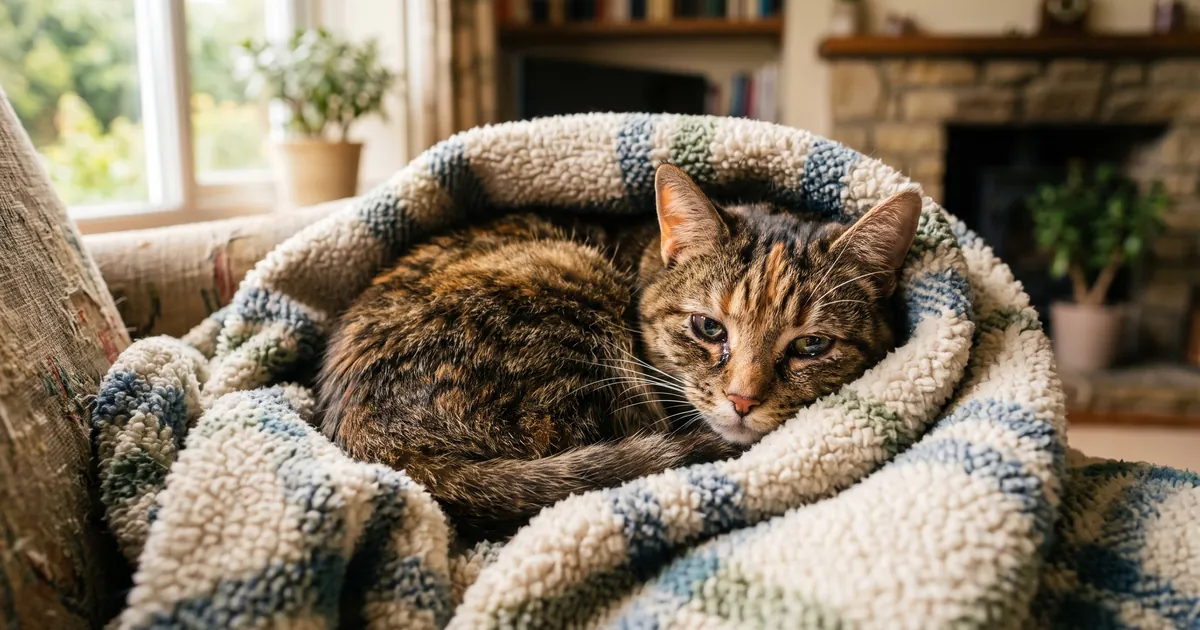
- Keep your cat warm and indoors, with a cosy bed away from draughts.
- Clean the eyes and nose several times a day with cotton wool and cooled boiled water, using fresh pieces for each eye.
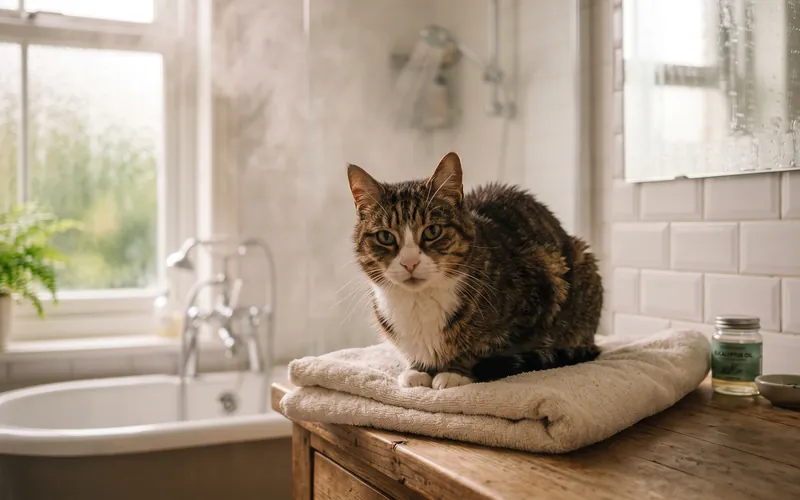
- Use steam: sit with your cat in the bathroom while a hot shower runs (not in the shower), or let it rest in the room afterwards, for 10–15 minutes a few times a day.
- Tempt the appetite with strong-smelling, warmed wet food, such as fish or meaty pouches. A blocked nose dulls smell, which reduces appetite.
- Encourage drinking with fresh water, a fountain, or a little water mixed into food.
- Keep sick cats apart from other cats, with separate bowls and litter trays, and wash your hands after handling them.
Never give human cold or flu medicines to a cat. Many contain paracetamol, decongestants or other ingredients that can be fatal to cats. Read our guide on whether you can give cats paracetamol.
When to see a vet
Contact your vet if your cat:
- Hasn't eaten for 24 hours (or 12 hours for a kitten).
- Is a kitten, elderly, or has another health condition.
- Has thick yellow or green discharge, or painful, closed eyes.
- Has mouth ulcers or is drooling.
- Seems very lethargic, or symptoms aren't improving after 5–7 days.
Your vet may prescribe antibiotics for secondary infection, eye drops, anti-inflammatories, appetite stimulants, or fluids for dehydrated cats.
Cat breathing heavily or rapid breathing in cats
Heavy or fast breathing is different from sneezing and is more worrying. To check, count your cat's breaths while it's resting or asleep: each rise and fall of the chest counts as one breath.
| Breaths per minute at rest | What it means |
|---|---|
| 20–30 | Normal |
| 30–40 | Higher than normal: recheck later and call your vet if it stays high |
| Over 40 | Too fast: see a vet today |
| Any open-mouth breathing, effortful breathing or blue gums | Emergency |
Causes of fast or heavy breathing include fever, pain, stress, heatstroke, asthma, heart disease (often silent until breathing changes), fluid around the lungs, anaemia and lungworm. Cats rarely pant like dogs, so a panting cat that isn't simply hot after play needs prompt attention. Our guide to normal cat heart rate explains how to check your cat's pulse too.
Cat coughing and sneezing
Many owners mistake a cat bringing up a hairball for coughing. A true cough looks like a crouched cat with its neck stretched out, making a dry hacking or wheezing sound, without bringing anything up. Coughing in cats can be caused by:
- Asthma, the most common cause of a chronic cough.
- Bordetella (kennel cough) or other respiratory infections.
- Lungworm, caught by hunting slugs, snails, birds and rodents. Read about wormers that cover lungworm.
- Something inhaled, such as a grass seed.
- Heart disease or tumours, especially in older cats.
Hairballs are covered in our guide to cat hairball remedies.
Can cats get kennel cough?
Yes. Bordetella bronchiseptica, one of the causes of kennel cough in dogs, can infect cats, causing sneezing, nasal discharge, coughing and, rarely, pneumonia, particularly in kittens. Cats in rescue shelters, catteries, multi-cat households, or homes with dogs that have kennel cough are most at risk. A vaccine is available and may be recommended for higher-risk cats.
Cats with asthma: symptoms and life expectancy
Feline asthma is an inflammatory condition of the airways, similar to asthma in people. Signs include coughing, wheezing, fast breathing and sudden breathing attacks. Triggers can include dust, smoke, scented sprays and litters, and pollen. With diagnosis and treatment, often a steroid inhaler given through a cat spacer and mask, many asthmatic cats live a normal lifespan. Reduce triggers by using dust-free litter, avoiding smoking near your cat and not using air fresheners or diffusers.
Cat lost voice
A hoarse or lost meow is often due to laryngitis during cat flu, or simply too much yowling (for example in a cat in heat, or one shut in a room). It usually returns within a week or two. A voice change that lasts longer than two weeks, especially with breathing noise, weight loss or difficulty eating, needs a vet check, as it can occasionally indicate thyroid disease, a growth in the throat or a nerve problem.
Preventing cat flu
- Keep vaccinations up to date, including boosters.
- Quarantine new cats for a week or two before they meet your other cats.
- Don't share bowls, beds or litter trays between sick and healthy cats.
- Wash hands after handling other people's cats.
- Reduce stress, which can trigger herpesvirus flare-ups in carrier cats.
Cat flu is especially common in kittens from busy rescues and breeders. If you're bringing home a new kitten, check that it's been vaccinated and examine its eyes and nose for discharge before you go.
Recovery and long-term effects
Most cats recover fully within two to three weeks. A few develop long-term problems, such as chronic sneezing and nasal discharge ("chronic snufflers") or recurring eye problems from herpesvirus. These cats can be managed, though not always cured, with your vet's help.
FAQs
Can cats catch a cold from humans?
No. The viruses that cause colds in people don't usually infect cats, and cat flu viruses don't infect people. Cats catch cat flu from other cats, through sneezing, shared bowls, grooming or on hands and clothing.
How long does a cat cold last?
Mild cat flu usually lasts one to three weeks. Some cats, especially those infected with feline herpesvirus, carry the virus for life and can have flare-ups when stressed.
What can I give my cat for a cold?
Keep your cat warm, clean its eyes and nose with cotton wool and cooled boiled water, offer strong-smelling warmed food, and use steam to help a blocked nose. Don't give human cold medicines, which can be toxic to cats. Your vet may prescribe medicine if needed.
Why is my cat breathing heavily?
Heavy or fast breathing can be caused by a blocked nose, fever, pain, stress or heat, but also by serious problems such as asthma, heart disease or fluid on the chest. If your cat is breathing fast at rest, breathing with effort, or breathing with its mouth open, contact a vet urgently.
Can cats get kennel cough?
Yes. The bacterium Bordetella bronchiseptica, a cause of kennel cough in dogs, can also cause sneezing, coughing and occasionally pneumonia in cats, especially in multi-cat homes or homes with dogs. A vaccine is available for cats at higher risk.
What is the life expectancy of a cat with asthma?
Many cats with asthma live a normal lifespan when the condition is diagnosed and managed with medication, often using an inhaler with a cat spacer. Severe untreated attacks can be life-threatening, so regular vet check-ups are important.
Sources and further reading
This guide is for general information only and is not a substitute for advice from a vet. Medicines, doses and costs change: always follow your vet and the product leaflet. If your cat is unwell or you think it has eaten something toxic, contact your vet or an emergency vet straight away.