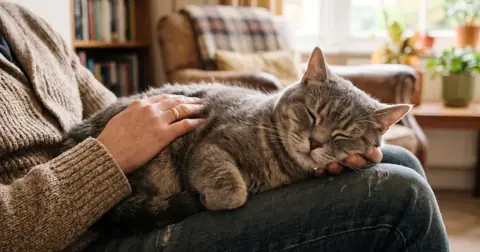
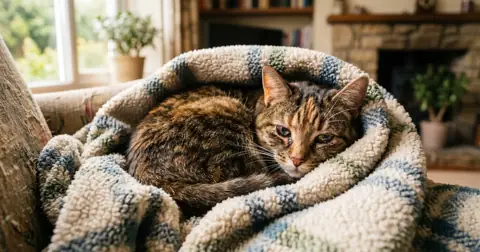
Why are my cat's ears hot or cold?
Owners often notice their cat's ears are hot or cold and wonder if something's wrong. Usually it's normal: a cat's ears warm up and cool down quickly with the room temperature, sleep and activity. But hot ears combined with lethargy or not eating can be a sign of fever, and one hot, red ear can mean an infection. Here's how to tell the difference.
Quick answer
- A cat's ears are thin and full of blood vessels, so their temperature changes easily.
- Warm ears after sleeping, sunbathing or playing are normal. Cold ears in a cool room are normal too.
- Hot ears plus lethargy, hiding or not eating may mean a fever: check temperature or call your vet.
- One hot, red, itchy or smelly ear suggests an ear infection, mites or an abscess.
Why cats' ears change temperature
A cat's ear flaps (pinnae) are thin, covered in fine fur and packed with small blood vessels close to the surface. Cats use them, along with their paw pads, to help control body temperature:
- When a cat is warm, blood vessels in the ears widen to release heat, so the ears feel warm.
- When a cat is cold, the vessels narrow to keep heat in the body, so the ears feel cool.
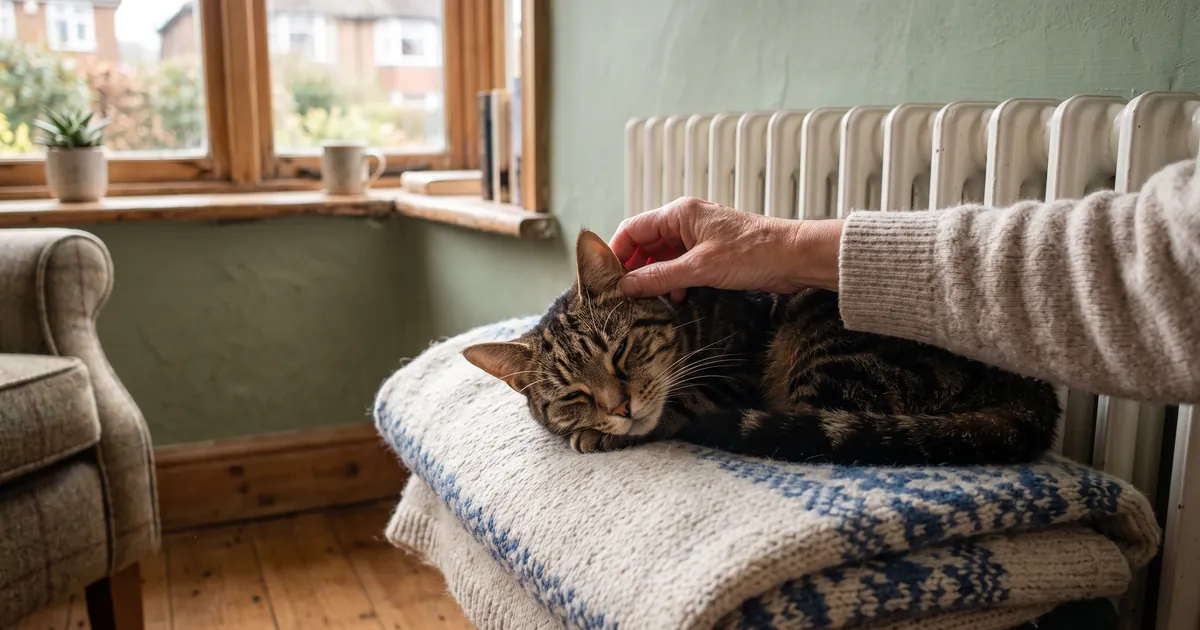
Because ears respond so quickly, they're a poor guide to your cat's actual body temperature. A cat with cold ears can be perfectly healthy, and a cat with warm ears may simply have been lying on a radiator.
Why are my cat's ears warm? Normal reasons
- Sleeping curled up in a warm bed, under a duvet or near a radiator.
- Sunbathing on a windowsill or in the garden.
- Exercise: running, playing or chasing toys.
- Stress or excitement, which increases blood flow.
- Your own hands are cold, which makes everything feel warmer.
- Breed and coat: hairless breeds such as the Sphynx feel warm all over because there's no fur insulating their skin.
Remember that a cat's normal body temperature, around 38.1°C to 39.2°C, is higher than a person's, so cats often feel warm to the touch.
Why are my cat's ears cold? Normal reasons
- Cool weather or a cold room.
- Coming in from outside on a cold or wet day.
- Sleeping on a cold floor or by an open window.
- Being relaxed and still, when less blood flows to the ears.
If your cat is behaving normally, eating, grooming and moving around, cold ears are nothing to worry about.
When hot ears could mean a fever
A fever is a body temperature above about 39.2°C. It's the body's response to infection, inflammation and some other illnesses. Hot ears alone don't mean fever, but look for these signs together:
- Lethargy, sleeping much more than usual, or hiding.
- Not eating or drinking.
- Shivering, or a hunched posture.
- Fast breathing or a fast heart rate. See our guide to normal cat heart rate.
- Not grooming, or a greasy, unkempt coat.
- Vomiting, diarrhoea, sneezing or a swollen, painful area.
Common causes of fever in cats include bite abscesses, viral infections such as cat flu, and inflammation. Our guide to cat cold symptoms covers sneezing, runny eyes and breathing problems.
Call your vet if your cat has hot ears and seems unwell, especially if it hasn't eaten for 24 hours (12 hours for kittens). A temperature above 40°C, or a fever with breathing problems, needs to be seen urgently.
When cold ears could be a problem
Cold ears become a concern when your cat is also:
- Weak, wobbly or collapsing.
- Very quiet, hiding and not responding normally.
- Showing pale, white or blue-tinged gums.
- Breathing fast or with effort.
- Cold all over, not just the ears.
These can be signs of shock, low body temperature (hypothermia), heart disease or serious illness, and need emergency veterinary care. Very young kittens, elderly cats and cats that have been out in freezing weather are most at risk of hypothermia. Wrap your cat in a warm, dry towel and get to a vet.
Sudden cold, painful or paralysed back legs, often with crying and fast breathing, can be caused by a blood clot (aortic thromboembolism) linked to heart disease. This is an emergency.
Why is only one of my cat's ears hot?
If one ear feels hotter than the other, look closely at it. Common causes include:
- Ear infection (otitis): redness, swelling, smell, discharge and head shaking.
- Ear mites: dark, crumbly, coffee-ground-like wax and intense scratching. Ear mites spread easily between pets; products such as Stronghold and Advocate treat them.
- A bite or abscess from a fight: a hot, swollen, painful area, sometimes with a scab or pus.
- An aural haematoma: a soft, swollen, blood-filled ear flap, often from head shaking.
- Allergies, which can make the ears red and itchy.
These problems need a vet check. Don't put anything into your cat's ear canal until a vet has examined it, as some ear drops are harmful if the eardrum is damaged.
Sunburn on white ears
Cats with white or pale ears are prone to sunburn, which can lead to a type of skin cancer called squamous cell carcinoma. Warm, red, flaky or crusty ear tips that don't heal should be checked by a vet. Keep pale-eared cats indoors during the strongest midday sun in summer, and ask your vet about cat-safe sun protection.
How to check your cat's temperature
The only reliable way to check for fever is with a thermometer:
- Use a digital thermometer with a flexible tip, ideally one kept just for your pet.
- Lubricate the tip with a little petroleum jelly.
- Have someone hold your cat gently but securely, ideally wrapped in a towel.
- Lift the tail and insert the tip about 1–2 cm into the rectum, angled slightly towards the spine.
- Wait for the beep and remove gently. Clean the thermometer afterwards.
| Temperature | What it means |
|---|---|
| Below 37.5°C | Too low: call a vet |
| 38.1–39.2°C | Normal |
| 39.3–39.9°C | Mild fever: call your vet for advice |
| 40°C or above | High fever: see a vet promptly |
Many cats find this stressful. If your cat struggles, stop and phone your vet instead. Never use a glass thermometer, and don't give human fever medicines: paracetamol is toxic to cats.
Warm ears in kittens and senior cats
Kittens often feel warm because they have a high metabolism and spend lots of time sleeping in warm piles. They also lose heat quickly, so a kitten that feels cold and is quiet or not feeding needs warming and urgent veterinary care.
Older cats can have problems regulating body temperature, especially if they're thin or have conditions such as kidney disease or hyperthyroidism. Offer warm beds away from draughts, and keep an eye on appetite and energy levels. Our cat years calculator shows when your cat counts as a senior.
Cat's ears and stress
Some owners notice warm ears when their cat is anxious, for example after a car journey, a vet visit or a new pet arriving. Stress raises the heart rate and blood flow, and ears can feel noticeably warmer for a while. If your cat is otherwise well, the warmth fades as it calms down. Long-term stress shows in other ways, such as over-grooming, hiding or spraying, and our guide to cat calming products explains how to help.
The bottom line
Your cat's ears feeling hot or cold is usually just a sign of where it's been sleeping and how warm the room is. Look at the whole cat instead: if it's eating, grooming, playing and behaving normally, there's rarely a problem. If your cat is lethargic, hiding, not eating, breathing fast or has one red, smelly or swollen ear, contact your vet.
FAQs
Is it normal for a cat's ears to be warm?
Yes. A cat's ears often feel warm to the touch, especially after sleeping near a radiator, lying in the sun or playing. Cats' normal body temperature (around 38.1°C to 39.2°C) is higher than ours, so they often feel warm to us.
Why are my cat's ears cold?
Cold ears are usually normal when the room or weather is cool. Cats reduce blood flow to their ears to conserve heat. If your cat has cold ears and is also lethargic, weak, hiding or has pale gums, it could be unwell or in shock and needs a vet.
Do hot ears mean my cat has a fever?
Not on their own. Hot ears can be a sign of fever, but only if your cat is also showing other signs, such as lethargy, hiding, not eating, shivering or fast breathing. The only reliable way to check for fever is with a thermometer.
What is a normal temperature for a cat?
A healthy cat's temperature is usually between 38.1°C and 39.2°C. Above 39.2°C is a fever, and above 40°C needs prompt veterinary attention. Below 37.5°C is too low and also needs a vet.
Why is only one of my cat's ears hot?
One hot ear, especially if it's red, swollen, itchy, smelly or has discharge, often points to an ear infection, ear mites, a bite wound or an abscess. A vet can check inside the ear and treat the cause.
Can I take my cat's temperature at home?
It's possible with a digital thermometer used rectally, but many cats find it stressful and it's easy to hurt them. If you're worried about fever, it's usually best to call your vet, who can check safely.
Sources and further reading
This guide is for general information only and is not a substitute for advice from a vet. Medicines, doses and costs change: always follow your vet and the product leaflet. If your cat is unwell or you think it has eaten something toxic, contact your vet or an emergency vet straight away.