Cat swollen lip: causes and treatment
A cat swollen lip is a common reason for a vet visit. The most frequent causes are a type of allergic skin reaction called eosinophilic granuloma complex, chin acne, bite abscesses and dental problems. Most are treatable, but sudden swelling of the face or throat can be an emergency. This guide explains each cause, what it looks like and what your vet can do.
Quick answer
- The most common cause of a swollen or ulcerated lip in cats is eosinophilic granuloma complex, often linked to allergies (especially fleas).
- A swollen lower lip or chin may also be chin acne, sometimes triggered by plastic bowls.
- Sudden swelling of the cheek or face often means a bite abscess or a tooth root abscess.
- Swelling with breathing difficulty or after a sting needs an emergency vet.
Causes of a cat swollen lip
| Cause | Where and what it looks like | Urgency |
|---|---|---|
| Rodent (indolent) ulcer | Shiny, red-brown raised sore on the upper lip | Vet within days |
| Eosinophilic granuloma ("fat chin") | Firm swelling of the lower lip or chin | Vet within days |
| Chin acne | Blackheads, pimples, swelling and crusts on the chin | Vet if swollen or infected |
| Bite abscess | Warm, painful lump on the face, often with fever | Vet within 24 hours |
| Tooth root abscess | Swollen cheek, often below the eye; bad breath | Vet within 24 hours |
| Insect sting or allergic reaction | Sudden puffiness of the lips, face or muzzle | Urgent if breathing or behaviour affected |
| Injury or foreign body | Swelling with a wound, or something stuck in the lip | Vet soon |
| Tumour (older cats) | Firm, growing or ulcerated lump that doesn't heal | Vet soon |
Eosinophilic granuloma complex
Eosinophilic granuloma complex (EGC) is a group of inflammatory skin conditions in cats caused by eosinophils, a type of white blood cell involved in allergic reactions. It's one of the most common reasons for a cat swollen lip. There are three main forms:
Rodent ulcer (indolent ulcer) on the upper lip
A raised, shiny, reddish-brown sore on one or both sides of the upper lip, often where the lower canine tooth touches. It's usually not painful or itchy, which is why it can grow quite large before owners notice.
Swelling of the lower lip or chin ("fat chin")
A firm, puffy swelling of the lower lip or chin. It may come and go, and some cats look as if they're pouting. It's common in young cats.
Eosinophilic plaques and linear granulomas
Itchy, raw, red patches on the belly or inner thighs, or raised lines on the back of the legs. Cats with lip lesions sometimes have these too.
What triggers EGC?
EGC is usually a reaction to an allergy:
- Flea allergy: the most common trigger. Even cats with no visible fleas can react to occasional bites, so strict year-round flea control is essential. See our flea treatment for cats guide.
- Food allergy: identified with a strict elimination diet trial lasting 6 to 8 weeks.
- Environmental allergies to pollen, dust mites or moulds. Read can cats get hayfever.
- Genetics: some cats seem predisposed.
Treatment
Your vet may prescribe anti-inflammatory medication (often steroids) to calm the swelling, antibiotics if there's infection, and a plan to identify and control the allergy. Lesions often heal well, but they can return if the trigger isn't controlled.
Cat chin acne
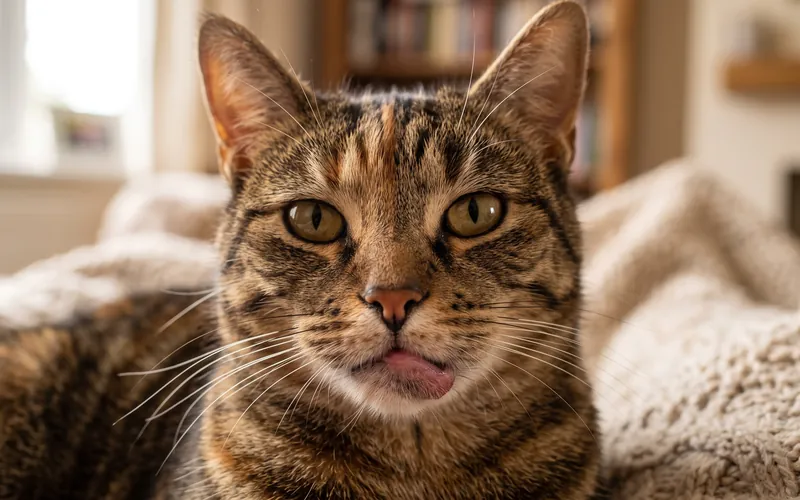
Feline acne causes blackheads, pimples, crusts and sometimes swelling on the chin and lower lip. Mild cases are cosmetic, but infected acne can become swollen, red and sore. Contributing factors include:
- Plastic food and water bowls, which scratch and harbour bacteria.
- Poor grooming of the chin, common in older or overweight cats.
- Stress, allergies and changes in skin oil production.
Switch to ceramic, glass or stainless steel bowls, wash them daily, and gently clean the chin with a vet-recommended cleanser. Don't squeeze spots. Your vet may prescribe antibacterial washes or medication for infected acne.
Cat swollen face or cheek: abscesses
Bite abscesses
Cat bites push bacteria deep under the skin. A few days later, a warm, painful swelling develops, often on the face, neck, legs or base of the tail. Cats may have a fever, stop eating and seem withdrawn. The abscess may burst and leak pus. Your vet will usually clean and drain it and prescribe pain relief and antibiotics. Neutering reduces fighting and so lowers the risk; see our guide to the cost of neutering a cat.
Tooth root abscesses
An infected tooth root, often the large upper premolar, can cause swelling of the cheek just below the eye, sometimes bursting through the skin. Other signs include bad breath, chewing on one side, drooling and dropping food. Treatment usually involves dental surgery to remove or treat the tooth. Our cat dental chart shows where each tooth sits.
Sudden swelling: stings and allergic reactions
A lip or face that puffs up suddenly, over minutes to hours, is often caused by an insect sting or an allergic reaction to something eaten or touched. Mild cases settle within a day. But swelling can spread to the throat and affect breathing. Our guide to a cat stung by a bee explains first aid and the warning signs of anaphylaxis.
Go to a vet immediately if your cat's face or lips swell suddenly and your cat is drooling, vomiting, breathing noisily or with effort, has pale gums, or collapses.
Injuries, foreign bodies and burns
Cats can injure their lips while fighting, catching prey or chewing objects. Fish hooks, splinters and grass seeds can lodge in the lip. Chewing electrical cables can cause burns to the lips and mouth, and licking caustic chemicals can blister the lips. Look gently for wounds or objects, but don't try to remove anything deeply embedded: see your vet.
Lumps that don't heal: tumours
In older cats, a firm, growing, bleeding or ulcerated swelling of the lip, gums or face can occasionally be a tumour, such as squamous cell carcinoma. Early diagnosis gives more treatment options. Any lip sore that doesn't heal within two weeks should be checked by a vet, who may take a biopsy.
What to do if your cat has a swollen lip
- Check breathing and behaviour. If your cat is struggling to breathe, drooling heavily or collapsing, go to a vet immediately.
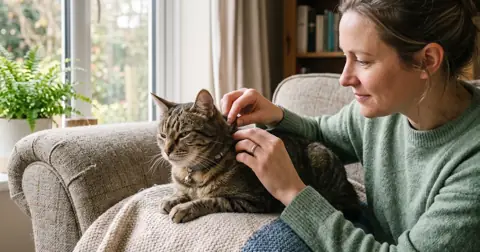
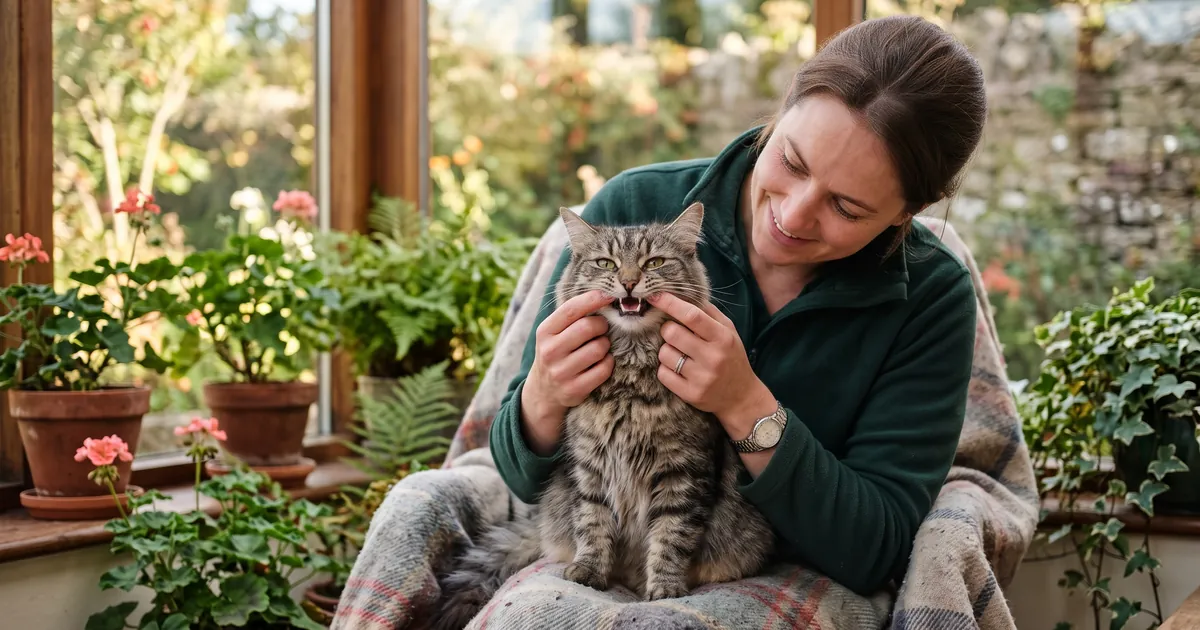
- Look gently at the lip and inside the mouth for wounds, ulcers, broken teeth or anything stuck.
- Note the details: how fast it appeared, whether it's hot or painful, upper or lower lip, one side or both, and any recent stings, fights or new foods.
- Don't apply creams your cat might lick, and never give human medicines.
- Book a vet appointment if the swelling lasts more than a day or two, keeps returning, is painful, ulcerated or affects eating.
How vets diagnose lip swelling
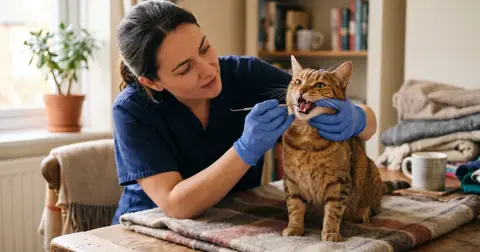
Your vet will examine your cat's face, mouth and teeth and ask about flea control, diet and any recent changes. They may suggest:
- A skin swab or impression smear to look for eosinophils or bacteria.
- A fine-needle sample or biopsy of a persistent lump.
- Dental X-rays if a tooth problem is suspected.
- A strict food elimination trial for suspected food allergy.
- Rigorous flea treatment for all pets in the household, even if no fleas are seen.
A consultation usually costs £45 to £80. Biopsies, dental work and allergy investigations cost more and are often covered by pet insurance if the problem started after the policy began. See our guide to cat insurance.
Preventing a swollen lip from coming back
- Keep every pet on year-round flea treatment.
- Use ceramic, glass or steel bowls and wash them daily.
- Follow any diet plan your vet recommends exactly, with no extra treats during a food trial.
- Book regular dental checks.
- Neuter your cat to reduce fighting and bite abscesses.
FAQs
Why is my cat's lip swollen?
Common causes include eosinophilic granuloma complex (an allergic inflammatory reaction), chin acne, an abscess from a bite or tooth infection, an insect sting, an allergic reaction, an injury, and less commonly a tumour. A vet needs to examine the area to find the cause.
What is a rodent ulcer in cats?
A rodent ulcer, or indolent ulcer, is a reddish-brown, shiny, raised sore on the upper lip, often near the canine tooth. It's part of eosinophilic granuloma complex and usually isn't painful. Despite the name, it has nothing to do with rodents. It often responds to treating the underlying allergy and anti-inflammatory medication.
Is a swollen lip in a cat an emergency?
Usually not, but it is if the swelling appeared suddenly with breathing difficulty, drooling, vomiting or collapse, or after an insect sting, as these can signal a severe allergic reaction. Go to a vet immediately in these cases.
Can plastic bowls cause a swollen chin in cats?
Plastic bowls can harbour bacteria in scratches and may cause a contact reaction in some cats, contributing to chin acne and swelling. Switching to ceramic, glass or stainless steel bowls and washing them daily often helps.
Why is my cat's cheek swollen?
A swollen cheek, especially below the eye, is often caused by a tooth root abscess. A swollen cheek or face elsewhere may be a bite abscess from a fight. Both usually need a vet, antibiotics or pain relief, and sometimes dental treatment or draining.
Will my cat's swollen lip go away by itself?
Mild swelling from a sting or minor injury may settle within a day or two. Swelling that lasts more than a few days, keeps coming back, ulcerates, bleeds or affects eating needs a vet check.
Sources and further reading
This guide is for general information only and is not a substitute for advice from a vet. Medicines, doses and costs change: always follow your vet and the product leaflet. If your cat is unwell or you think it has eaten something toxic, contact your vet or an emergency vet straight away.