Cat dental chart: every tooth explained
This cat dental chart shows all 30 adult teeth and 26 kitten teeth, the numbering system vets use on dental records, and when each set of teeth comes through. It also explains the most common dental problems in cats and how to keep your cat's teeth healthy at home.
Quick answer
- Adult cats have 30 teeth: 16 upper and 14 lower.
- Kittens have 26 milk teeth, which are replaced by adult teeth between about 3 and 7 months.
- Vets number teeth with the modified Triadan system (e.g. 104 = upper right canine).
- Most adult cats develop some dental disease; tooth resorption and gum disease are the most common.
How many teeth do cats have?
| Tooth type | Upper jaw | Lower jaw | Total (adult) | Kitten (milk teeth) |
|---|---|---|---|---|
| Incisors (small front teeth) | 6 | 6 | 12 | 12 |
| Canines (fangs) | 2 | 2 | 4 | 4 |
| Premolars | 6 | 4 | 10 | 10 |
| Molars | 2 | 2 | 4 | 0 |
| Total | 16 | 14 | 30 | 26 |
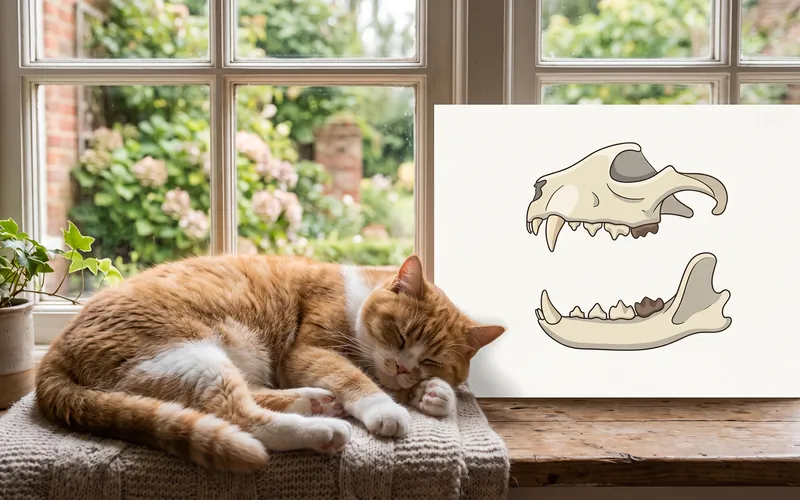
Cats are carnivores, and their teeth reflect that. The incisors nibble and groom, the long canines grip and kill prey, and the premolars and molars work like scissors (carnassial teeth) to slice meat, rather than grinding like our molars.
Cat dental chart with tooth numbers
Vets record teeth using the modified Triadan system, so you might see these numbers on your cat's dental report. The first digit shows the quadrant of the mouth, and the last two digits show the tooth, counting from the middle front.
| Quadrant | Incisors | Canine | Premolars | Molar |
|---|---|---|---|---|
| Upper right (100s) | 101, 102, 103 | 104 | 106, 107, 108 | 109 |
| Upper left (200s) | 201, 202, 203 | 204 | 206, 207, 208 | 209 |
| Lower left (300s) | 301, 302, 303 | 304 | 307, 308 | 309 |
| Lower right (400s) | 401, 402, 403 | 404 | 407, 408 | 409 |
Cats have fewer premolars than dogs, which is why some numbers are skipped (there's no 105 in the upper jaw and no 305 or 306 in the lower jaw). The large upper premolars 108 and 208 and the lower molars 309 and 409 are the carnassial teeth. Kitten (milk) teeth use the same system but start with 5, 6, 7 and 8 instead of 1, 2, 3 and 4.
When cat teeth come through
| Age | What happens |
|---|---|
| 2–4 weeks | Milk incisors appear |
| 3–4 weeks | Milk canines appear |
| 4–6 weeks | Milk premolars appear |
| About 8 weeks | All 26 milk teeth present |
| 3–4 months | Adult incisors replace milk incisors |
| 4–5 months | Adult canines and premolars start coming through |
| 4–6 months | Adult molars appear |
| 6–7 months | All 30 adult teeth usually in place |
Teething kittens may chew more, drool a little or have slightly sore gums. Offer soft toys to chew. Occasionally a milk tooth doesn't fall out and the adult tooth grows beside it (a retained deciduous tooth). Your vet may remove it, often at the same time as neutering, to prevent crowding and gum problems.
How to read your cat's dental chart after a dental
After a dental procedure, many practices give owners a copy of the cat dental chart completed during the anaesthetic. It usually shows each tooth as a small drawing with notes or symbols beside it. Common abbreviations include:
| Note on the chart | What it means |
|---|---|
| X or a line through the tooth | Tooth extracted |
| O or "missing" | Tooth already absent before the procedure |
| TR (or FORL) | Tooth resorption |
| CI (calculus index) | Amount of tartar, often graded 0–3 |
| GI (gingival index) | Severity of gum inflammation, often graded 0–3 |
| PD (pocket depth) | Depth of the gap between gum and tooth, in millimetres |
| Fx | Fractured (broken) tooth |
| M (mobility) | How loose the tooth is |
Keep the chart with your cat's records. If your cat changes vet, or needs another dental in a few years, it helps the next vet see which teeth were treated and where problems tend to occur.
Common dental problems in cats
Plaque, tartar and gingivitis
Plaque is a sticky film of bacteria that builds up on teeth daily. Left alone, it hardens into brown tartar (calculus). Bacteria under the gum line cause gingivitis: a red line along the gums, bad breath and sometimes bleeding. Gingivitis can be reversed with cleaning, but untreated it can progress to periodontitis.
Periodontal disease
Periodontitis is destruction of the tissues that hold the teeth in place. Teeth loosen and gums recede. It's painful and can't be fully reversed, but treatment stops it getting worse.
Tooth resorption
Tooth resorption (once called FORL, or "neck lesions") is extremely common in adult cats. The tooth structure is broken down by the cat's own cells, often starting at the gum line, where a red lump of gum may appear to grow into the tooth. It's painful, especially when touched. Dental X-rays are needed to assess it, and affected teeth are usually extracted.
Stomatitis
Feline chronic gingivostomatitis is severe inflammation of the gums and the back of the mouth. Affected cats may drool, stop eating and paw at their mouths. See our guide to why cats drool. Treatment often involves extracting many or all teeth, which helps most cats.
Broken teeth
Cats often break the tips of their canine teeth in falls or fights. If the pink pulp is exposed, the tooth is painful and can become infected, leading to a swollen face or cheek. Broken teeth need treatment, usually extraction or root canal therapy.
Signs of dental problems
- Bad breath.
- Red, swollen or bleeding gums.
- Brown tartar on the teeth.
- Drooling, sometimes with blood.
- Dropping food, chewing on one side or swallowing food whole.
- Pawing at the mouth or rubbing the face.
- Reduced grooming and a scruffy coat.
- Weight loss or preferring soft food.
Cats hide pain very well. Many owners only realise how sore their cat's mouth was when it becomes more playful after dental treatment.
How to keep your cat's teeth healthy
Tooth brushing
Daily brushing is the most effective way to prevent plaque and gum disease. Use a soft finger brush or small toothbrush and toothpaste made for pets (never human toothpaste, which can contain fluoride and xylitol). Start slowly: let your cat lick the paste, then touch the teeth with your finger, and gradually introduce the brush over a few weeks.
Dental chews for cats and dental diets
Some dental chews, treats and diets are designed to scrape plaque as cats bite into them or to reduce tartar with special ingredients. Look for products accepted by the Veterinary Oral Health Council (VOHC), which have evidence behind them. They help, but they're not a substitute for brushing.
Regular vet checks
Your vet checks your cat's teeth at every annual health check and booster. Our guide to cat vaccination costs explains what the yearly visit includes. Older cats may need checks every six months.
What happens during a cat dental under anaesthetic
- A full examination of each tooth, recorded on a cat dental chart.
- Dental X-rays to look below the gum line, where most problems hide.
- Scaling to remove tartar above and below the gums.
- Polishing to smooth the tooth surface.
- Extractions of painful or damaged teeth, with pain relief and sometimes stitches.
Most cats go home the same day. A routine scale and polish usually costs £250 to £450, while a dental with X-rays and several extractions can cost £500 to £1,200 or more. Some insurance policies cover dental illness if your cat has had regular checks; see our guide to cat insurance.
Cat teeth and age
Vets can estimate a young cat's age from its teeth: milk teeth mean under about 7 months, and clean white adult teeth suggest a young adult. After that, tartar and wear vary too much between cats to be a reliable guide. To understand your cat's age in human terms, try our cat years calculator.
FAQs
How many teeth does a cat have?
An adult cat has 30 permanent teeth: 12 incisors, 4 canines, 10 premolars and 4 molars. Kittens have 26 temporary (milk) teeth, with no molars.
When do kittens lose their baby teeth?
Kittens start losing their milk teeth at around 3 to 4 months old, and most adult teeth are in place by 6 to 7 months. You may find tiny teeth on the floor or notice a little bleeding from the gums, but many kittens swallow their milk teeth without anyone noticing.
What do the numbers on my cat's dental chart mean?
Vets use the modified Triadan system. The first digit is the quarter of the mouth (1 = upper right, 2 = upper left, 3 = lower left, 4 = lower right) and the last two digits are the tooth position, counting back from the front. For example, 104 is the upper right canine and 309 is the lower left molar.
Do dental chews work for cats?
Some dental chews and dental diets help reduce plaque and tartar, particularly those tested by the Veterinary Oral Health Council (VOHC). They're a useful extra but don't replace tooth brushing or professional dental care.
What is tooth resorption in cats?
Tooth resorption is a painful condition where the tooth structure breaks down, often starting at the gum line. It's very common in adult cats. Affected teeth are usually extracted, because the process can't be reversed and causes pain.
Can cats live without teeth?
Yes. Many cats eat well, including dry food, after having several or even all of their teeth removed, because the painful teeth have gone. Your vet may suggest soft food for a short time after extractions.
Sources and further reading
This guide is for general information only and is not a substitute for advice from a vet. Medicines, doses and costs change: always follow your vet and the product leaflet. If your cat is unwell or you think it has eaten something toxic, contact your vet or an emergency vet straight away.