Cat stung by a bee or wasp: what to do
If your cat is stung by a bee or wasp, it will usually have a painful, swollen paw or face for a day or two and then recover. A small number of cats have a serious allergic reaction, and stings in the mouth or throat can be dangerous. Here's how to remove a sting, what first aid is safe and which signs mean you need a vet straight away.
Quick answer
- Bees leave a sting behind; scrape it out sideways with a bank card. Wasps don't leave a sting.
- Hold a cold compress wrapped in a cloth on the area for 5–10 minutes to reduce swelling.
- Watch closely for 30–60 minutes: vomiting, collapse, pale gums, breathing difficulty or a swollen face mean an emergency vet.
- Never give human antihistamines or painkillers unless a vet tells you the exact product and dose.
Why cats get stung
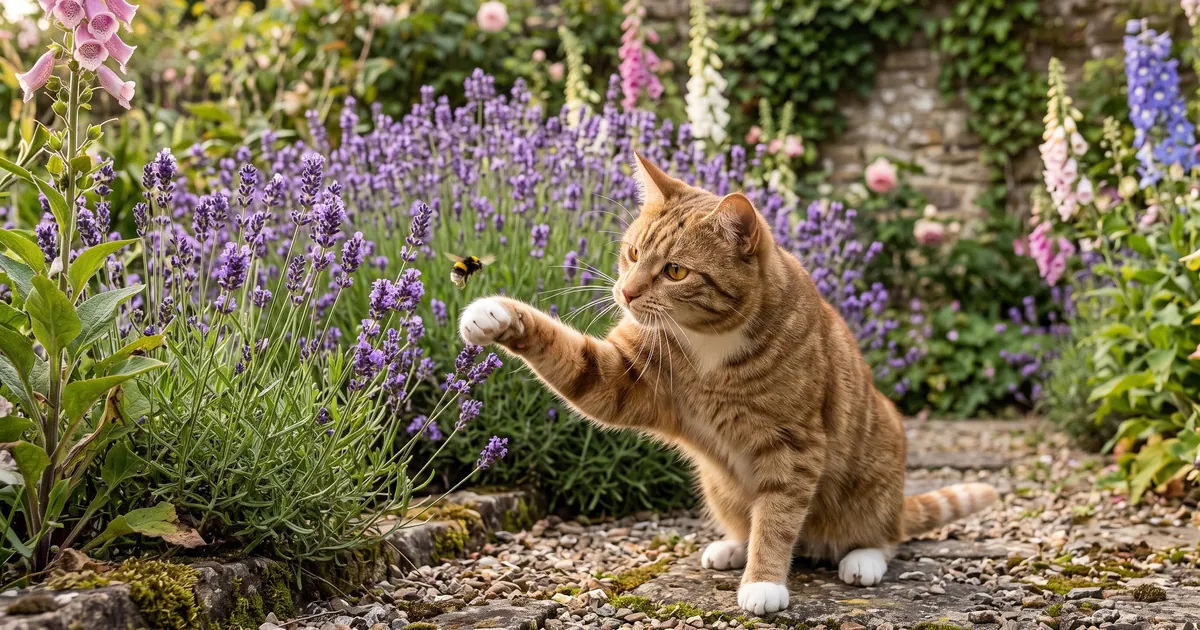
Cats are natural hunters and will chase, swat and even bite anything that moves, including bees and wasps buzzing around flowers, windows and bins. That's why most stings in cats happen on the front paws, the face and occasionally inside the mouth. Stings are most common in late spring and summer, when insects are busiest, and in late summer when wasps are drawn to food and fallen fruit.
Signs your cat has been stung by a bee
- Sudden yelping, jumping or running off.
- Holding up a paw, limping, or licking a paw intensely.
- Swelling of a paw, the face, an ear or the lips.
- Pawing at the face or mouth, or drooling.
- A small black sting with a sac still stuck in the skin (bees only).
- A dead bee or wasp nearby.
A sudden swollen face can have other causes, such as an abscess, an allergic reaction to food, or a dental problem. See our guide to a cat's swollen lip or face if you didn't see your cat get stung.
What to do if your cat is stung: first aid
- Stay calm and move your cat indoors, away from any more insects.
- Look for the sting. Bees leave a barbed sting with a venom sac. Wasps and hornets usually don't leave anything behind.
- Remove a bee sting by scraping it out sideways with the edge of a bank card or a fingernail. Don't pinch it with tweezers, as squeezing the sac can push in more venom.
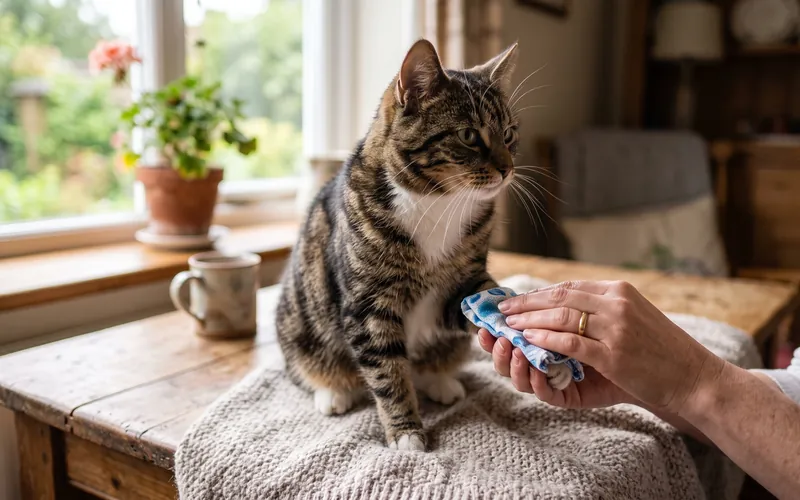
- Apply something cold: a cloth-wrapped ice pack, a bag of frozen peas in a tea towel, or a cool damp flannel, for 5–10 minutes. Repeat a few times if your cat allows it.
- Keep your cat quiet and indoors, and offer water.
- Watch closely for 30–60 minutes, then keep checking for the rest of the day, for any signs of an allergic reaction.
- Call your vet for advice if you're worried, if the swelling is large, or if your cat was stung in or near the mouth.
When a bee sting is an emergency
Go to a vet immediately (or your vet's out-of-hours service) if your cat shows any of these signs after a sting:
- Swelling of the face, throat or tongue, or noisy or difficult breathing.
- Vomiting, diarrhoea or drooling.
- Weakness, wobbliness or collapse.
- Pale or blue-tinged gums.
- A fast or weak heartbeat.
- Hives or widespread swelling over the body.
- Several stings (for example from a disturbed nest).
- A sting inside the mouth or throat.
These can be signs of anaphylaxis, a severe allergic reaction that can be fatal without treatment. Vets treat it with injections such as adrenaline, antihistamines and steroids, and sometimes oxygen and fluids. Don't wait to see whether it improves.
Bee sting vs wasp sting in cats
| Bee | Wasp | |
|---|---|---|
| Leaves a sting behind? | Yes, usually with a venom sac | No |
| Can sting more than once? | No | Yes |
| Most common season | Spring and summer | Late summer and autumn |
| Where cats meet them | Flowers, lavender, clover in lawns | Bins, fallen fruit, picnics, nests in sheds |
| First aid | Remove sting, cold compress, monitor | Cold compress, monitor |
Old home remedies suggest bicarbonate of soda paste for bee stings and vinegar for wasp stings. There's little evidence they help, and cats lick off anything put on their fur, so a simple cold compress is safer.
Can I give my cat antihistamine?
Vets sometimes give cats antihistamines for stings, but they choose the drug and the dose carefully. Many human antihistamine tablets, liquids and "allergy and cold" medicines contain other ingredients, such as decongestants or paracetamol, which can be very dangerous for cats. Paracetamol in particular can kill a cat: read our guide on whether you can give cats paracetamol. Always phone your vet before giving any medicine.
Cat stung by a bee in the mouth
Cats sometimes bite at bees, so stings in the lips, tongue or throat happen. Swelling in the mouth or throat can make swallowing and breathing difficult. Signs include drooling, pawing at the mouth, gulping, refusing food and noisy breathing. Contact a vet straight away, even if your cat seems to be coping, because swelling can increase over the next hour. Our guide to why cats drool explains other causes of sudden drooling.
Recovery after a bee sting
Most cats recover from a single sting quickly. Mild swelling usually goes down within 12 to 24 hours and disappears completely within two to three days. During recovery:
- Keep your cat indoors for the rest of the day.
- Offer food and water as normal; soft food may help if the face is swollen.
- Check the area for heat, oozing or increasing swelling, which can signal infection.
- Stop excessive licking of a swollen paw by distracting your cat with play or a treat.
If swelling gets worse after the first day, or your cat stops eating, see your vet.
Cats with a previous allergic reaction
If your cat has had a strong reaction to a sting before, it may react more severely next time. Tell your vet, who may give you a plan for what to do if it happens again. Keep your vet's number and the nearest out-of-hours emergency vet saved in your phone during summer.
How to reduce the risk of stings
- Avoid planting large swathes of bee-attracting plants right by your cat's favourite spots, such as the cat flap or a sunny bench.
- Remove fallen fruit promptly and keep outdoor bins closed.
- Ask a professional to remove wasp nests in sheds, lofts or under eaves.
- Keep windows screened if wasps often get trapped indoors, where bored indoor cats chase them.
- Distract your cat with a wand toy when you see it stalking insects.
Some popular garden plants are also toxic to cats. Use our poisonous plant checker when planning borders.
How much does vet treatment for a sting cost?
A standard daytime consultation for a sting usually costs £45 to £80, plus £15 to £40 for an anti-inflammatory or antihistamine injection. Emergency treatment for anaphylaxis, especially out of hours, can cost £200 to £600 or more, including injections, monitoring and fluids. Insurance usually covers accidental stings; see our guide to cat insurance.
Other insects and spiders
Hornets give more painful stings than wasps and are more likely to sting repeatedly. Ant bites usually cause mild irritation. Spider bites in the UK are rarely a problem for cats, although the noble false widow can cause painful local swelling. Treat any bite or sting with a cold compress and watch for the same warning signs. Our guide to cat facial swelling explains other causes of a sudden puffy face, such as abscesses and allergies, if you're not sure what caused it.
FAQs
What do I do if my cat gets stung by a bee?
Stay calm, look for the sting and scrape it out sideways with a bank card if it's still there. Hold a cloth-wrapped ice pack or cold compress on the area, keep your cat indoors and quiet, and watch it closely for at least an hour. Contact a vet if your cat was stung in the mouth or throat, was stung several times, or shows any signs of an allergic reaction.
How long does a bee sting swelling last in cats?
Mild swelling usually goes down within 12 to 24 hours and is gone in two to three days. If swelling gets worse after 24 hours, spreads, becomes hot or oozes, an infection may have developed and your cat should see a vet.
Can a cat die from a bee sting?
It's rare, but yes. A severe allergic reaction (anaphylaxis), multiple stings, or a sting in the mouth or throat that swells and blocks the airway can be life-threatening. These need emergency veterinary treatment.
Can I give my cat antihistamine for a bee sting?
Only if a vet tells you to, and only the specific product and dose they recommend. Many human allergy and cold medicines contain ingredients such as decongestants or paracetamol that are toxic to cats.
How do I know if my cat was stung by a wasp?
Wasps don't leave a sting behind, so you may only notice sudden pain, a lifted paw, swelling, licking or a dead wasp nearby. Treat a wasp sting the same way as a bee sting, with a cold compress and close monitoring.
What does an allergic reaction to a sting look like in cats?
Signs include vomiting, diarrhoea, drooling, sudden weakness or collapse, pale gums, rapid or difficult breathing, hives, and major swelling of the face or throat. These usually appear within minutes to an hour and need an emergency vet.
Sources and further reading
This guide is for general information only and is not a substitute for advice from a vet. Medicines, doses and costs change: always follow your vet and the product leaflet. If your cat is unwell or you think it has eaten something toxic, contact your vet or an emergency vet straight away.