Can cats get hayfever? Pollen allergies in cats explained
Yes, cats can get hayfever, although it rarely looks like it does in people. Cats with pollen allergies more often have itchy skin, over-grooming and scabs than sneezing and runny eyes. This guide explains the signs of hay fever in cats, how vets confirm it, and the treatments and home changes that help most.
Quick answer
- Cats can be allergic to grass, tree and weed pollen, as well as dust mites and moulds.
- In cats, hay fever usually causes itchy skin: over-grooming, scabs and bald patches. Some cats sneeze or have watery eyes.
- Vets first rule out fleas and food allergy, which cause very similar signs.
- Never give human hay fever tablets without vet advice: some contain ingredients that are dangerous for cats.
Can cats get hayfever? What the allergy is
Hay fever is an allergic reaction to pollen. In allergic cats, the immune system overreacts to harmless particles such as grass, tree or weed pollen. Vets often call environmental allergies in cats feline atopic skin syndrome, because the skin is where most signs appear. The same cats are frequently allergic to house dust mites, storage mites or moulds as well as pollen.
Allergies tend to start in young adult cats, often between six months and three years old, and can continue for life. They can't usually be cured, but they can be managed well.
Symptoms of hay fever in cats
Skin signs (most common)
- Itching, scratching, licking or chewing.
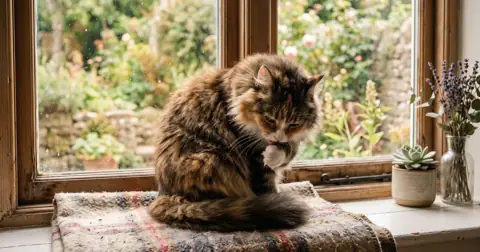
- Over-grooming, leading to thinning fur or bald patches, often on the belly, inner thighs and flanks.
- Small crusty scabs along the back and neck (miliary dermatitis).
- Red, raw patches or raised plaques.
- Swelling or ulcers of the lips (eosinophilic granuloma). See our guide to a cat swollen lip.
- Scratching at the ears and face.
Breathing and eye signs (less common)
- Sneezing and a clear runny nose.
- Watery, red or itchy eyes.
- Coughing or wheezing, sometimes linked to asthma.
Sneezing and runny eyes are more often caused by cat flu than by hay fever. If your cat also seems unwell, read our guide to cat cold symptoms, and for eye discharge see cat eye problems.
Pollen seasons in the UK
| Pollen | Typical UK season |
|---|---|
| Tree pollen (birch, oak, ash, alder) | Late February to June |
| Grass pollen | May to August (peak June–July) |
| Weed pollen (nettle, dock, mugwort) | June to September |
| Mould spores | Late summer and autumn, damp homes all year |
| House dust mites | All year, often worse in winter with heating on |
If your cat's itching follows a seasonal pattern, keep a diary. It helps your vet work out which allergens may be involved.
Other conditions that look like hay fever
Several common problems cause the same itching, scabs and over-grooming, so your vet will rule these out first:
- Flea allergy: the most common skin allergy in cats. Many allergic cats have no visible fleas because they groom them away. Strict, year-round flea control for every pet is the first step. See our flea treatment for cats guide.
- Food allergy: causes year-round itching, often around the head and neck, sometimes with vomiting or diarrhoea. Diagnosed with a strict elimination diet trial.
- Mites and lice: ear mites, fur mites and lice cause itching.
- Ringworm and skin infections.
- Stress-related over-grooming, which can look identical. Read our guide to cat calming products.
How vets diagnose hay fever in cats
- History and examination: when itching started, which areas, seasonal pattern, diet and flea control.
- Skin tests: tape strips, scrapings or swabs to look for mites, bacteria and yeast.
- Strict flea control for all pets for at least 6–8 weeks.
- A food trial with a hydrolysed or novel-protein diet for 6–8 weeks, with no other food or treats.
- Allergy testing (blood test or intradermal skin test) if signs continue, mainly to plan desensitising treatment.
Treatment for hay fever in cats
| Treatment | How it helps |
|---|---|
| Steroids (tablets, liquid or injection) | Rapid relief from itching and inflammation; usually used short term or at the lowest effective dose |
| Ciclosporin | Long-term control for many allergic cats |
| Other prescription anti-itch medicines | Your vet may use newer drugs depending on your cat |
| Antihistamines | Help some cats with mild signs; vet-prescribed dose only |
| Omega-3 fatty acids | Support the skin barrier; take several weeks to work. See our guide to salmon oil for cats |
| Allergen-specific immunotherapy | Desensitising injections or oral drops tailored to your cat's test results; can reduce reliance on medication |
| Treatment of secondary infections | Antibiotics or antifungals when scratched skin becomes infected |
Don't give your cat human hay fever tablets, nasal sprays or eye drops without asking your vet. Some contain decongestants or other ingredients that are dangerous for cats, and the doses are very different. Human painkillers such as paracetamol are especially toxic.
How to help a cat with hay fever at home
- Wipe your cat's coat with a damp cloth when it comes in on high-pollen days.
- Keep your cat indoors during peak pollen times, usually early morning and early evening, on high-count days. Check the Met Office pollen forecast.
- Close windows on high-pollen days and keep grass cut short (and keep your cat in while mowing).
- Wash bedding weekly at 60°C to reduce pollen and dust mites.
- Vacuum regularly, ideally with a HEPA filter.
- Reduce dust by using low-dust litter and avoiding scented sprays and diffusers.
- Keep up flea control, because fleas make allergic cats much itchier.
Can cats get hayfever from flowers in the house?
Cut flowers can shed pollen, but the bigger danger is toxicity. Lily pollen is extremely toxic to cats: even a little licked off the fur can cause kidney failure. Never keep lilies in a home with cats. Check any plant or bouquet with our toxic plant checker.
Living with a cat with hay fever long term
Environmental allergies usually last for life, but most cats live happily once a plan is in place. Many owners find it helpful to:
- Plan ahead for the season. If your cat's itching starts every May, ask your vet about starting treatment a few weeks early.
- Keep a symptom diary with dates, weather, pollen counts and what your cat was doing, so you and your vet can spot patterns.
- Photograph flare-ups, because skin often looks better by the time of the appointment.
- Review medication with your vet regularly, aiming for the lowest dose that keeps your cat comfortable.
- Watch for infections. Scratched, broken skin can become infected, which makes itching worse. Redness, smell or oozing need a vet check.
Can cats get hayfever at any age?
Allergies most often begin in young adult cats, but they can appear at any age. If an older cat suddenly starts itching or over-grooming, your vet will look carefully for other causes too, such as parasites, infections, pain or an overactive thyroid. Kittens rarely show true hay fever; itching in kittens is far more likely to be fleas or mites.
When to see a vet
Book an appointment if your cat is scratching or grooming more than usual, has bald patches, scabs or sores, or if sneezing or eye discharge lasts more than a few days. See a vet urgently if your cat is breathing fast, wheezing or breathing with its mouth open, which can be a sign of asthma. Most allergic cats can live comfortably with the right long-term plan, and the earlier itching is controlled, the less damage the skin suffers.
Cost of treating hay fever in cats
A consultation usually costs £45 to £80, and initial skin tests £30 to £80. Food trials cost the price of a prescription diet for 6 to 8 weeks. Allergy blood tests typically cost £150 to £300, and immunotherapy can cost several hundred pounds a year. Long-term allergy treatment is usually covered by lifetime pet insurance if the signs started after the policy began; see our guide to cat insurance.
FAQs
Do cats get hayfever like humans?
Cats can be allergic to pollen, but the signs are usually different. Instead of mainly sneezing and itchy eyes, most allergic cats get itchy skin, over-groom, and develop scabs, bald patches or red, raw areas. Some cats do sneeze, have watery eyes or develop asthma-like coughing.
What are the symptoms of hayfever in cats?
Common signs include itching, licking or chewing the skin, over-grooming the belly, legs or flanks, small scabs along the back and neck, bald patches, ear scratching and, less often, sneezing, watery eyes and coughing. Symptoms often get worse in spring and summer.
Can I give my cat antihistamine for hayfever?
Only with your vet's advice. Some antihistamines are used in cats at specific doses, but many human hay fever products contain decongestants or other ingredients that are harmful to cats. Antihistamines also work less well for allergies in cats than in people.
How do vets test cats for hay fever?
Vets first rule out fleas, mites, infections and food allergy. If an environmental allergy is still suspected, a blood test or an intradermal skin test can identify which allergens your cat reacts to, which helps if desensitising treatment is planned.
Is hay fever in cats seasonal?
It can be. Tree pollen peaks in spring, grass pollen in early to mid summer and weed pollen in late summer. Cats allergic to dust mites or moulds may have symptoms all year.
Can indoor cats get hayfever?
Yes. Pollen comes indoors through windows and on clothing, and indoor cats can also be allergic to house dust mites and moulds.
Sources and further reading
This guide is for general information only and is not a substitute for advice from a vet. Medicines, doses and costs change: always follow your vet and the product leaflet. If your cat is unwell or you think it has eaten something toxic, contact your vet or an emergency vet straight away.