Advocate for cats: fleas and worms in one monthly spot-on
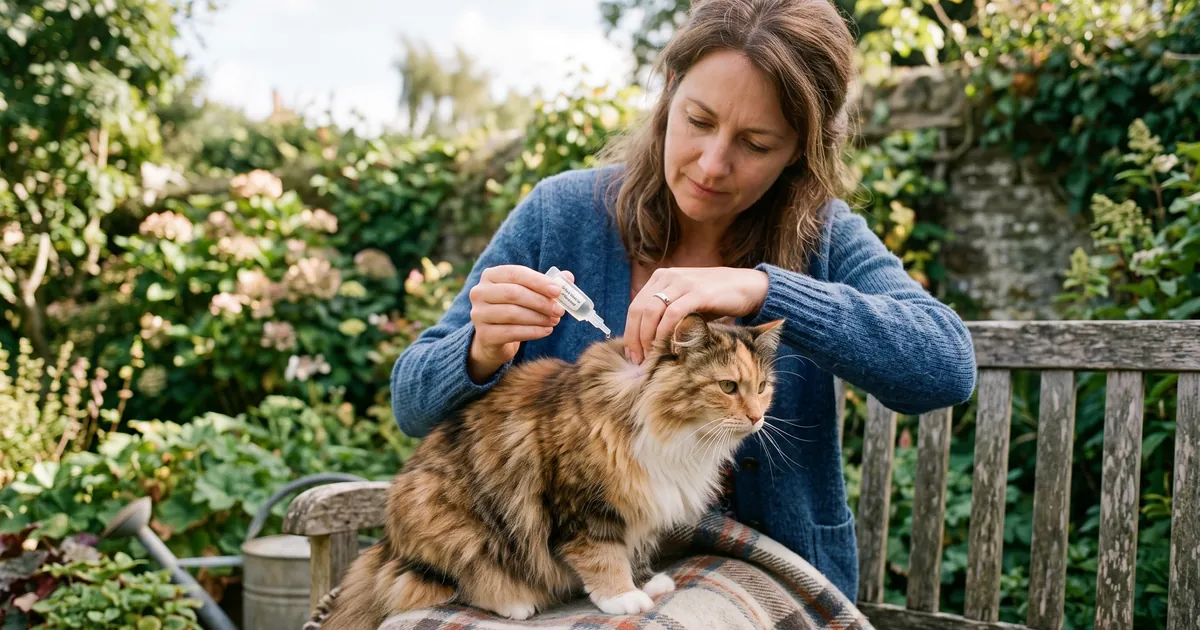
Advocate for cats is a prescription spot-on that treats fleas, roundworms, ear mites and lungworm with one monthly dose. It is one of the most popular combined products UK vets prescribe, but it doesn't cover ticks or tapeworm. This guide explains what Advocate does, how to use it and how generic versions such as Prinovox compare.
Quick answer
- Advocate contains imidacloprid + moxidectin: fleas, roundworms, hookworms, ear mites and lungworm.
- It does not treat ticks or tapeworm.
- Prescription-only (POM-V): there is no legal way to buy Advocate without a vet prescription in the UK.
- Prinovox and Prinocate are generic versions with the same ingredients.
What is Advocate for cats?
Advocate is a spot-on made by Elanco (previously Bayer). It combines two active ingredients:
- Imidacloprid: the flea-killing ingredient also used in Advantage. It kills adult fleas within about 24 hours and kills flea larvae in your cat's surroundings.
- Moxidectin: a drug from the avermectin family, absorbed into the bloodstream, that kills roundworms, hookworms, lungworm and ear mites.
Together, they give broad cover in one monthly dose. This makes Advocate a popular choice for kittens, indoor cats and cats with ear mites. For a full comparison of flea products, see our flea treatment for cats guide.
What Advocate covers (and what it doesn't)
| Parasite | Advocate for cats |
|---|---|
| Fleas (adults and larvae) | Yes, treats and prevents for 4 weeks |
| Roundworms (Toxocara, Toxascaris) | Yes, treats |
| Hookworms | Yes, treats |
| Lungworm (Aelurostrongylus abstrusus) | Yes, treats and prevents |
| Heartworm | Prevents (mainly relevant if travelling abroad) |
| Ear mites | Yes, treats |
| Notoedric mange | Yes, treats |
| Ticks | No |
| Tapeworms | No |
Because Advocate doesn't treat tapeworm, cats with fleas, and cats that hunt, often need a separate praziquantel wormer. See our cat worming guide and our guide to spot-on cat worming for tapeworm options.
Advocate dose for cats
| Product | Cat weight |
|---|---|
| Advocate for small cats (0.4 ml) | 1 kg to 4 kg |
| Advocate for large cats (0.8 ml) | Over 4 kg to 8 kg |
Cats over 8 kg are given a combination of pipettes, as directed by your vet. Advocate is licensed for kittens from 9 weeks of age that weigh at least 1 kg.
How to apply Advocate spot-on
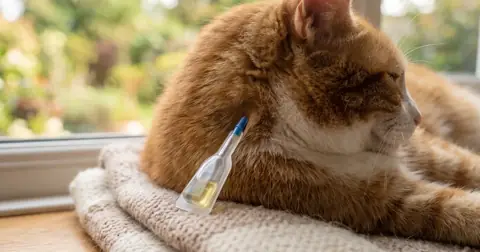
- Take one pipette out of the pack, hold it upright and remove the cap.
- Reverse the cap and use it to break the seal on the tip.
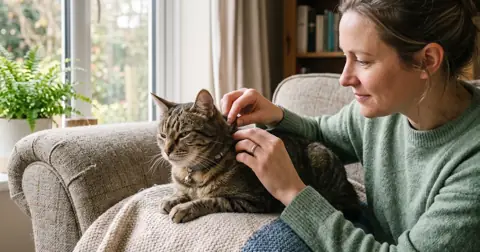
- Part the fur on the back of the neck at the base of the skull, so the skin is visible.
- Squeeze firmly to empty the pipette directly onto the skin in one spot.
- Prevent licking. Keep cats from grooming each other until the area is dry.
- Wash your hands and avoid touching the area until it has dried.
Don't let your cat swallow Advocate. If a cat licks the product, it may drool heavily or vomit, and in rare cases develop neurological signs such as wobbliness, trembling or dilated pupils. Applying it at the base of the skull, where cats can't reach, prevents this. Contact your vet if any of these signs appear.
Advocate for cats without vet prescription: is it possible?
"Advocate for cats without vet prescription" is a common search, but in the UK Advocate is classed as POM-V (Prescription Only Medicine, Veterinarian). By law, it can only be supplied after a vet has assessed your cat, usually within the last 6 to 12 months depending on the practice.
Your legal options are:
- Buy it directly from your vet practice, often included in a health plan.
- Ask your vet for a written prescription (usually £10 to £20) and buy it from a registered online pharmacy. One prescription can cover several months.
- Choose a non-prescription combination instead: a flea spot-on such as Frontline plus a separate wormer.
Be cautious of websites offering Advocate without a prescription. Products sold this way may be counterfeit, out of date or illegally imported, and may not work.
Prinovox and Prinocate: generic Advocate
Prinovox (Virbac) and Prinocate (Krka) are generic versions of Advocate, containing the same amounts of imidacloprid and moxidectin. They are licensed for the same uses and are also prescription-only. Your vet or online pharmacy may offer them at a lower price, so it's worth asking.
Advocate vs Stronghold vs other options
| Advocate | Stronghold Plus | Broadline | |
|---|---|---|---|
| Fleas | Yes | Yes | Yes |
| Ticks | No | Yes | Yes |
| Roundworm | Yes | Yes | Yes |
| Tapeworm | No | No | Yes |
| Lungworm | Yes | Helps prevent | Yes |
| Ear mites | Yes | Yes | No |
| Minimum age | 9 weeks | 8 weeks | 7 weeks |
If ticks are a problem where you live, Stronghold Plus adds tick cover. If you want tapeworm included too, ask your vet about an all-in-one product, covered in our guide to flea and wormer for cats.
Advocate for ear mites and lungworm
Ear mites
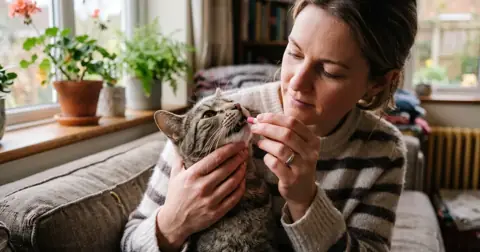
Ear mites cause head shaking, scratching and a dark, crumbly wax that looks like coffee grounds. They spread easily between cats and to dogs, so every pet in the household needs treatment. Advocate kills ear mites after a single dose, though your vet may recheck the ears and repeat it a month later. Gentle ear cleaning can help remove debris.
Lungworm
Cats catch lungworm by eating birds, frogs or rodents that have eaten infected slugs or snails. Many infected cats have no signs, while others develop a cough, wheezing or rapid breathing. Advocate both treats lungworm and prevents new infections when used monthly, which makes it useful for hunting cats. Read more about coughing and breathing problems in our guide to cat cold symptoms.
How long does Advocate take to work?
Advocate starts killing fleas within a few hours, and most fleas on your cat are dead within 24 hours. Roundworms and hookworms are killed over the following days as moxidectin is absorbed, and ear mites usually die after a single dose, though the itching and wax can take a couple of weeks to settle. Lungworm treatment takes longer: your vet may recommend several monthly doses and a follow-up check if your cat was coughing.
As with every flea product, you may still see a few fleas for 4 to 8 weeks while eggs and pupae in your home hatch. Keep treating monthly, vacuum daily and wash bedding at 60°C.
Using Advocate in a home with dogs
Advocate has separate dog versions with different doses, and they must not be swapped. Keep cat and dog pipettes in separate, labelled places. A dog's moxidectin dose can be dangerous to a small cat, and some breeds of dog (such as collies) are more sensitive to this family of drugs. Our guide to whether dogs can get cat fleas explains why every pet in the house needs its own treatment.
Advocate side effects in cats
- Temporary greasiness, clumping or a white residue on the fur where it was applied.
- Mild itching or redness at the application site, which usually passes within a day.
- Drooling, vomiting or, rarely, neurological signs if the cat licks the product.
- Rarely, behaviour changes such as agitation or lethargy shortly after treatment.
If side effects are severe or last more than a day, contact your vet. Don't use Advocate on sick or underweight cats without your vet's advice.
Is Advocate safe for kittens and pregnant cats?
Advocate is licensed for kittens from 9 weeks of age and at least 1 kg. For younger kittens, your vet may suggest a different product, such as Stronghold, which is licensed from 6 weeks. Advocate's safety in pregnant and nursing cats has not been fully established, so your vet will decide whether it is appropriate. Our cat pregnancy guide covers parasite control before and after kittens arrive.
How much does Advocate for cats cost?
Advocate typically costs £8 to £14 per pipette from a vet practice or online pharmacy, plus the cost of a prescription if buying online. Multipacks reduce the price per dose. Because Advocate replaces both a flea spot-on and a roundworm treatment, the overall monthly cost is often similar to buying two separate products. Many vet health plans include Advocate or a similar product as part of a fixed monthly fee.
FAQs
What does Advocate for cats treat?
Advocate for cats treats and prevents fleas, treats ear mites, roundworms and hookworms, treats and prevents lungworm (Aelurostrongylus abstrusus), helps prevent heartworm and treats notoedric mange. It does not treat ticks or tapeworms.
Can I buy Advocate for cats without a vet prescription?
No. Advocate is a prescription-only veterinary medicine (POM-V) in the UK, so a vet must examine your cat before it can be supplied. Websites selling it without a prescription may be selling counterfeit or illegally imported products. You can ask your vet for a written prescription and buy it from a registered online pharmacy.
How often should I use Advocate on my cat?
Advocate is applied once a month. Using it every month gives continuous protection against fleas and helps prevent lungworm and heartworm.
Does Advocate kill tapeworm?
No. Advocate does not treat tapeworms. If your cat has fleas or hunts, your vet may recommend a separate tapeworm treatment containing praziquantel.
Is Prinovox the same as Advocate?
Prinovox and Prinocate contain the same active ingredients as Advocate (imidacloprid and moxidectin) in the same strengths. They are generic products, also prescription-only, and are often slightly cheaper.
What happens if my cat licks Advocate?
If a cat licks Advocate soon after application, it may drool, vomit or, rarely, show wobbliness or other neurological signs because of the moxidectin. Apply it where your cat can't reach, keep cats apart until it is dry, and contact your vet if any symptoms appear.
Sources and further reading
This guide is for general information only and is not a substitute for advice from a vet. Medicines, doses and costs change: always follow your vet and the product leaflet. If your cat is unwell or you think it has eaten something toxic, contact your vet or an emergency vet straight away.