Renal diet for cats: feeding a cat with kidney disease
A renal diet for cats is one of the most effective treatments for chronic kidney disease (CKD), which affects many older cats. Studies show that cats eating a kidney diet live significantly longer and feel better than cats on normal food. This guide explains what's in a renal diet, when to start, how to switch a fussy cat, and how it differs from a urinary diet.
Quick answer
- Renal diets are lower in phosphorus, contain moderate, high-quality protein and add omega-3s, potassium and B vitamins.
- Vets usually recommend starting at IRIS stage 2 kidney disease, or earlier if phosphate is high.
- Switch gradually over 2–3 weeks and never while your cat feels sick, to avoid a food aversion.
- A urinary diet is different: it's designed for bladder stones and crystals, not kidney disease.
Chronic kidney disease in cats
The kidneys filter waste from the blood, balance water and minerals, help control blood pressure and make hormones that stimulate red blood cell production. In chronic kidney disease (CKD), kidney tissue is gradually lost and can't be replaced. CKD is one of the most common conditions in older cats.
Signs of kidney disease
- Drinking more and urinating more.
- Weight loss and muscle loss.
- Reduced or fussy appetite.
- Vomiting or nausea, sometimes with bad breath.
- A dull, unkempt coat.
- Lethargy and weakness.
- Constipation, from dehydration. See our guide to cat constipation.
CKD is diagnosed with blood tests (creatinine, SDMA, phosphate), urine tests and blood pressure measurement. Vets use the IRIS system to stage CKD from 1 (mild) to 4 (severe).
How a renal diet helps
| Feature of a renal diet | Why it helps |
|---|---|
| Restricted phosphorus | High phosphate speeds up kidney damage; lowering it is the most important change |
| Moderate, high-quality protein | Reduces waste products that make cats feel sick, while maintaining muscle |
| Added omega-3 fatty acids | Help reduce inflammation in the kidneys |
| Added potassium | Cats with CKD often lose potassium, causing weakness |
| Extra B vitamins | Replace vitamins lost in increased urine |
| Antioxidants | Help protect kidney cells |
| Higher energy density | Cats get enough calories even if they eat less |
| Reduced sodium | May help with blood pressure |
Research in cats with CKD has shown that feeding a renal diet reduces kidney-related crises and significantly extends survival compared with ordinary adult food.
When to start a kidney diet
| IRIS stage | Typical advice |
|---|---|
| Stage 1 | Monitor; renal diet usually not needed unless phosphate is high |
| Stage 2 | Start a renal diet |
| Stage 3 | Renal diet strongly recommended; phosphate binders often added |
| Stage 4 | Renal diet and extra support for appetite, hydration and nausea |
Your vet will tailor the timing to your cat's results. Older cats should have regular blood and urine tests so CKD is caught early, when diet makes the biggest difference.
Renal diets available in the UK
Several companies make veterinary renal diets for cats, including Hill's Prescription Diet k/d, Royal Canin Renal, Purina Pro Plan Veterinary Diets NF and Specific kidney support diets, in both wet and dry forms and many flavours. Your vet may suggest trying more than one to find what your cat prefers. Wet versions are often better because they add water.
Renal diets are not designed for healthy cats, kittens or pregnant cats. If you have several cats, you may need to feed them separately, for example with a microchip feeder.
How to switch your cat to a renal diet
- Wait until your cat feels well. Don't introduce a new diet while your cat is nauseous or in hospital, as it may develop a lasting dislike of the food.
- Mix gradually over 2–3 weeks: start with about a quarter renal food and three-quarters usual food, and increase slowly.
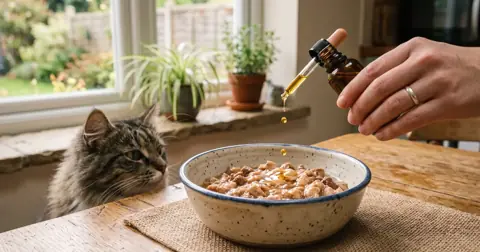
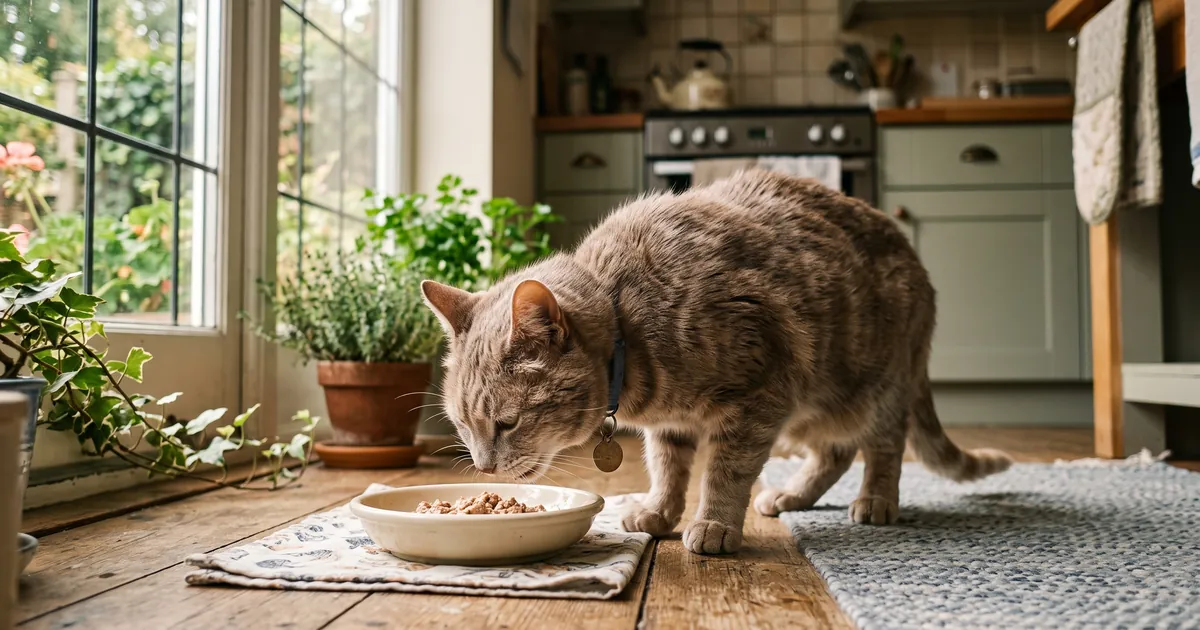
- Warm wet food to body temperature to boost smell and appetite.
- Try different textures and flavours: pâté, chunks, mousse or dry kibble.
- Offer small, frequent meals rather than two large ones.
- Keep treats kidney-friendly, and ask your vet which treats are suitable.
If your cat won't eat the renal diet at all, tell your vet. A cat with CKD that stops eating can deteriorate quickly. Eating some ordinary senior food is better than eating nothing, and your vet may suggest an appetite stimulant or anti-sickness medication.
Helping your cat drink more
Cats with kidney disease lose more water in their urine and can become dehydrated, which makes them feel worse. To increase water intake:
- Feed wet renal food, and add a little warm water to it.
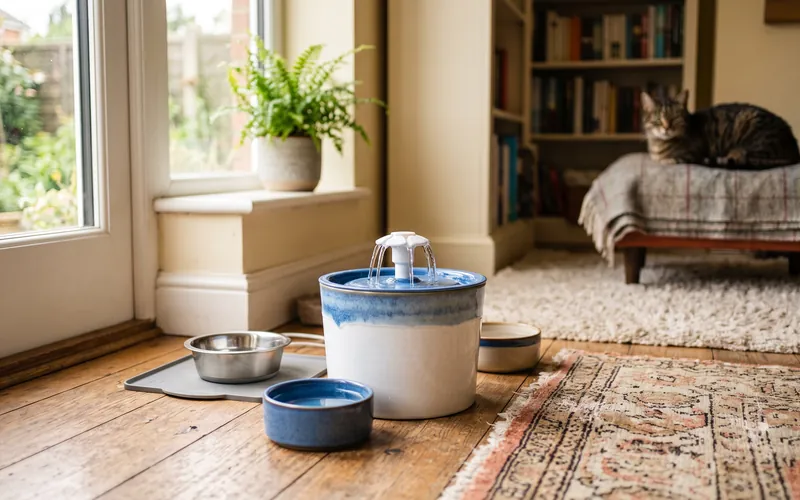
- Place several water bowls around the home, away from food and litter trays.
- Try a water fountain; many cats prefer running water.
- Use wide, shallow bowls so whiskers don't touch the sides.
- Ask your vet about subcutaneous fluids at home for more advanced CKD.
Phosphate binders and kidney supplements
If blood phosphate stays high despite a renal diet, your vet may recommend a phosphate binder: a powder or liquid mixed into food that stops phosphorus being absorbed from the gut. Products used in UK cats include prescription binders and supplements such as Ipakitine and Pronefra. Binders only work when mixed into food, so they're given with every meal. Don't add binders or supplements without your vet's advice, as some aren't suitable with certain diets.
Other treatments for kidney disease
- Blood pressure medication if your cat has hypertension. See our guide to normal cat blood pressure.
- Medicines to reduce protein loss in the urine.
- Anti-sickness and appetite medicines.
- Potassium supplements for low potassium.
- Treatment of anaemia in advanced CKD.
- Careful use of painkillers: many arthritic cats with stable CKD can still have pain relief under close monitoring. Read about Metacam for cats.
Renal diet vs urinary diet
| Renal (kidney) diet | Urinary diet | |
|---|---|---|
| Main purpose | Slow chronic kidney disease | Dissolve or prevent bladder crystals and stones, manage cystitis |
| Phosphorus | Restricted | Not usually restricted as much |
| Protein | Moderate | Normal |
| Urine pH | Not a main target | Controlled to prevent crystals |
| Suitable for CKD? | Yes | Not usually, unless designed for both |
Some veterinary diets combine kidney and urinary support. Only feed a urinary or renal diet if your vet has recommended it for your cat's specific condition.
Cost of a renal diet for cats
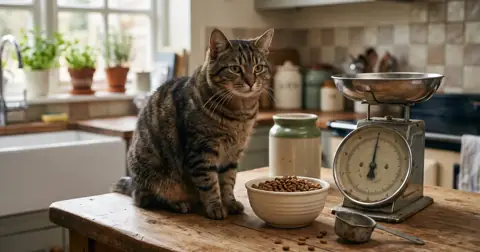
Veterinary renal diets cost more than ordinary supermarket food. As a rough guide, wet renal food costs £1 to £2 per pouch or can, and dry renal food around £15 to £30 for a 1.5 to 2 kg bag. For an average cat eating mainly wet food, that works out at roughly £40 to £70 a month. Prescription diets are usually not covered by pet insurance, so check your policy. Buying in bulk, mixing wet and dry food, or using a vet's online pharmacy can bring the cost down.
Treats for cats on a renal diet
Many treats are high in phosphorus, which works against the diet. Ask your vet which treats are suitable, or use a few pieces of your cat's renal kibble as treats instead. Small amounts of plain cooked chicken may be acceptable for some cats, but check first, especially in later stages of CKD when protein and phosphorus need closer control.
Can I make a homemade renal diet?
Homemade diets for cats with CKD are very difficult to balance correctly, especially for phosphorus, protein and essential nutrients such as taurine. If you'd like to feed homemade food, ask your vet to refer you to a board-certified veterinary nutritionist, who can create a balanced recipe for your cat.
Monitoring your cat on a renal diet
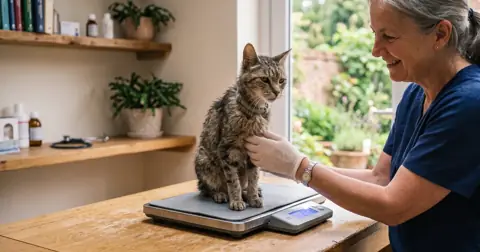
Your vet will usually recheck blood, urine and blood pressure every 3 to 6 months, or more often in later stages. At home, weigh your cat regularly (our cat weight checker helps), track appetite and thirst, and note any vomiting. When CKD becomes advanced, our guide to knowing when it's time may help you think about quality of life.
FAQs
What is a renal diet for cats?
A renal diet is a veterinary diet designed for cats with chronic kidney disease. It's restricted in phosphorus, contains moderate amounts of high-quality protein, and is supplemented with omega-3 fatty acids, potassium, B vitamins and antioxidants. Many are also higher in calories to help cats that eat less.
When should a cat start a kidney diet?
Most vets recommend a renal diet once a cat reaches IRIS stage 2 chronic kidney disease, based on blood and urine tests. It may be started earlier if blood phosphate levels are raised. Your vet will advise based on your cat's results.
Can I feed my cat a renal diet without a prescription?
Renal diets are veterinary diets and are usually supplied by vets or through online retailers that ask for your vet's details. They're not suitable for healthy cats or kittens, because they're deliberately restricted in some nutrients. Always talk to your vet first.
What if my cat won't eat its renal diet?
Introduce it slowly, mixing increasing amounts with your cat's usual food over two to three weeks. Try different brands, flavours and textures, and warm wet food slightly. If your cat still won't eat it, ask your vet: eating any food is better than not eating, and appetite stimulants may help.
Is a urinary diet the same as a renal diet?
No. Urinary diets are designed to dissolve or prevent bladder stones and crystals and manage cystitis. They're not restricted in phosphorus in the same way and may not be suitable for cats with kidney disease. Some veterinary diets are designed to support both, so check with your vet.
How long can a cat live with kidney disease on a renal diet?
It depends on the stage of disease and other conditions, but many cats live for several years after diagnosis with a renal diet and good management. Studies have shown cats fed a renal diet lived around twice as long as cats on a normal diet.
Sources and further reading
This guide is for general information only and is not a substitute for advice from a vet. Medicines, doses and costs change: always follow your vet and the product leaflet. If your cat is unwell or you think it has eaten something toxic, contact your vet or an emergency vet straight away.