Cat laxatives and constipation: what helps and when to worry
Cat laxatives can help a constipated cat pass hard stools, but it's important to know what's causing the problem and which products are safe. Most cats poop once or twice a day, and going more than two or three days without a bowel movement needs attention. This guide explains the signs of constipation, the laxatives vets use, safe home measures, and the emergencies that can look like constipation.
Quick answer
- Most cats poop every 12–36 hours. More than 48–72 hours without a stool needs a vet check.
- A cat straining in the tray may have a blocked bladder, not constipation: this is an emergency, especially in males.
- Gentle options include extra water, wet food and fibre; vets also use lubricant pastes (Katalax, Laxapet) and lactulose.
- Never use human enemas on a cat: phosphate enemas are toxic to cats.
How often should a cat poop?
Most adult cats pass stools once or twice a day, but every cat is a little different. What matters most is a change from your cat's normal pattern. Healthy cat stools are brown, firm but not hard, and shaped like a log.
| Time since last stool | What to do |
|---|---|
| Up to 36 hours | Usually normal |
| 36–48 hours | Watch closely, encourage drinking and wet food |
| 48–72 hours | Call your vet for advice |
| Over 72 hours, or straining, vomiting or not eating | See a vet |
Signs of constipation in cats
- Fewer stools than usual, or none for 48 hours or more.
- Small, hard, dry stools, sometimes found outside the tray.
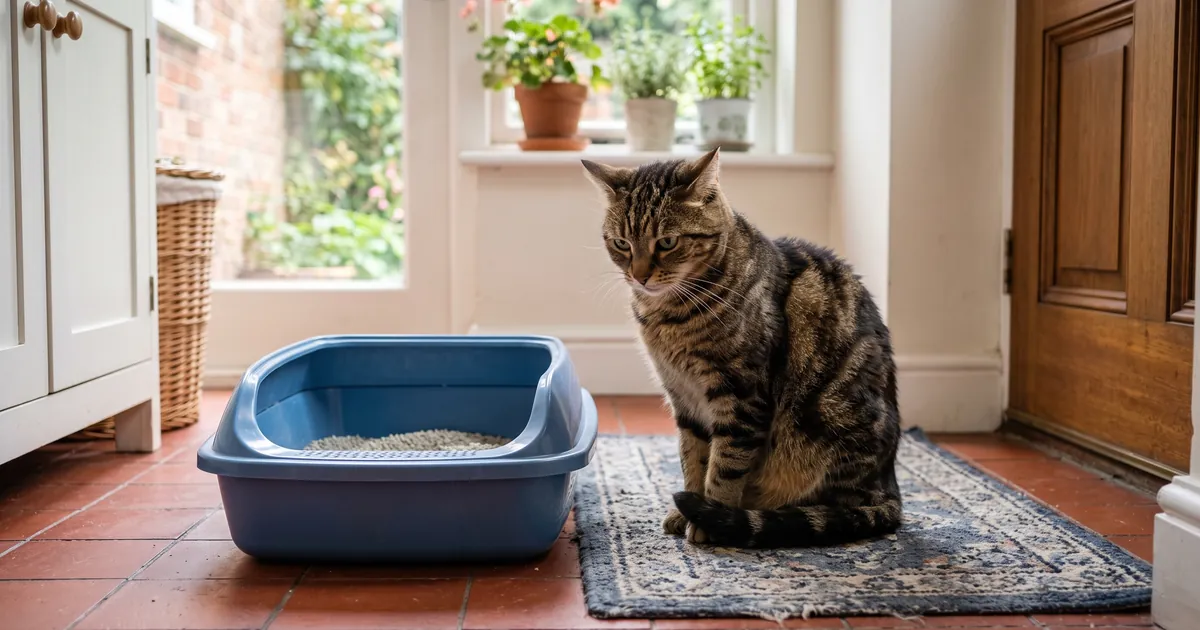
- Straining or spending a long time in the litter tray.
- Crying or appearing uncomfortable while trying to go.
- A little liquid or mucus around hard stools (sometimes mistaken for diarrhoea).
- Reduced appetite, vomiting or lethargy in more severe cases.
Is it constipation or a blocked bladder? Cats straining in the litter tray are often thought to be constipated when they actually can't pass urine. A urinary blockage is a life-threatening emergency, especially in male cats, and can be fatal within a day or two. Check the tray for urine clumps. If your cat is straining with little or no urine, crying, licking its genitals or vomiting, go to a vet immediately.
Causes of constipation in cats
- Dehydration: common in cats fed only dry food and in cats with kidney disease. See our guide to renal diets for cats.
- Hairballs and swallowed fur. Read our guide to cat hairball remedies.
- Low-fibre or low-moisture diet.
- Pain from arthritis or injury, which makes squatting uncomfortable. Our guide to Metacam for cats explains arthritis pain relief.
- Litter tray problems: a dirty tray, a tray with high sides, a stressful location or a change of litter.
- Obesity and inactivity.
- Stress, such as a house move or new pet.
- Medicines, including some painkillers and antihistamines.
- Megacolon: a stretched, weakened colon that can't push stools out, usually in middle-aged or older cats.
- Narrowed pelvis after a road accident, or a blockage from bones or foreign objects.
Cat laxatives compared
| Type | Examples | How it works | Prescription? |
|---|---|---|---|
| Lubricant pastes | Katalax, Laxapet, Laxatract | White soft paraffin or liquid paraffin coats stools so they slide out | No |
| Bulk-forming fibre | Psyllium husk, fibre-rich diets | Absorbs water and softens stools | No (ask vet for dose) |
| Osmotic laxatives | Lactulose; polyethylene glycol (e.g. Movicol, used under vet direction) | Draw water into the bowel to soften stools | Yes / vet-directed |
| Prokinetic medicines | Cisapride (specialist supply) | Help the colon contract | Yes |
| Prescription fibre or gut diets | Various veterinary diets | Balanced fibre and moisture | Usually via your vet |
Katalax for cats
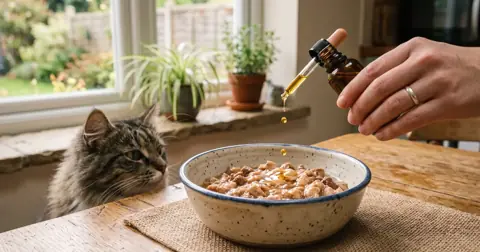
Katalax is a malt-flavoured paste containing white soft paraffin. It lubricates hard stools and hair, and many cats lick it straight from the tube or from a paw. It's useful for mild constipation and hairballs. Use it as directed on the pack, and don't give it every day long-term without asking your vet, because paraffin can reduce the absorption of fat-soluble vitamins.
Laxapet and Laxatract
Laxapet and Laxatract are similar lubricant pastes for cats and dogs, often used for hairballs and mild constipation. Follow the dosing on the label for your cat's weight.
Psyllium husk for cats
Psyllium is a natural fibre that absorbs water and softens stools. A small pinch of plain, unflavoured psyllium husk powder mixed into wet food can help some cats. Too much can make stools bulkier and worsen constipation if your cat isn't drinking enough, so ask your vet for a dose and make sure fresh water is always available.
Lactulose and other prescription laxatives
Lactulose is a syrup that draws water into the bowel, softening stools. It's prescribed by vets, often for cats with recurring constipation or megacolon. Polyethylene glycol products can also be used under veterinary direction at a carefully worked-out dose. Never guess doses of human laxatives.
Safe home remedies for mild constipation
- Increase water intake: feed more wet food, add a little water to meals, use a water fountain and place water bowls away from food.
- Add a little fibre: a teaspoon of plain cooked pumpkin (not pie filling) in wet food can help some cats. Plain pumpkin is generally safe for cats in small amounts.
- Brush your cat to reduce swallowed fur.
- Keep the litter tray clean and in a quiet place, with low sides for older cats.
- Encourage activity with short play sessions.
- Help overweight cats lose weight gradually. Check your cat with our cat weight checker.
If there's no improvement within 24 to 48 hours, or your cat seems unwell, contact your vet.
Cat laxatives for older cats
Constipation becomes more common with age. Older cats often drink less, move less, have stiff joints that make squatting uncomfortable, and may have kidney disease that leaves them mildly dehydrated. For these cats, vets often combine several approaches: a long-term laxative such as lactulose at a carefully chosen dose, more wet food or added water, pain relief for arthritis, a low-sided litter tray on every floor, and regular check-ups. Constipation in an older cat can also be the first sign of another illness, so it's worth a vet visit rather than simply reaching for a paste.
Constipation in kittens
Kittens can become constipated when they move from milk to solid food, or if they're dehydrated or have a heavy roundworm burden. Very young kittens need their bottoms gently stimulated with a warm, damp cloth after feeding to help them pass stools, as their mother would do. A kitten with a swollen belly, straining or not passing stools for more than a day needs a vet promptly. Our cat worming guide explains how worms affect kittens.
What not to do
- Never give a human enema. Phosphate enemas, commonly sold for people, can cause fatal salt imbalances in cats.
- Don't use human laxatives without your vet's dose.
- Don't give olive oil, butter or mineral oil by syringe: oils can be inhaled into the lungs and cause pneumonia.
- Don't give milk: it can cause diarrhoea and stomach upset.
How vets treat constipation
Your vet will examine your cat, feel the abdomen and may take X-rays to see how much stool is present and look for causes such as a narrowed pelvis or megacolon. Blood tests may check for dehydration and kidney disease. Treatment can include:
- Fluids to rehydrate your cat.
- Laxatives and stool softeners.
- A warm-water enema given safely by the vet team.
- Manual removal of stools under sedation or anaesthetic for severe cases.
- Long-term diet changes, laxatives or medicines to prevent recurrence.
- Surgery for severe megacolon that doesn't respond to treatment.
Preventing constipation
- Feed some wet food daily and keep fresh water available in several places.
- Brush regularly, especially long-haired cats.
- Keep your cat at a healthy weight and active.
- Provide easy-access litter trays, one per cat plus one extra, kept clean.
- Treat pain and arthritis so squatting is comfortable.
- Book regular check-ups for older cats.
FAQs
How long can a cat go without pooping?
Most healthy cats poop once or twice a day, though some go every 36 hours. If your cat hasn't passed a stool in 48 hours, keep a close eye on it. After 72 hours, or sooner if your cat is straining, vomiting or not eating, contact your vet.
What laxatives are safe for cats?
Safe options include lubricant pastes made for cats (such as Katalax or Laxapet), fibre supplements like psyllium husk in small amounts, and prescription laxatives such as lactulose. Only use human laxatives such as Movicol if your vet has prescribed a specific dose. Never use human enemas.
What is Katalax used for in cats?
Katalax is a paste containing white soft paraffin, a lubricant that coats stools and hair so they pass more easily. It's used for mild constipation and hairballs. It shouldn't be given within an hour or two of meals every day long-term, as it can reduce absorption of some vitamins.
Can I give my cat psyllium husk?
Small amounts of plain psyllium husk powder mixed into wet food can help some constipated cats, but too much can make constipation worse if your cat isn't drinking enough. Ask your vet for a dose and make sure your cat has plenty of water.
What is a natural laxative for cats?
Gentle natural measures include feeding more wet food, adding water to meals, encouraging drinking with a fountain, a small amount of plain cooked pumpkin, regular brushing to reduce swallowed fur, and more activity. Ask your vet before adding anything new.
Why is my cat straining but not pooping?
Straining can be caused by constipation, but it's also a sign of a blocked bladder, which is life-threatening and most common in male cats. If your cat strains with little or no urine, cries in the tray, or keeps going back, contact a vet immediately.
Sources and further reading
This guide is for general information only and is not a substitute for advice from a vet. Medicines, doses and costs change: always follow your vet and the product leaflet. If your cat is unwell or you think it has eaten something toxic, contact your vet or an emergency vet straight away.