Do cats kill rabbits and birds? Why cats hunt and how to help wildlife
Yes, cats kill rabbits and birds, along with mice, voles and other small animals. Hunting is a natural instinct, even in well-fed pet cats, and UK cats are estimated to catch tens of millions of animals each year. The good news is that simple changes, such as daily play, a high-meat diet and keeping cats in at dawn and dusk, can significantly reduce how much your cat hunts.
Quick answer
- Cats hunt by instinct, not hunger. Even well-fed cats hunt.
- Most UK cat prey are small mammals (mice, voles, shrews), followed by birds; young rabbits are also taken.
- Daily object play and a high-meat diet reduced prey brought home in a UK study.
- Keep cats in from dusk to dawn and consider a brightly coloured collar to protect birds.
Why do cats hunt?
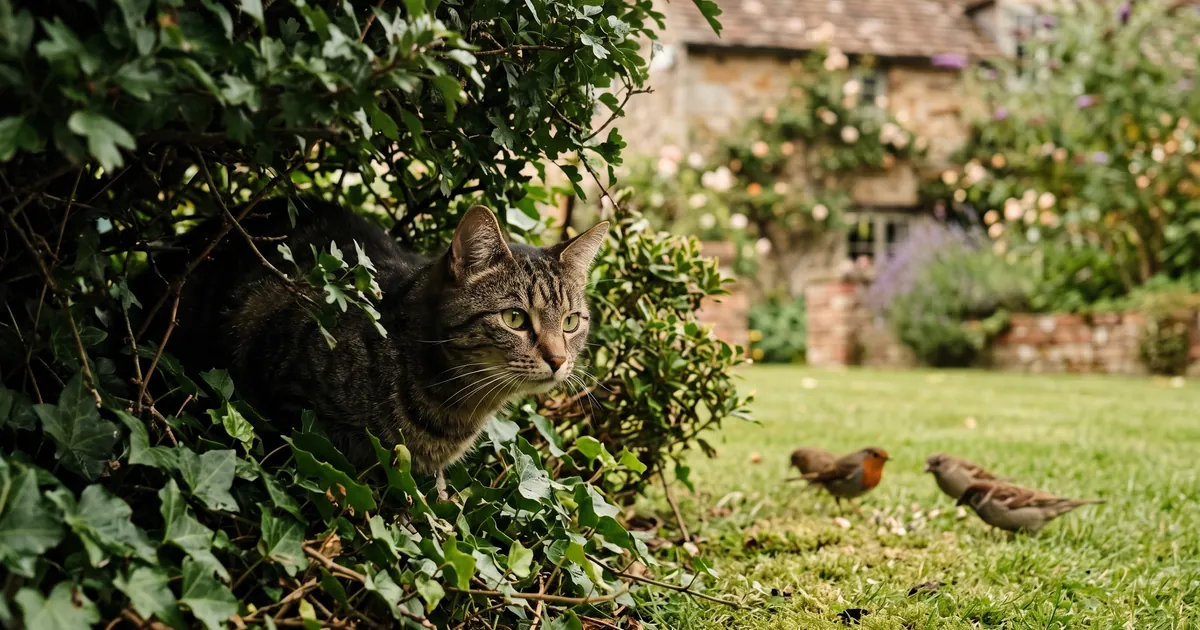
Cats are natural predators. Their ancestors survived by catching around 10 to 20 small prey a day, and modern pet cats still have the same instincts. Hunting is triggered by movement and sound, not by hunger, which is why even a well-fed cat sitting on a full stomach will stalk a bird. The sequence of watching, stalking, pouncing and catching is highly rewarding for cats, whether they eat the prey or not.
Some cats are keen hunters while others rarely catch anything. Young cats, outdoor cats in rural areas and cats that were raised by hunting mothers tend to hunt more.
What do cats kill in the UK?
| Prey | How common | Notes |
|---|---|---|
| Mice, voles and shrews | Most common | The majority of prey brought home |
| Birds | Common | Especially house sparrows, blue tits, robins and blackbirds; fledglings in spring |
| Young rabbits | Fairly common in rural and suburban areas | Mainly spring and summer |
| Rats | Occasional | Larger cats; rats can bite back |
| Frogs, newts, lizards, slow worms | Occasional | Some can carry parasites or be toxic |
| Insects | Common | Often chased but not counted in studies |
Research suggests that UK pet cats catch tens of millions of animals each year. Whether cats are reducing bird populations is debated: conservation organisations such as the RSPB note that cats often take weak or young birds that might not have survived, but predation is still a welfare and conservation concern, particularly where other pressures already affect wildlife.
Do cats kill rabbits?
Yes, especially young rabbits (kits), which are easy to catch in spring and summer. Adult wild rabbits are usually too large for most cats, but big, experienced hunters can occasionally kill them. Cats that hunt rabbits are more likely to pick up fleas and the prey tapeworm, so they need regular parasite treatment. See our cat worming guide.
Can cats eat bunnies?
Some cats eat part of the young rabbits they catch. Eating wild prey exposes cats to parasites and bacteria, and sharp bones can cause injuries. It's another reason to discourage hunting.
Cats and pet rabbits
Pet rabbits and cats can live together safely in some homes, particularly when a large adult rabbit and a calm cat are introduced carefully. But a rabbit is a prey animal and can be badly stressed or injured by a cat. Keep rabbits in secure hutches and runs with solid tops, supervise any contact, and never leave a cat and a small or young rabbit unsupervised. Rabbits can also catch cat fleas, and some cat flea treatments are toxic to rabbits, so ask your vet for a rabbit-safe product.

Do cats kill chickens?
Most cats leave adult chickens alone, because hens are large and can be aggressive. Chicks, ducklings and small bantams are at risk, however. Keep young birds in fully enclosed runs until they're fully grown.
Proven ways to reduce your cat's hunting
A study by the University of Exeter, published in 2021, tested several practical methods with UK cat owners and found two particularly effective approaches:
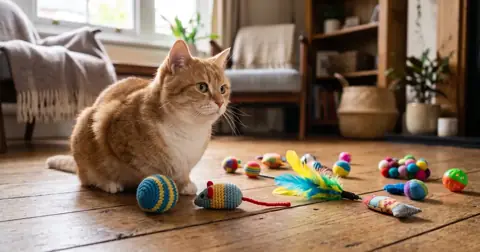
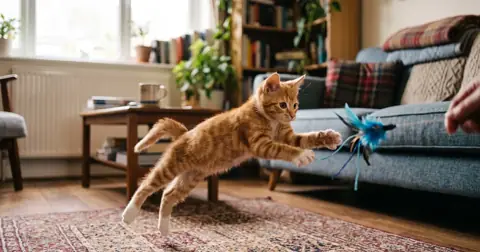
- Daily object play: 5 to 10 minutes a day of play with a feather toy on a wand, ending with a toy mouse for the cat to "catch", reduced the number of animals brought home by about a quarter.
- A high-meat, grain-free diet: switching to a premium food where protein came from meat reduced prey brought home by around a third. Researchers think some cats hunt partly to make up for nutrients missing from their diet.
Other helpful steps include:
- Keep cats in from dusk to dawn. This is when many small mammals are active, and when road and fox risks are highest. See do foxes and badgers attack cats.
- Keep cats in for a few hours after sunrise in spring and early summer, when fledglings leave the nest.
- Use a brightly coloured collar cover, which birds can see more easily, on a quick-release safety collar.
- Try a bell, which can help reduce bird catches for some cats.
- Feed at regular times and use puzzle feeders to satisfy the urge to "work" for food.
- Make your garden bird-safe: place feeders high up, away from cover where cats can hide, and use spiky shrubs around feeding areas.
Read our guide to cat collars and how to fit them safely.
Do cats kill birds at garden feeders?
Bird feeders attract birds into gardens, and that can make them easy targets for cats. You can keep feeding birds while reducing the risk:
- Hang feeders at least 1.5 to 2 metres high, on a smooth pole or from a branch cats can't climb.
- Place feeders a couple of metres away from hedges, fences and dense shrubs where cats can hide and ambush.
- Put prickly plants, such as holly or berberis, around the base of feeding stations.
- Avoid ground feeding where cats are common.
- Keep bird baths in open areas with a clear view, so birds can spot an approaching cat.
Do cats hunt more at certain times of year?
Yes. UK cats tend to catch the most prey from spring to late summer, when young birds leave the nest, baby rabbits and voles are abundant and days are long. This is when keeping cats in at dawn and dusk, and for a couple of hours after sunrise, makes the biggest difference. Hunting usually drops in winter, when cats spend more time indoors and prey is scarcer.
Are some cats more likely to hunt?
Young cats, unneutered cats and cats that learned to hunt from their mothers tend to hunt more. Rural cats usually catch more than urban cats. Breed may play a small part; some active breeds have a strong prey drive. Neutering, play and a predictable routine help reduce roaming and hunting in many cats. See our guide to the cost of neutering a cat.
Why cats bring prey home
Many owners find a mouse or bird on the doormat. Cats bring prey back to a safe place in their territory to eat later, or because they were disturbed. It's often described as a gift, but there's no good evidence for that. Don't punish your cat: it won't understand, and it may simply stop bringing prey home and eat it elsewhere instead.
What to do with prey
- Wear gloves or use a bag to pick it up.
- If a bird or animal is still alive and injured, keep it in a quiet box and contact a local wildlife rescue or the RSPCA. Cat bites carry bacteria that can kill wild animals even from small wounds, so they usually need antibiotics.
- Clean the area and wash your hands.
Health risks of hunting for your cat
- Worms: prey carry tapeworm and lungworm. Hunting cats usually need monthly worming. See our guide to spot-on wormers.
- Fleas and ticks from wild animals.
- Toxoplasmosis, caught by eating infected rodents and birds.
- Bites and injuries from rats and other animals.
- Poisoning from rodents that have eaten rat poison.
- Road accidents when hunting at dawn, dusk and night.
Indoor cats and hunting instinct
Indoor cats still have the instinct to hunt. Without an outlet, they may become bored, frustrated or overweight. Daily play with wand toys, puzzle feeders, treat balls and climbing spaces let them express natural behaviour safely. Our guide to whether cats can have ADHD includes a daily enrichment plan for energetic cats.
FAQs
Do cats kill rabbits?
Yes. Cats often catch young wild rabbits, especially in spring and summer. Adult rabbits are usually too large for most cats, but some large or experienced hunters can kill them. Pet rabbits should always be kept in secure hutches and runs away from cats.
Do house cats eat birds?
Some cats eat birds they catch, while many bring them home or leave them. Pet cats that are well fed often don't eat their prey fully, because hunting is driven by instinct rather than hunger.
Do cats kill chickens?
Adult chickens are usually too big for cats, and many hens will see off a cat. However, cats can kill chicks and young birds. Keep chicks and bantams in secure, covered runs.
How many animals do cats kill in the UK?
Estimates suggest that pet cats in the UK catch tens of millions of animals a year, including many millions of birds. Most prey are small mammals such as mice and voles.
Do bells on collars stop cats killing birds?
Bells can reduce the number of birds caught, but they don't work for all cats and are less effective against mammals. Brightly coloured collar covers are also effective for birds. Always use a quick-release safety collar.
Why does my cat bring dead animals home?
Cats bring prey home to a safe place, their territory, to eat later or because they were interrupted. It isn't really a 'gift' or teaching behaviour. Don't punish your cat; calmly remove the prey with gloves.
Sources and further reading
This guide is for general information only and is not a substitute for advice from a vet. Medicines, doses and costs change: always follow your vet and the product leaflet. If your cat is unwell or you think it has eaten something toxic, contact your vet or an emergency vet straight away.