Cat worming tablets: which wormer tablet is best?
Cat worming tablets are the most popular and usually the cheapest way to deworm a cat. But not every tablet kills every worm: some cheap pet-shop tablets only treat roundworm. This guide compares the main cat wormer tablets in the UK, explains doses by weight and shows how to get a tablet into a reluctant cat.
Quick answer
- Choose a tablet that kills roundworm and tapeworm: look for praziquantel plus a roundworm ingredient.
- Drontal and Milbemax/Milpro are broad-spectrum; many cheap tablets (piperazine) only kill roundworm.
- Dose by weight: weigh your cat before buying, especially kittens and large breeds.
- Most adult cats need a wormer tablet at least every 3 months; hunters monthly.
How cat worming tablets work
A worming tablet is swallowed and absorbed in the gut, where it kills worms within hours. Most dead worms are digested, so you won't usually see anything in the litter tray. Worming tablets don't protect your cat for weeks afterwards: they clear the worms present at the time, which is why they are repeated regularly.
For an overview of every type of wormer, the worms UK cats catch and a full worming schedule, see our cat worming guide.
Cat worming tablets compared
| Tablet (active ingredients) | Roundworm | Tapeworm | Hookworm | Lungworm | Minimum age / weight |
|---|---|---|---|---|---|
| Drontal Cat (praziquantel, pyrantel embonate) | Yes | Yes | Yes | No | 6 weeks / 1 kg |
| Drontal Cat XL | Yes | Yes | Yes | No | For cats 4–8 kg |
| Milbemax for small cats and kittens (milbemycin oxime, praziquantel) | Yes | Yes | Yes | Some | 6 weeks / 0.5 kg |
| Milbemax for cats | Yes | Yes | Yes | Some | For cats 2–8 kg |
| Milpro (milbemycin oxime, praziquantel) | Yes | Yes | Yes | Some | Generic of Milbemax |
| Panacur tablets/granules (fenbendazole) | Yes | Taenia only (not flea tapeworm) | Yes | Some, with longer courses | Varies by product |
| Piperazine tablets (various pet-shop brands) | Yes | No | No | No | Varies |
| Praziquantel-only tablets | No | Yes | No | No | Varies |
Ingredients and licensed claims can change, so always read the box and leaflet before use.
Drontal worming tablets for cats
Drontal is one of the most widely used cat wormers in the UK. Each tablet combines praziquantel for tapeworms with pyrantel embonate for roundworms and hookworms. Standard Drontal Cat tablets treat cats up to 4 kg (half a tablet for cats of 1 to 2 kg), and Drontal Cat XL treats cats from 4 to 8 kg. They are film-coated, small and can be given with or without food. Read our full guide to Drontal for cats.
Milbemax and Milpro for cats
Milbemax and its generic equivalent Milpro contain milbemycin oxime and praziquantel. They kill roundworms, hookworms and tapeworms and are licensed to help with some lungworm and heartworm prevention. They come in two strengths: one for small cats and kittens (0.5 to 2 kg) and one for cats from 2 to 8 kg. The tablets are small and beef-flavoured in some versions, which helps with fussy cats.
Cheap cat worming tablets: what to check
Pet shops and supermarkets sell low-cost wormer tablets, often under their own brand name. Many contain piperazine, which only kills roundworms. They do nothing against tapeworm, which is the worm most owners actually see, as rice-like segments around the bottom.
Before buying any cat wormer, look for these ingredients on the box:
- Praziquantel for tapeworm.
- Pyrantel, milbemycin, emodepside or fenbendazole for roundworm.
If the box only lists piperazine, it won't give full cover. A broad-spectrum tablet costs a little more but treats both types at once.
Worming tablet doses by weight
Doses for cat worming tablets depend on body weight, so guessing can mean under-dosing (the worms survive) or giving more than necessary. As a general example:
| Cat weight | Typical tablet choice |
|---|---|
| 0.5–2 kg (kittens, very small cats) | Kitten or small cat strength, or half an adult tablet where the leaflet allows |
| 2–4 kg | One standard cat tablet |
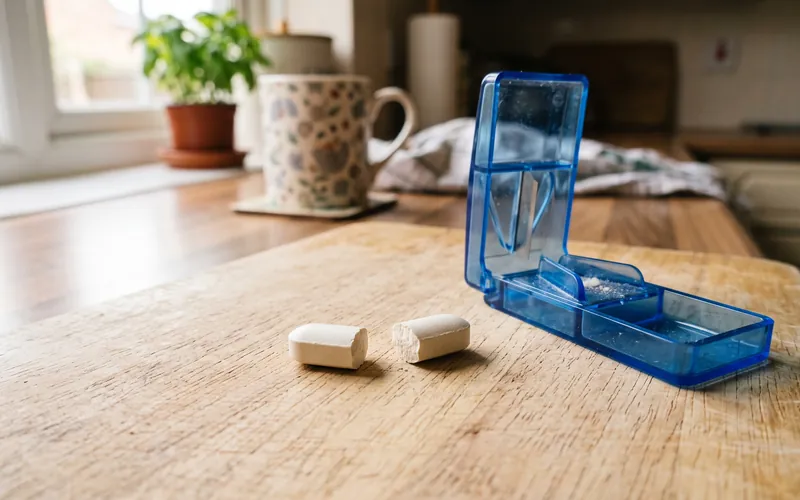
| 4–8 kg | XL tablet, or two standard tablets where the leaflet allows |
| Over 8 kg | Ask your vet |
Always follow the dosing table on your product's leaflet, as it varies between brands. To weigh your cat, weigh yourself holding it and subtract your own weight. Our cat weight checker shows healthy ranges by breed.
How to give a cat a worming tablet
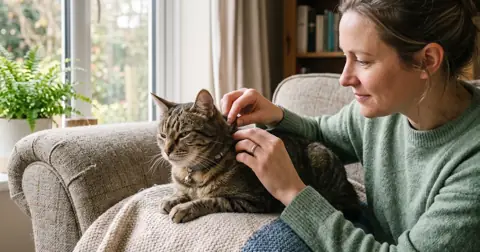
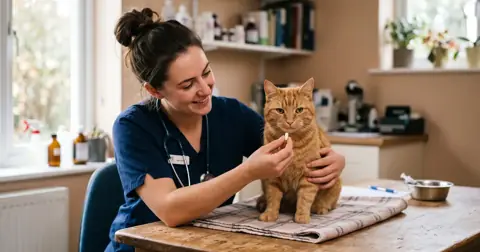
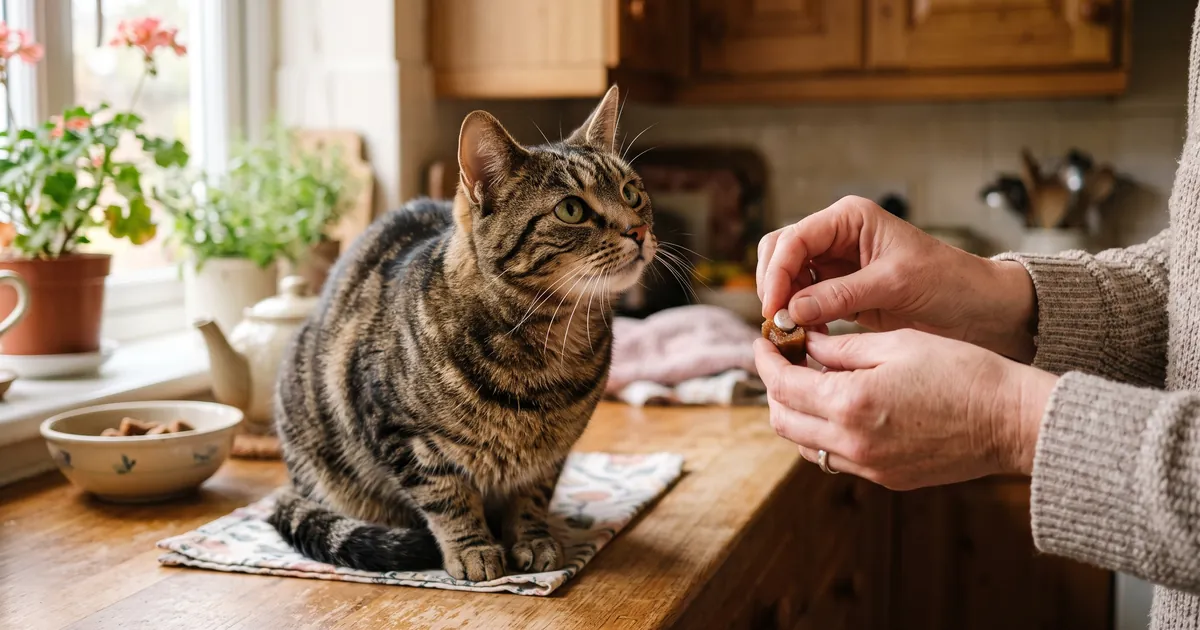
- Try food first. Wrap the tablet in a small piece of soft treat, a pill pocket or a little pâté. Offer a plain treat first, then the hidden one, then another plain one.
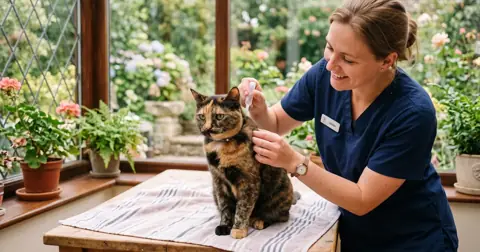
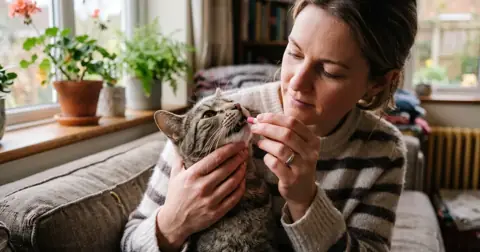
- If that fails, pill directly. Hold your cat's head from above with your thumb and finger behind the cheekbones, and tilt it back.
- Open the mouth by pressing gently on the lower front teeth with a finger of the other hand.
- Drop the tablet as far back on the tongue as possible.
- Close the mouth and gently stroke the throat or blow lightly on the nose to encourage swallowing.
- Follow with food or water so the tablet doesn't stick in the throat.
For more techniques, including the towel wrap and pill poppers, see our guide on how to give a cat a pill. If your cat won't take tablets at all, a spot-on wormer is a stress-free alternative.
Worming tablets for kittens
Kittens should be wormed every 2 weeks from 3 weeks of age until 8 weeks, then monthly until 6 months. Several tablets, such as Milbemax for small cats and kittens, are licensed from 6 weeks and 0.5 kg. Younger kittens are often given a liquid or paste instead. Weigh kittens before every dose, as they gain weight quickly.
Cat worming tablets and fleas
If your cat has fleas, it is very likely to have the flea tapeworm too. A tablet with praziquantel clears the tapeworm, but your cat will catch it again within weeks unless fleas are treated as well. Combine your worming tablet with a monthly flea product. Our guide to flea and wormer for cats explains how to line them up, and our guide to flea tablets for cats covers oral flea options if your cat already takes tablets well.
Worming tablets for cats that hunt
Cats that catch mice, voles, rats or rabbits pick up the prey tapeworm (Taenia taeniaeformis) each time they eat infected prey. A tablet clears it, but a busy hunter can be reinfected within a few weeks. For these cats, vets often recommend a broad-spectrum worming tablet every month rather than every three months. If your cat brings prey home or you find remains in the garden, treat it as a regular hunter. Our guide to whether cats kill rabbits and birds explains how much hunting UK cats do and how to reduce it.
Side effects of cat worming tablets
- Vomiting or drooling, especially if the cat bites the tablet.
- Mild diarrhoea for a day.
- Reduced appetite for a short time.
- Rarely, lethargy or wobbliness.
Most side effects are mild and short-lived. Contact your vet if your cat is unwell for more than a day or shows any neurological signs. If vomiting happens within an hour or two of the tablet, the dose may need repeating; ask your vet or pharmacist.
How much do cat worming tablets cost?
Broad-spectrum cat worming tablets usually cost £3 to £8 per dose, depending on brand, size and pack. Multipacks of 4 or 6 tablets reduce the price per dose. Piperazine-only tablets are cheaper, around £1 to £3, but they don't treat tapeworm. A typical outdoor cat wormed four times a year costs £15 to £30 a year in tablets.
Can you buy cat worming tablets without a prescription?
Yes. Most cat worming tablets are available without a prescription. Some must be sold by a pharmacist or an SQP, who will ask a few questions about your cat, while others are sold freely in pet shops. Prescription-only wormers are usually combination products that also treat fleas or other parasites.
FAQs
What are the best worming tablets for cats?
The best cat worming tablets kill both roundworms and tapeworms. In the UK, the main broad-spectrum options are Drontal (praziquantel, pyrantel) and Milbemax or Milpro (milbemycin oxime, praziquantel). Your vet may recommend one based on your cat's weight, age and lifestyle.
How often should I give my cat a worming tablet?
Most adult cats should have a worming tablet at least four times a year. Cats that hunt should be wormed monthly, and kittens every 2 weeks until 8 weeks old, then monthly until 6 months. Follow your vet's advice for your cat.
Can I crush a cat worming tablet?
Some worming tablets can be crushed and mixed with a small amount of food, but others should be given whole. Check the product leaflet. If crushed, make sure your cat eats all of the food, otherwise it won't get the full dose.
Do cheap cat worming tablets work?
Some do, but many low-cost pet-shop tablets contain piperazine, which only treats roundworm. They don't kill tapeworm, which cats catch from fleas and prey. Check the active ingredients on the box before buying.
What if my cat vomits after a worming tablet?
If your cat vomits within an hour or two of a tablet, the dose may not have been absorbed. Ask your vet or pharmacist whether to give another tablet. If vomiting continues, contact your vet.
Can I give a dog worming tablet to my cat?
No. Dog wormers are dosed for dogs and some contain ingredients or strengths that are unsafe for cats. Always use a product licensed for cats.
Sources and further reading
This guide is for general information only and is not a substitute for advice from a vet. Medicines, doses and costs change: always follow your vet and the product leaflet. If your cat is unwell or you think it has eaten something toxic, contact your vet or an emergency vet straight away.