Why do cats snore? Normal snoring vs signs of a problem
Why do cats snore? Just like people, cats can snore when the soft tissues in the nose and throat relax and vibrate during deep sleep. It's common and usually harmless, particularly in flat-faced breeds and overweight cats. But snoring that's new, getting louder, or that comes with noisy breathing while awake, sneezing or nasal discharge can be a sign of a problem that needs a vet.
Quick answer
- Cats snore when relaxed airway tissues vibrate during deep sleep.
- Snoring is common in flat-faced breeds (Persian, Exotic Shorthair) and overweight cats.
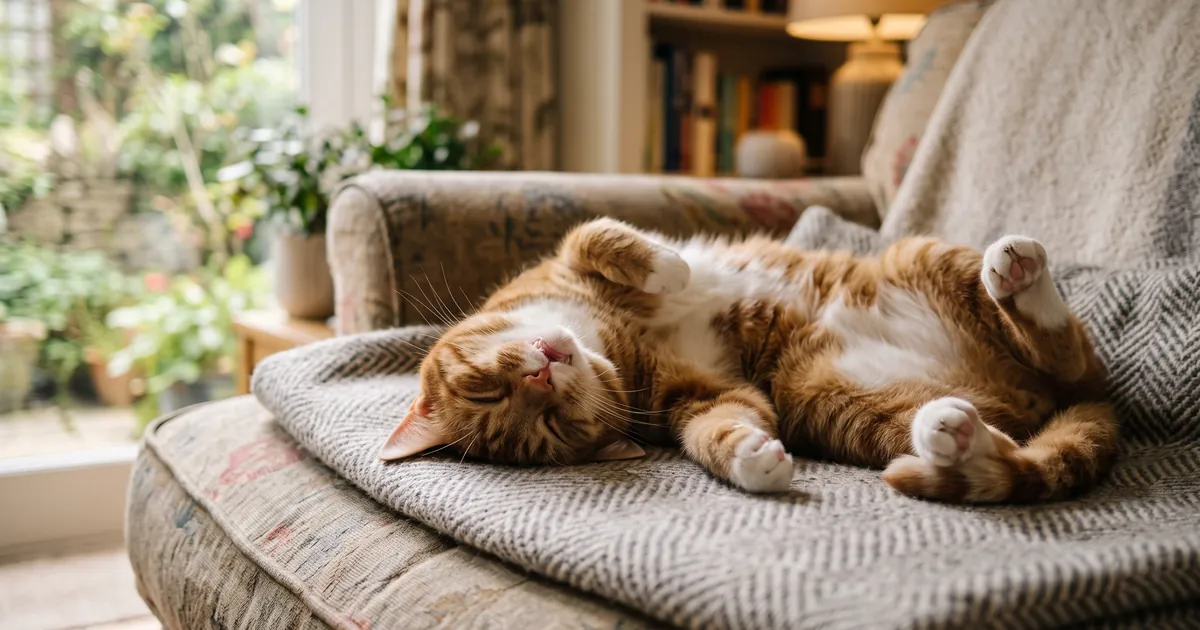
- Sleeping position matters: cats on their backs or with their heads tilted often snore more.
- See a vet if snoring is new or worsening, or comes with sneezing, discharge, nosebleeds or noisy breathing when awake.
Why do cats snore?
Snoring is the sound of air moving past relaxed, vibrating tissues in the upper airway: the nose, the soft palate at the back of the mouth and the throat. When a cat falls into deep sleep, these muscles relax and the airway narrows slightly. Air passing through makes the tissue vibrate, producing a snore. It's the same reason people snore.
Cats sleep for 12 to 16 hours a day, and they cycle between light sleep and deep sleep. Snoring is most likely during deep sleep, often when your cat is completely relaxed and stretched out.
Is cat snoring normal?
For many cats, yes. Gentle snoring is usually normal if your cat:
- Has snored softly for a long time without any change.
- Breathes quietly and easily when awake.
- Is eating, playing and behaving normally.
- Has no sneezing, nasal discharge or eye problems.
It's worth knowing your cat's normal pattern, so you can spot changes.
Which cats snore most?
Flat-faced (brachycephalic) breeds
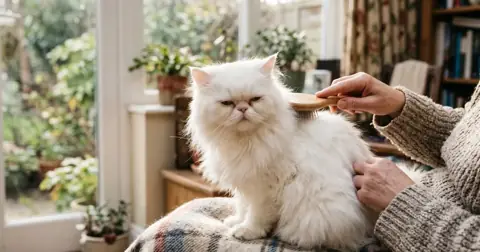
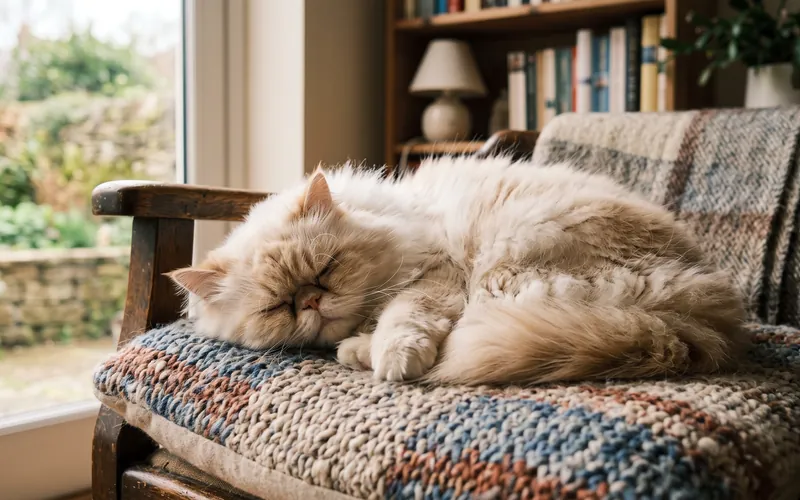
Persians, Exotic Shorthairs, Himalayans and other flat-faced cats have shortened skulls, narrow nostrils and a crowded airway. They snore and snuffle much more often, and some struggle to breathe easily, especially in heat or during exercise. Read our Persian cat guide for more on the health of flat-faced breeds.
Overweight cats
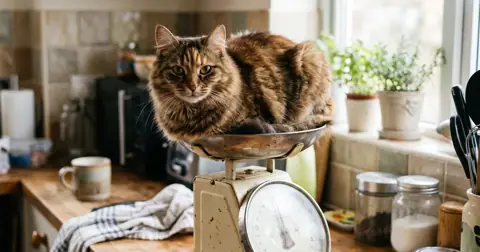
Fat deposits around the throat and neck narrow the airway, making snoring more likely. Check whether your cat is a healthy weight with our cat weight checker.
Older cats
Muscle tone in the throat can decrease with age, so some cats start snoring in their senior years. If snoring is new, though, it's still worth a check-up.
Cats in certain positions
Cats sleeping on their backs, with their heads tilted back or squashed into a corner, often snore more. It usually stops when they shift position.
When cat snoring may be a problem
Snoring can be a symptom of something narrowing or blocking the airway. Contact your vet if your cat's snoring:
- Started suddenly or is getting louder.
- Happens with noisy breathing while awake (snorting, wheezing or stridor).
- Comes with sneezing, nasal discharge or nosebleeds.
- Comes with a change in voice, gagging or difficulty swallowing.
- Comes with open-mouth breathing, fast breathing or reduced exercise tolerance.
- Is accompanied by weight loss, poor appetite or lethargy.
Emergency: if your cat is breathing with its mouth open, struggling to breathe or has blue or pale gums, go to a vet immediately.
Medical causes of snoring in cats
Upper respiratory infections
Cat flu and other infections cause congestion, which makes cats snore and snuffle. Signs include sneezing, discharge and watery eyes. Most cats improve within one to three weeks. See our guide to cat cold symptoms.
Allergies
Allergies to pollen, dust or smoke can inflame the nose. Read can cats get hayfever.
Nasopharyngeal polyps
Polyps are benign, fleshy growths that develop at the back of the throat or in the middle ear, most often in young cats. They cause snoring, noisy breathing, nasal discharge, ear problems and sometimes head tilt. A vet can usually remove them under anaesthetic.
Foreign bodies
Grass blades and other objects can be inhaled into the nose, causing sudden sneezing, pawing at the face, discharge from one nostril and snoring.
Nasal tumours
In older cats, a tumour in the nose can cause snoring, discharge (sometimes bloody) from one side, facial swelling and weight loss. Early investigation gives more treatment options.
Dental problems
Tooth root infections in the upper jaw can spread into the nasal passages, causing discharge and snoring. Our cat dental chart explains which teeth sit close to the nose.
How vets investigate snoring
Your vet will listen to your cat's breathing, examine the mouth, nose and throat, and ask about the history. Depending on the findings, they may recommend:
- Treatment for infection and a recheck.
- Blood tests.
- X-rays or CT scans of the head and chest.
- Examination of the nose and throat with a camera (rhinoscopy) under anaesthetic.
- Biopsies or samples for culture.
How to help a cat that snores
- Help overweight cats slim down slowly, using our cat food calculator to set portions.
- Reduce irritants: avoid smoking indoors, scented sprays, dusty litter and plug-in air fresheners.
- Use a humidifier or let your cat sit in a steamy bathroom if its nose is congested.
- Offer supportive beds that keep your cat's head slightly raised.
- Keep flat-faced cats cool in hot weather and avoid overexertion.
- Book a check-up if snoring changes.
Why do cats snore more in winter?
Some owners notice their cat snores more in the colder months. Central heating dries the air, which can make the lining of the nose drier and more irritated, and cats tend to sleep more deeply and for longer when it's cold. Colds and cat flu also spread more in winter, especially in multi-cat homes. A bowl of water near a radiator or a humidifier can help keep the air moist. If snoring comes with sneezing or discharge, treat it as a possible infection.
How cats sleep
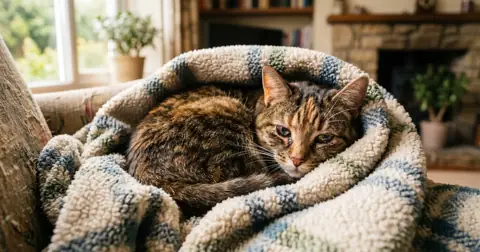
Cats spend much of the day dozing in light sleep, ready to wake at the slightest sound. They drop into deep sleep for shorter periods, and this is when snoring is most likely. During REM sleep, which follows deep sleep, cats may twitch their whiskers, paws and tail, chatter or make tiny sounds, which is thought to be linked to dreaming. A cat that feels safe and settled spends more time in deep sleep, so a snoring cat is often a very relaxed cat.
Recording your cat's snoring for the vet
Breathing noises often disappear in the consulting room, where cats are alert and stressed. A short video on your phone of your cat snoring, and of its breathing when awake, is extremely useful. Try to capture the sound clearly and show your cat's chest and nose. Count the breaths per minute while it's asleep too: 20 to 30 is normal, and more than 40 at rest needs prompt attention.
Questions your vet may ask
- When did the snoring start, and has it changed?
- Does it happen in every sleeping position?
- Is your cat noisy when breathing while awake or during play?
- Any sneezing, discharge, nosebleeds or changes in voice?
- Has your cat's appetite, weight or energy changed?
Snoring vs other sleep noises
Not every sound your sleeping cat makes is snoring. Cats twitch, chatter, purr and make little squeaks during REM (dreaming) sleep. These are normal. Purring in sleep is also normal. Snoring is a rhythmic, rumbling sound with each breath. If you're unsure, record a short video to show your vet.
Does snoring affect a cat's sleep?
For most cats, gentle snoring doesn't disturb their sleep at all. Cats with significant airway narrowing, such as some flat-faced breeds, may sleep less deeply, wake more often or prefer to sleep with their chin propped up on a toy or the edge of a bed to keep their airway open. If your cat seems tired during the day, sleeps in strange positions to breathe, or startles awake, mention it to your vet, as surgery to widen narrow nostrils can help some brachycephalic cats breathe more easily.
FAQs
Is it normal for cats to snore?
Yes, many cats snore occasionally, particularly in deep sleep or in certain positions. If your cat has always snored softly, breathes normally when awake and is otherwise well, it's usually nothing to worry about.
Why does my cat snore so loud?
Loud snoring can be caused by a flat face, extra weight, a sleeping position that narrows the airway, or a blocked nose from a cold or allergy. New, very loud snoring, or snoring with noisy breathing when awake, should be checked by a vet, as it can be caused by a polyp or something in the nose or throat.
Should I be worried if my cat starts snoring?
A cat that suddenly starts snoring when it never did before should have a vet check, especially if there's sneezing, nasal discharge, a nosebleed, a change in voice, mouth breathing or reduced appetite.
Do cats snore when they're sick?
Cats with a cold or cat flu often snore or snuffle because their nose is blocked. This usually improves as they recover. If it doesn't, or your cat stops eating, see your vet.
Can losing weight stop a cat snoring?
Often, yes. Extra fat around the neck and throat narrows the airway. Helping an overweight cat lose weight gradually can reduce snoring and has many other health benefits.
Do kittens snore?
Kittens can snore occasionally, especially with a cold. Young cats with persistent snoring or noisy breathing may have a nasopharyngeal polyp, a benign growth at the back of the throat, which a vet can usually remove.
Sources and further reading
This guide is for general information only and is not a substitute for advice from a vet. Medicines, doses and costs change: always follow your vet and the product leaflet. If your cat is unwell or you think it has eaten something toxic, contact your vet or an emergency vet straight away.