Persian cat: care, health and UK prices
The Persian cat is one of the oldest and most glamorous breeds, with a long, flowing coat, round face and calm, gentle personality. Persians are quiet, affectionate indoor cats, but they need daily grooming and their flat faces can cause breathing and eye problems. In the UK, a registered Persian kitten usually costs £700 to £1,500. Here's what you need to know.
Quick answer
- Persians are calm, quiet and affectionate, and well suited to indoor life.
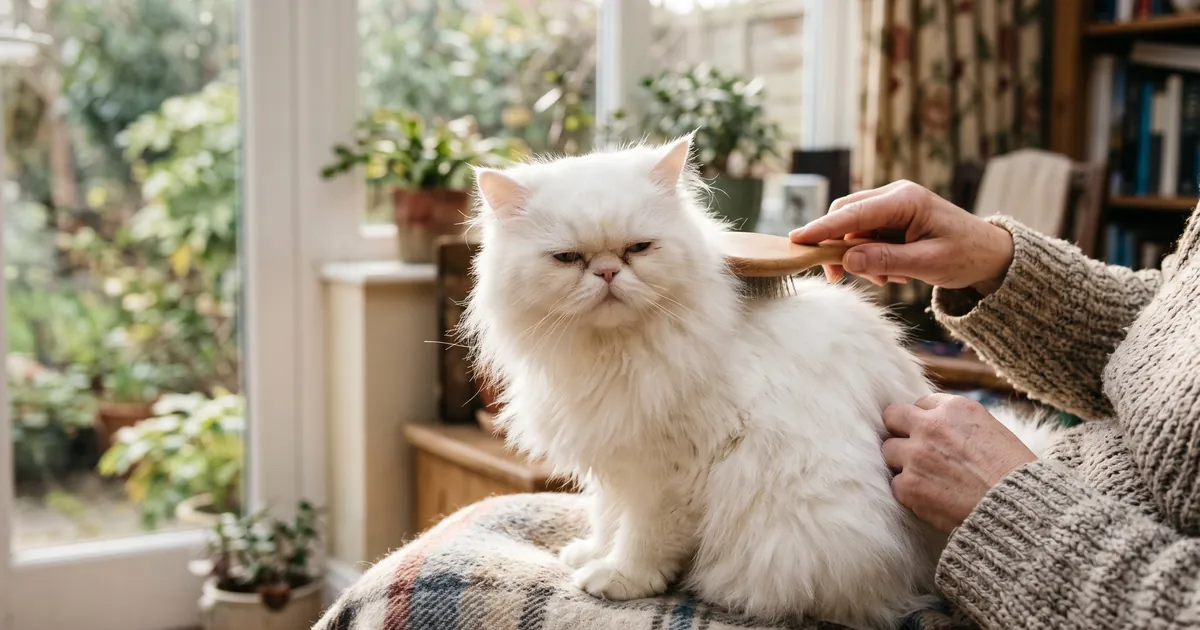
- Their long coat needs daily combing to prevent painful mats.
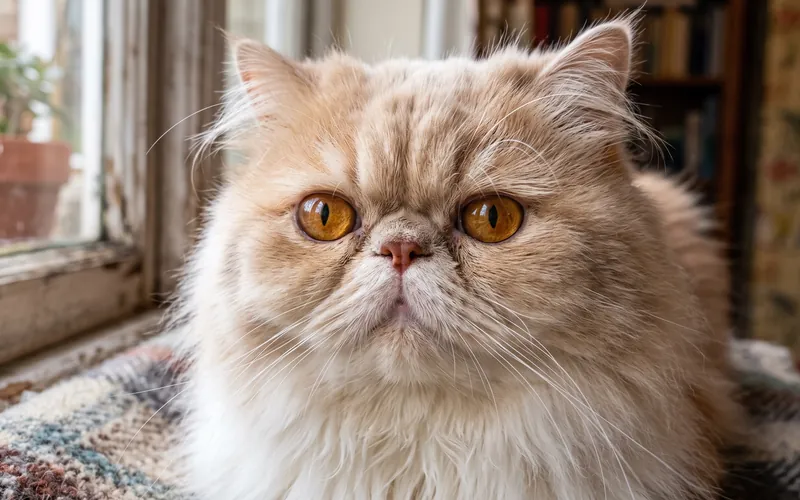
- Flat faces can cause breathing, eye and dental problems; choose breeders who avoid extreme faces.
- Ask breeders for a PKD DNA test. UK kittens usually cost £700–£1,500.
Persian cat at a glance
| Trait | Persian |
|---|---|
| Size | Medium, cobby (short and sturdy) |
| Weight | Females 3.2–4.5 kg, males 4–5.5 kg |
| Coat | Very long, thick and fine |
| Grooming | Daily |
| Energy | Low |
| Temperament | Calm, quiet, gentle, affectionate |
| Lifespan | Around 12–17 years |
| UK kitten price | £700–£1,500 |
History of the Persian
Long-haired cats from Persia (modern Iran) and Turkey reached Europe in the 1600s. In Victorian Britain, they became the stars of the earliest cat shows, and Queen Victoria herself kept blue Persians. Over the 20th century, breeders selected for an increasingly flat face and fuller coat. Today, many breeders and welfare organisations are working to move back towards a more moderate face shape for better health.
Persian colours and varieties
- Self (solid) colours: white, black, blue, red, cream, chocolate and lilac. Blue Persians are a historic British favourite.
- Silver and golden: including the shimmering Chinchilla Persian.
- Smoke and shaded: dark tips over a pale undercoat.
- Tabby, tortoiseshell and bicolour patterns.
- Colourpoint Persians: pointed with blue eyes, known as Himalayans in the US.
If you're looking for blue Persian breeders or Himalayan Persian breeders, contact the relevant GCCF breed clubs, which cover specific colours.
Persian personality
Persians are among the calmest cats. They tend to be:
- Quiet, with soft voices.
- Gentle and affectionate, enjoying laps and calm company.
- Content indoors, preferring a peaceful routine.
- Less inclined to climb and leap than active breeds.
- Sensitive to noisy, chaotic environments, preferring a predictable daily routine.
- Loyal to their family and often wary of loud visitors at first.
They're a classic choice among the best indoor cat breeds.
Grooming a Persian cat
Grooming isn't optional for a Persian. Their fine undercoat tangles easily, and mats pull painfully on the skin and can trap dirt and moisture.
- Comb daily with a wide-toothed metal comb, then a finer comb, working down to the skin.
- Focus on problem areas: armpits, belly, behind the ears and the "trousers" on the back legs.
- Clean the face daily with cotton wool and cooled boiled water, especially tear stains and skin folds.
- Keep the bottom clean: a "sanitary trim" around the back end helps.
- Book a professional groom every few months, or a full clip if mats develop.
Persians swallow a lot of fur, so hairballs are common. See our guide to cat hairball remedies.
Persian cat health
| Condition | What to know |
|---|---|
| Polycystic kidney disease (PKD) | Inherited cysts in the kidneys; DNA test available. Only buy from PKD-negative parents. |
| Breathing problems (brachycephaly) | Narrow nostrils and crowded airways cause snoring, noisy breathing and heat intolerance |
| Eye problems | Tear overflow, staining, corneal ulcers and corneal sequestrum |
| Dental problems | Crowded, misaligned teeth |
| Skin fold dermatitis | Infection in facial folds |
| Hypertrophic cardiomyopathy (HCM) | Heart scans in breeding cats |
| Difficult births | Large, round heads can make kittening harder |
Learn more about eye care in our guide to cat eye problems, and about noisy breathing in why do cats snore. Persians usually cost more to insure; see cat insurance.
Choose a moderate face. Persians with a visible nose, open nostrils and a less flattened face generally breathe more easily and have fewer eye problems. Ask breeders about their approach and see the parents.
A daily care routine for a Persian
| When | Task |
|---|---|
| Every day | Comb the whole coat, wipe the eyes and face folds, check the bottom is clean |
| Every week | Check claws, ears and teeth; brush teeth if your cat allows |
| Every few months | Professional groom or bath, and a hygiene trim |
| Every year | Vet health check, vaccination booster, dental check and kidney screening as advised |
Persian kittens: what to expect
Persian kittens are usually gentle and playful, though calmer than most breeds. Start handling, face cleaning and short combing sessions from the day your kitten comes home, so grooming becomes a calm, normal part of life. Kittens' coats are softer and shorter, and the full adult coat develops over the first year or two. Keep an eye on the eyes and nose: some kittens need daily cleaning from the start.
Keeping a Persian cool in summer
Flat-faced cats can't cool themselves as efficiently by breathing, and their thick coats hold heat. On hot days, keep your Persian indoors in the coolest room, close curtains, offer plenty of water and cool surfaces such as tiles or a cooling mat, and never leave it in a car or conservatory. A summer clip from a groomer can help. Signs of overheating include panting, drooling and restlessness, which need urgent attention.
Persians with children and other pets
Persians are gentle and usually tolerant, but they prefer calm handling and a quiet home. They suit families with older, considerate children better than very busy households. Most get on well with other calm cats and quiet dogs, especially if introduced slowly.
The cost of owning a Persian
Persians can cost more to keep than many breeds because of grooming, eye and dental care, and higher insurance premiums. Budget for professional grooming, good combs, unscented wipes and regular vet checks, alongside routine costs such as vaccinations and neutering.
Persian cat price in the UK
| Option | Typical UK cost |
|---|---|
| Registered pet kitten (PKD-negative parents) | £700–£1,500 |
| Show or breeding quality | £1,500+ |
| Rehomed adult Persian | £100–£250 |
Budget for ongoing grooming (professional grooms often cost £40 to £80), eye and dental care, and insurance.
How to buy a Persian cat in the UK
- Find breeders through GCCF Persian breed clubs, which cover specific colours.
- Check PKD status for both parents and ask about heart scans.
- Look at the parents' faces: open nostrils and clear eyes are good signs.
- Visit the kittens and check eyes, nose and coat are clean.
- Check paperwork: registration, vaccinations, microchip and a contract.
- Ask for grooming advice and start daily grooming from day one.
Persian cat rescue
Persians often come into rescue because of grooming needs or owners' health changes. Persian breed clubs run rehoming schemes, and general rescues frequently have Persians and Persian crosses. Many arrive matted and are shaved for comfort; the coat grows back. Adopting an adult Persian can be a lovely way to give a calm cat a second chance. Find out how rescues work in our guide on how to foster a cat.
Feeding a Persian
Some Persians find it hard to pick up food because of their flat faces. Wide, shallow bowls or flat plates help, and some breeders recommend kibble shapes designed for flat-faced cats. Persians are not very active, so they can gain weight easily: measure meals using our cat food calculator. Wet food adds moisture, which supports kidney health in a breed prone to PKD.
Persian vs Exotic Shorthair
If you love the Persian's personality but can't commit to daily grooming, consider the Exotic Shorthair. It has the same calm temperament and round face, with a short, plush coat that needs only weekly brushing. It shares the same flat-face health considerations.
Is a Persian right for you?
A Persian may be ideal if you want a calm, quiet indoor companion and you enjoy daily grooming. It may not suit you if you want a low-maintenance cat, live in a hot home, or have a busy, noisy household. Compare with other options in our guide to the best indoor cat breeds.
FAQs
How much is a Persian cat in the UK?
A registered Persian kitten from a health-testing breeder usually costs £700 to £1,500. Some colours and show lines cost more. Rehomed adult Persians typically cost £100 to £250 to adopt.
Do Persian cats need a lot of grooming?
Yes. Persians need daily combing to stop their fine undercoat from matting, plus regular face cleaning. Many owners also book professional grooming every few months.
What health problems do Persian cats have?
Common concerns include polycystic kidney disease (PKD), breathing difficulties linked to a flat face, eye problems such as tear staining and corneal sequestrum, dental crowding, skin fold infections and heat intolerance.
What is a Himalayan Persian?
A Himalayan is a Persian with a colourpoint pattern and blue eyes, like a long-haired Siamese in colouring. In the UK, the GCCF calls these Colourpoint Persians.
Are Persian cats good for first-time owners?
Persians are calm and affectionate, but their grooming and health needs are demanding. They suit owners who have time for daily care and can afford regular vet and grooming costs.
Are there Persian cat rescues in the UK?
Yes. Persian breed clubs run rehoming services, and general rescues often have Persians, sometimes given up because of grooming needs. Many arrive matted and need a full clip before rehoming.
Sources and further reading
This guide is for general information only and is not a substitute for advice from a vet. Medicines, doses and costs change: always follow your vet and the product leaflet. If your cat is unwell or you think it has eaten something toxic, contact your vet or an emergency vet straight away.