Devon Rex cat: the playful pixie cat from Devon
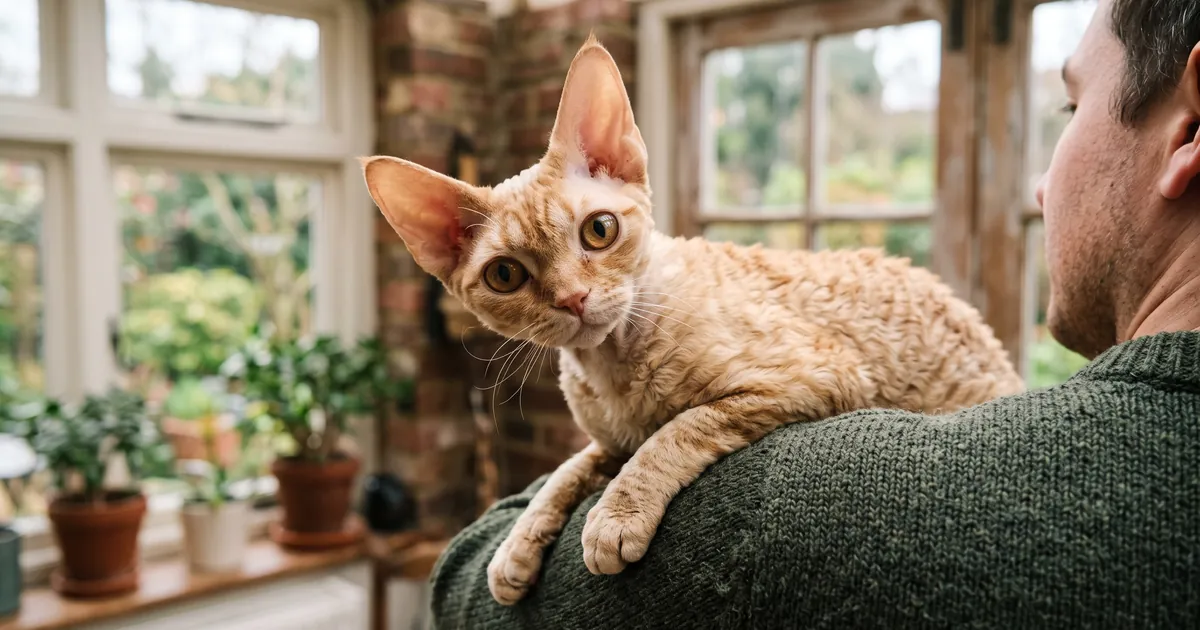
The Devon Rex cat is a British breed with a soft, wavy coat, huge ears and an impish, pixie-like face. Often called "a monkey in a cat suit", the Devon Rex is playful, mischievous and very people-focused, and loves to perch on shoulders. In the UK, a registered Devon Rex kitten usually costs £700 to £1,200. Here's what you need to know about personality, care and health.
Quick answer
- A British breed discovered in Devon in 1960, with a short, curly coat and large ears.
- Playful, affectionate and clownish; they love warmth and people.
- UK kittens usually cost £700–£1,200 from a registered breeder.
- Ask breeders about the CMS DNA test and blood group; many Devon Rex are blood type B.
Devon Rex at a glance
| Trait | Devon Rex |
|---|---|
| Size | Small to medium, slender but muscular |
| Weight | Females 2.5–3.5 kg, males 3.5–4.5 kg |
| Coat | Short, soft, wavy; sometimes thin patches |
| Grooming | Low: gentle hand grooming |
| Energy | High |
| Temperament | Playful, mischievous, affectionate, people-focused |
| Lifespan | Around 14–17 years |
| UK kitten price | £700–£1,200 |
History of the Devon Rex
The Devon Rex began in 1960 in Buckfastleigh, Devon, when a curly-coated kitten named Kirlee was born to a stray. Breeders at first thought Kirlee carried the same gene as the curly-coated Cornish Rex discovered a decade earlier in neighbouring Cornwall, but crosses produced only straight-coated kittens: the two curly coats were caused by different genes. Kirlee became the founder of a new breed, which was recognised by the GCCF in 1967. It's one of the UK's own breeds and now popular worldwide, with a devoted following of owners who love its playful, affectionate character.
Appearance
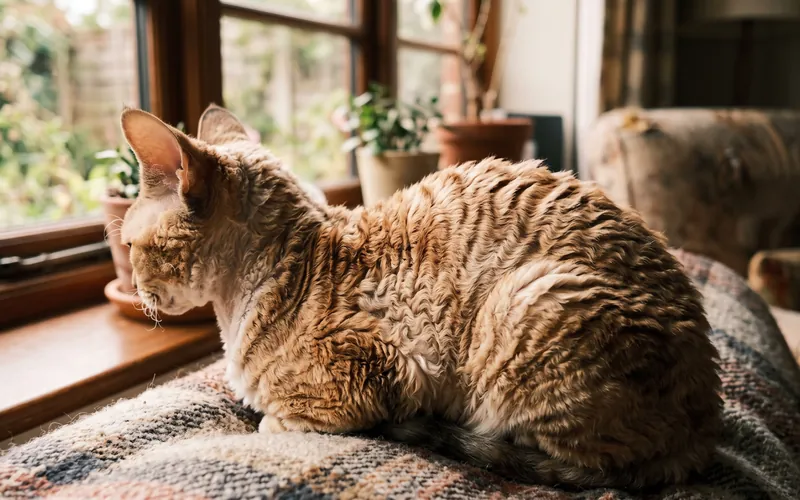
The Devon Rex has a short, wedge-shaped face with prominent cheekbones, large wide-set eyes and enormous, low-set ears that give it an elfin look. The coat is soft and wavy, sometimes described like crushed velvet. Whiskers are often short and curly or broken. Devons come in almost every colour and pattern, including pointed. The coat can be thin on the belly, chest and ears, and some cats have patchy areas.
Devon Rex personality
- Playful and clownish: they love games, fetch and exploring.
- People-focused: they follow owners around and like to be involved.
- Shoulder-sitters: many like to ride on shoulders or perch high.
- Warmth-seeking: they snuggle under duvets and onto laps.
- Intelligent: quick to learn tricks, play fetch and open cupboards and drawers.
- Food-loving: they have big appetites and are notorious for stealing food from plates, so keep meals covered.
Devons are usually sociable with visitors, children and other pets, and they dislike being left alone for long periods.
Caring for a Devon Rex
Coat and skin
The delicate coat breaks easily, so avoid vigorous brushing. A gentle stroke with a soft cloth, chamois or rubber mitt is enough. Some Devons have slightly oily skin that benefits from wiping with a damp cloth, or an occasional bath with a gentle cat shampoo recommended by your vet.
Ears
Those large ears collect wax and debris. Check them weekly and gently clean the outer ear if needed with a vet-approved cleaner. Our guide to why cats' ears feel hot or cold explains when ear changes need a vet.
Warmth
With their thin coat, Devons feel the cold. Provide heated beds, fleece blankets and warm spots, and keep them indoors or give sheltered outdoor access in winter.
Exercise and enrichment
Devons need daily play, climbing trees, puzzle feeders and company. A second cat can help if you're out during the day.
Diet
Devons often have hearty appetites but should stay slim and athletic. Measure meals with our cat food calculator.
Devon Rex health
| Condition | Notes |
|---|---|
| Congenital myasthenic syndrome (CMS, Devon Rex myopathy) | Inherited muscle weakness affecting the neck and swallowing; DNA test available |
| Hereditary baldness (hypotrichosis) | Severe hair loss; breeders avoid affected lines |
| Hypertrophic cardiomyopathy (HCM) | Heart scans in breeding cats |
| Patellar luxation and hip dysplasia | Kneecap and hip joint problems |
| Blood type B | Common in the breed; important for breeding (to avoid kitten deaths from incompatible blood) and for transfusions |
| Skin conditions | Yeast overgrowth and urticaria pigmentosa in some cats |
Ask your vet to note your cat's blood group on its records in case a transfusion is ever needed. Pedigree cats usually cost more to insure; see our guide to cat insurance.
Devon Rex and allergies
Because they shed less than most cats, Devon Rex are often suggested for people with allergies. But cat allergies are mainly triggered by Fel d 1, a protein in saliva and skin, not by fur itself. Devons still produce Fel d 1, so some allergic people react to them. If you have allergies, spend time with Devon Rex cats before committing, and talk to your GP if you have asthma. Our Siberian cat guide explains Fel d 1 in more detail.
Signs of congenital myasthenic syndrome
Congenital myasthenic syndrome, also called Devon Rex myopathy or spasticity, usually shows in kittens from a few weeks to a few months old. Affected kittens have weakness in the neck and shoulders, hold their head low, tire quickly and may struggle to swallow or eat. There's no cure, which is why DNA testing breeding cats is so important. Ask breeders for results for both parents, and see your vet if your kitten shows any of these signs.
The cost of owning a Devon Rex
Devons are inexpensive to groom, but budget for heated beds, plenty of toys, ear cleaner, insurance and, for many owners, a second cat for company. Routine costs such as vaccinations and neutering are explained in our guides to vaccination costs and neutering costs.
Devon Rex price in the UK
| Option | Typical UK cost |
|---|---|
| Registered pet kitten | £700–£1,200 |
| Show or breeding quality | £1,200+ |
| Rehomed adult | £100–£250 |
Finding Devon Rex cats for sale in the UK
- Contact Devon Rex breed clubs via the GCCF.
- Ask about health tests: CMS DNA status, blood group, heart scans and any history of baldness or kneecap problems.
- Visit the kittens with their mother in a warm, clean home.
- Check the coat is soft and wavy and the kittens are lively and confident.
- Check paperwork: registration, vaccinations, microchip and contract.
- Collect at around 13 weeks or older.
Be wary of "Devonshire Rex" or "Devon Rex" kittens advertised without registration or for delivery. Always see the kitten with its mother and ask for health test results.
Devon Rex vs Cornish Rex vs Sphynx
| Devon Rex | Cornish Rex | Sphynx | |
|---|---|---|---|
| Coat | Loose, wavy, soft | Tight, even waves | Hairless or fine down |
| Body | Slender, broad chest | Long, arched, greyhound-like | Muscular, pot-bellied |
| Ears | Very large, low-set | Large, high-set | Very large |
| Grooming | Gentle wiping | Gentle wiping | Regular bathing |
Read our Sphynx cat guide to compare.
Devon Rex kittens
Devon Rex kittens are energetic, curious and fearless, often climbing onto shoulders and into cupboards within days of arriving. Their coat may change and thin during the first year before settling. Keep them warm, kitten-proof your home and provide plenty of toys. Start ear cleaning and handling early. Check plants and household dangers with our toxic plant checker.
Devon Rex with children and other pets
Devons are usually sociable and tolerant, enjoying the activity of family life and the company of other cats and cat-friendly dogs. They often do best with another playful companion, especially in homes where people work during the day. Teach children to handle them gently, as their slender build makes rough play unsuitable.
Is a Devon Rex right for you?
A Devon Rex may be perfect if you want an affectionate, playful, low-shedding cat that loves company, and you can provide warmth and plenty of interaction. It may not suit you if you're out all day, want a calm, independent cat, or live in a cold home. Compare breeds in our guide to the best indoor cat breeds.
FAQs
How much is a Devon Rex cat in the UK?
A registered Devon Rex kitten from a health-testing UK breeder typically costs £700 to £1,200. Rehomed adults usually cost £100 to £250.
Do Devon Rex cats shed?
Devon Rex shed less than most cats because of their short, curly coat, but they do shed. They're not hypoallergenic, although some people with mild allergies find them easier to live with.
Are Devon Rex cats good pets?
Yes, for owners who want an affectionate, playful and sociable cat. They love company, often follow their owners and enjoy games. They don't like being left alone for long.
What health problems do Devon Rex cats have?
Devon Rex can be affected by congenital myasthenic syndrome (an inherited muscle weakness with a DNA test), hereditary baldness, hypertrophic cardiomyopathy, kneecap problems and skin conditions. Many are blood type B, which matters for breeding and transfusions.
What is the difference between a Devon Rex and a Cornish Rex?
Both have curly coats from different genetic mutations. The Devon Rex has larger ears, a shorter, pixie-like face and a looser, wavier coat. The Cornish Rex has a more slender, greyhound-like body and tight, even waves.
Do Devon Rex cats need baths?
Not usually. Their skin can become slightly oily, so gentle wiping with a damp cloth helps. Occasional baths may be needed if their skin gets greasy, using a vet-recommended cat shampoo.
Sources and further reading
This guide is for general information only and is not a substitute for advice from a vet. Medicines, doses and costs change: always follow your vet and the product leaflet. If your cat is unwell or you think it has eaten something toxic, contact your vet or an emergency vet straight away.