Birman cat: the gentle, white-gloved breed
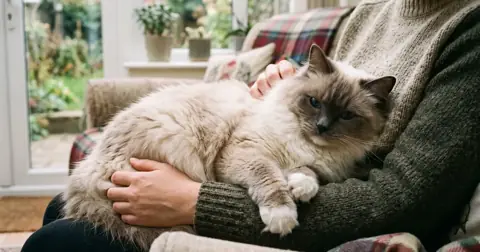
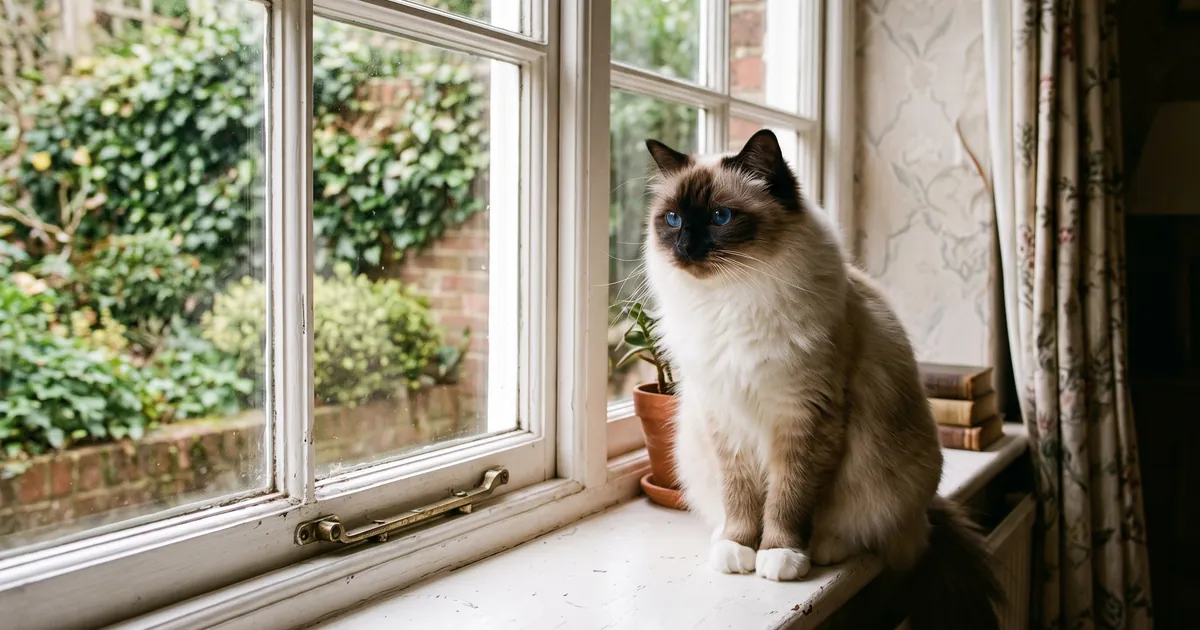
The Birman cat, known as the Sacred Cat of Burma, is a gentle, sociable breed with deep blue eyes, a silky semi-long coat and distinctive pure white "gloves" on all four paws. Birmans are calm, affectionate and adaptable, making them excellent family and indoor cats. In the UK, a registered Birman kitten usually costs £600 to £1,000.
Quick answer
- Birmans are gentle, sociable and calm, and adapt well to family and indoor life.
- Every Birman is pointed with blue eyes and white gloves on all four paws.
- Their silky coat has little undercoat, so it mats less than many long-haired breeds.
- UK kittens usually cost £600–£1,000; many Birmans are blood type B.
Birman cat at a glance
| Trait | Birman |
|---|---|
| Size | Medium to large, stocky |
| Weight | Females 3.5–5 kg, males 4.5–6.5 kg |
| Coat | Semi-long, silky, with little undercoat |
| Eyes | Deep blue |
| Grooming | Once or twice a week |
| Energy | Low to medium |
| Temperament | Gentle, sociable, calm, quietly playful |
| Lifespan | Around 14–16 years |
| UK kitten price | £600–£1,000 |
The legend and history of the Birman
According to legend, Birmans were temple cats in Burma. A white cat named Sinh sat with a dying priest in front of a golden, blue-eyed goddess; the cat's fur turned golden, its eyes turned blue, and its paws, resting on the priest, stayed pure white as a sign of purity. The real history is less certain: Birmans were developed in France in the early 20th century and arrived in the UK in the 1960s. They're now a popular, well-established breed.
Birman colours and markings
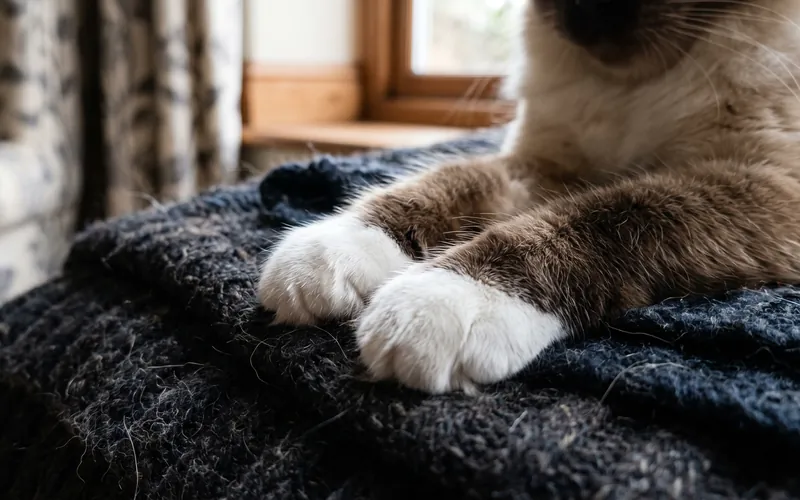
Every Birman shares three features: a pointed pattern (darker face, ears, legs and tail), deep blue eyes and white paws. The white "gloves" on the front paws should be even, and the white extends up the back of the back legs in points called "laces".
| Point colour | Look |
|---|---|
| Seal point | Dark brown points on a golden-cream body |
| Blue point | Grey-blue points on a cool white body |
| Chocolate point | Milk-chocolate points on an ivory body |
| Lilac point | Pinkish-grey points on a white body |
| Red and cream point | Warm orange or pale cream points |
| Tortie and tabby point | Mixed or striped points in many colours |
Like Siamese and Ragdolls, Birman kittens are born pale and their points develop gradually. Read about how cats see the world in our guide to what colours cats can see.
Birman personality
- Gentle and calm: rarely aggressive, and patient with handling.
- Sociable: they enjoy company and usually greet visitors.
- Affectionate but not clingy: they like being near you without constant demands.
- Quietly playful: they enjoy interactive play and puzzle toys.
- Soft-voiced: much quieter than the Siamese.
- Good with other pets: they usually get on with cats and cat-friendly dogs.
Caring for a Birman
Grooming
The Birman's silky coat lacks a heavy undercoat, so it mats much less than a Persian's. Comb once or twice a week, and more often during spring and autumn moults, paying attention to the belly, armpits and back legs. Keep the white gloves clean with a damp cloth if needed. Regular grooming also reduces hairballs; see our guide to cat hairball remedies.
Exercise and enrichment
Birmans are content indoors but still need daily play, climbing opportunities and window perches. Many enjoy a secure garden or catio.
Diet and weight
Birmans are sturdy cats that can gain weight if overfed. Measure meals with our cat food calculator and check weight with our cat weight checker.
Company
Birmans are sociable and can become lonely if left alone for long periods. Many owners keep two cats.
Birman cat health
Birmans are generally healthy, but responsible breeders watch for:
| Condition | Notes |
|---|---|
| Blood type B | Common in the breed; important when breeding and if your cat ever needs a transfusion |
| Hypertrophic cardiomyopathy (HCM) | Heart scans in breeding cats |
| Corneal dermoids | Patches of skin-like tissue on the eye surface, treatable with surgery |
| Congenital hypotrichosis | Rare inherited hairlessness in kittens |
| Kidney problems | Monitor kidney function in older cats |
Ask your vet to record your Birman's blood group. Our guide to cat insurance explains breed-related insurance costs.
Birman cat price in the UK
| Option | Typical UK cost |
|---|---|
| Registered pet kitten | £600–£1,000 |
| Show or breeding quality | £1,000+ |
| Rehomed adult Birman | £100–£250 |
Finding Birman cats and kittens for sale in the UK
- Contact Birman breed clubs via the GCCF for breeder lists.
- Ask about health: heart scans, blood typing and any eye problems in the family.
- Visit the kittens with their mother and check they're confident, clean and well socialised.
- Check paperwork: registration, vaccinations, microchip, worming and a contract.
- Collect at around 13 weeks or older.
Cheap "Birman" kittens without papers are often crosses. That's fine if you want a pet, but never buy without seeing the kitten with its mother, and avoid sellers who offer delivery or won't let you visit.
Birman rescue and rehoming
Birmans occasionally need new homes through breed club rehoming schemes, and general rescues sometimes have Birmans or Birman crosses. Adult Birmans usually settle into new homes quickly thanks to their easy-going nature. Learn how rescues work in our guide on how to foster a cat.
Birman vs Ragdoll vs Siamese
| Birman | Ragdoll | Siamese | |
|---|---|---|---|
| Size | Medium–large | Large | Medium, slender |
| Coat | Semi-long, silky | Semi-long, plush | Very short |
| Paws | Always white gloves | White in mitted and bicolour only | Coloured points |
| Voice | Quiet | Quiet | Very loud |
| Energy | Low–medium | Low–medium | High |
Read our guides to the Ragdoll and Siamese to compare.
Birman cat facts
- Birmans were nearly lost during the Second World War, and the breed was rebuilt from just a few surviving cats.
- The white gloves are caused by a white-spotting gene that only shows on the paws.
- Birmans are one of the few long-haired breeds without a dense undercoat.
- Their deep blue eye colour is linked to the same gene that causes the pointed pattern.
- Birmans are often described as "dog-like" because they follow their owners and greet them at the door.
Setting up your home for a Birman
Birmans are adaptable, but a few things help them thrive, especially indoors. Provide a sturdy cat tree near a window, a couple of cosy beds, a covered hiding spot, scratching posts in the main rooms and a few toys you can rotate each week. Place food, water and litter trays in separate, quiet areas. Birmans love being near their people, so put at least one bed in the room where you spend the most time. Check every houseplant with our toxic plant checker before your cat arrives.
Birman kittens
Birman kittens are born almost white, and their points and gloves become clearer over the first weeks. They're curious and playful but usually calmer than many breeds. Start gentle grooming early, provide climbing options and kitten-proof your home before collection. Like all kittens, they need a full vaccination course, neutering and a microchip; see our guides to vaccination costs and neutering costs.
Birmans in older age
Many Birmans live well into their mid-teens. As they age, they may sleep more, groom less thoroughly and become less keen on high jumps. Help by combing more often, adding steps to favourite perches, using low-sided litter trays and booking six-monthly health checks, including kidney tests and blood pressure. Our cat years calculator shows when your Birman becomes a senior.
Birmans with children and other pets
Birmans are among the most family-friendly breeds. Their patience and gentle nature suit homes with children who are taught to handle cats kindly. They usually welcome another cat and cope well with calm, cat-friendly dogs after a gradual introduction.
The cost of owning a Birman
Birmans are moderate to keep: food for a medium-to-large cat, a good comb and brush, toys and climbing furniture, and insurance. They rarely need professional grooming. Budget for routine vaccinations, parasite treatment and annual health checks.
Is a Birman right for you?
A Birman may be ideal if you want a calm, affectionate, family-friendly cat that's happy indoors and doesn't need daily grooming. It may not suit you if you want a very independent cat or are out for long hours with no companion for your cat. Compare with other options in our guide to the best indoor cat breeds.
FAQs
How much is a Birman cat in the UK?
A registered Birman kitten from a UK breeder usually costs £600 to £1,000. Rehomed adult Birmans typically cost £100 to £250.
Are Birman cats affectionate?
Yes. Birmans are known for being gentle, people-friendly and affectionate without being overly demanding. Most enjoy company, laps and quiet play.
Do Birman cats need a lot of grooming?
Less than most long-haired breeds. Their silky coat has little undercoat, so a comb once or twice a week is usually enough, with extra grooming during moulting.
What colours do Birman cats come in?
Birmans are always pointed with blue eyes and white gloves. Point colours include seal, blue, chocolate, lilac, red and cream, plus tortie and tabby points.
Are Birmans good with children?
Birmans are usually patient and gentle, making them a good choice for families with children who are taught to handle cats calmly.
Are Birmans good indoor cats?
Yes. Their calm, adaptable nature makes them one of the best breeds for indoor living, as long as they have play, climbing spaces and company.
Sources and further reading
This guide is for general information only and is not a substitute for advice from a vet. Medicines, doses and costs change: always follow your vet and the product leaflet. If your cat is unwell or you think it has eaten something toxic, contact your vet or an emergency vet straight away.