Keeping a cat in after moving: how long and how to let it out
Most UK cat charities recommend keeping a cat in after moving for at least two to three weeks, and longer for nervous cats or short-distance moves. This gives your cat time to learn that the new home is its territory, so it's far less likely to wander off or try to return to the old house. Here's how to settle your cat and let it out safely for the first time.
Quick answer
- Keep your cat indoors for at least 2–3 weeks after moving; up to 4–6 weeks for nervous cats or if you've moved only a short distance.
- Start with one quiet room containing food, water, litter, bed and scratcher.
- Let your cat out for the first time before a meal, for short supervised trips, and build up gradually.
- Update your cat's microchip address before the move.
Why keep your cat indoors after moving?
Cats are strongly attached to their territory. After a move, your cat has lost every familiar smell, landmark and route. If it goes outside too soon, it may get lost, panic and hide, or try to find its way back to its old home, which is a particular risk if you've moved only a short distance.
Keeping your cat indoors for a few weeks lets it learn the new house as its "core territory", fill it with its own scent and form a strong bond with the new home before it explores outside.
How long to keep a cat in after moving
| Situation | Suggested time indoors |
|---|---|
| Confident adult cat, long-distance move | 2–3 weeks |
| Nervous or shy cat | 3–6 weeks |
| Moved within a few miles of the old home | 4–6 weeks, with extra precautions |
| Newly adopted adult cat | 2–4 weeks, until settled and bonded |
| Kitten | Until fully vaccinated, neutered and microchipped (usually 5–6 months) |
These are guidelines. Watch your cat's behaviour: a cat that's eating well, using its tray, exploring confidently, sleeping in the open and coming to you for attention is usually ready to start going out.
Before and on moving day
- Update the microchip with your new address and phone number. It's a legal requirement in England to keep details up to date.
- Get a collar ID tag with your new phone number (on a safety collar).
- On moving day, shut your cat in one empty, quiet room with food, water, litter and its bed, with a sign on the door, or book it into a cattery for a day or two.
- Transport your cat last in a secure carrier, covered with a towel.
- Bring familiar items: unwashed bedding, toys and scratchers carry reassuring smells.
Settling your cat into the new home
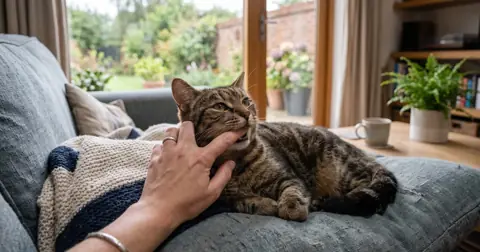
- Start with one room containing everything your cat needs: food, water, litter tray, bed, scratching post and hiding places. Keep the door closed for the first day or two.
- Spread familiar scent: gently rub a soft cloth on your cat's cheeks and wipe it on doorframes and furniture at cat height.
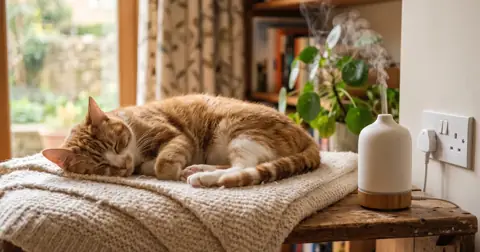
- Plug in a pheromone diffuser a day before your cat arrives. See our guide to cat calming products.
- Keep routines the same: feeding times, play and bedtime.
- Open up the house gradually, one room at a time, once your cat seems relaxed.
- Check for escape routes: open windows, chimneys, gaps behind kitchen units and loose floorboards.
- Provide high perches and hiding places so your cat can watch from safety.
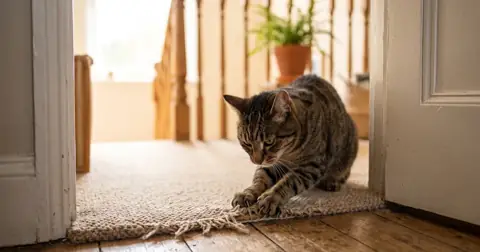
Some cats scratch more in a new home as they mark their territory. Place scratchers near doorways; our guide on how to stop a cat scratching carpet explains why.
Letting cats out for the first time after moving
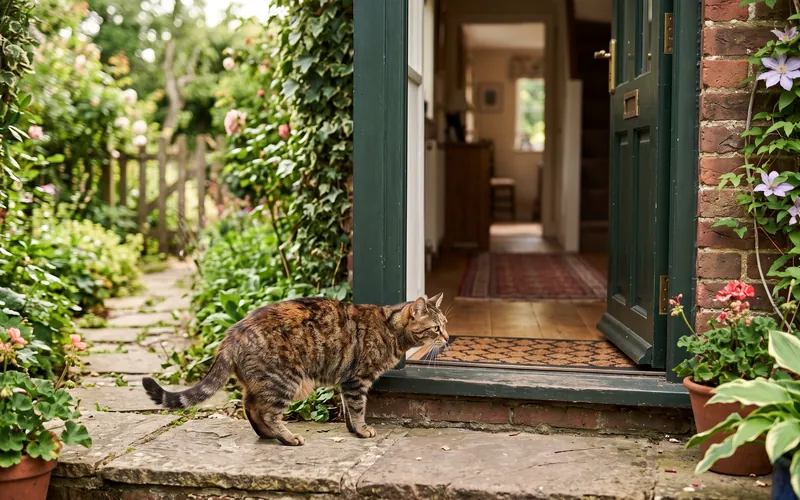
- Choose the right time: a calm, dry day, when the neighbourhood is quiet. Avoid bin day, fireworks or building work.
- Go out before a meal, so your cat is a little hungry and more likely to come back for food.
- Open the door and go with your cat. Let it explore at its own pace; don't carry it out.
- Stay close, chat calmly, and keep the door open so your cat can retreat.
- Call it back after 10–15 minutes with a familiar sound, such as shaking a treat pot, and reward with its meal.
- Repeat daily, gradually increasing the time outside.
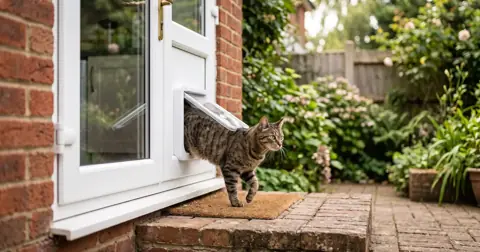
- After a week or two, if your cat is returning reliably, allow unsupervised access, for example through a cat flap.
Tip: scatter a little used cat litter outside the back door. Its familiar scent helps your cat recognise "home".
What age can cats go outside?
Kittens should stay indoors until they've had their full course of vaccinations (usually complete at around 12 weeks), have been neutered (recommended at around 4 months) and are microchipped. Most kittens are ready for short, supervised outings from about 5 to 6 months old. Follow the same gradual steps as above. Our guides to cat vaccinations and neutering explain what's needed.
Moving a short distance
If your new home is within a few miles of the old one, your cat may find its way back to familiar territory, sometimes repeatedly. To reduce the risk:
- Keep your cat indoors for longer, at least 4 to 6 weeks.
- Ask the new occupants of your old home not to feed or let in your cat, and to contact you if it appears.
- Ask old neighbours to do the same.
- Collect your cat calmly if it returns, and keep it in for a further period.
Moving house with an outdoor cat
Cats used to going outdoors can find being kept in frustrating. Help them cope with:
- Plenty of play sessions with wand toys and puzzle feeders.
- Window perches to watch the outside world.
- Cat grass and new scratchers.
- Extra litter trays, as they won't be toileting outside.
Once your cat starts going out, consider a microchip cat flap, which keeps neighbourhood cats out. See our guide to cat flap installation.
Keeping a cat in after moving with other pets
If you have more than one cat, or a dog, the move can upset the balance between them. Give each cat its own room or area at first, with separate food, water and litter trays, and reintroduce them gradually once they're calm. Cats that were friendly before can hiss at each other after a move because they smell of new places. Let them sniff each other's bedding before they meet again.
How far do cats roam?
Most domestic cats stay surprisingly close to home. Studies tracking pet cats in the UK found that many spend most of their time within about 100 metres of their house, though some, particularly unneutered males, roam much further. Cats in rural areas tend to travel further than urban cats. After a move, your cat will gradually build a new territory, usually starting with the garden and nearby gardens.
Keeping your cat in at night reduces the risk of road accidents and encounters with wildlife. Our guide to whether foxes and badgers attack cats explains the night-time risks.
Signs your cat isn't settling
- Hiding for long periods and not eating.
- Toileting outside the litter tray or spraying.
- Excessive vocalising, especially at night.
- Over-grooming or a change in behaviour.
Some unsettled behaviour is normal for a few days. If it continues for more than a week or two, or your cat stops eating for more than a day, contact your vet. If your cat has started spraying, our guide to removing cat urine smell will help you clean properly.
If your cat goes missing after a move
Search the new house thoroughly first, including cupboards, behind appliances and in lofts. Then search the garden and neighbouring gardens, sheds and garages, especially at dawn and dusk when it's quiet. Put your cat's litter tray outside, tell neighbours, post on local lost-pet groups and contact local vets, rescue centres and the council. Check your microchip database details are correct, and visit your old address if you've moved nearby.
FAQs
How long should I keep my cat in after moving?
Most UK charities recommend keeping your cat indoors for at least two to three weeks after moving. Some cats need four to six weeks, particularly nervous cats or those that have moved only a short distance from their old home.
How do I let my cat out for the first time after moving?
Choose a calm, dry day and go out before a meal so your cat is a little hungry. Open the door and let your cat explore at its own pace while you stay nearby, then call it back with food. Keep the first trips short and gradually increase the time outside over a week or two.
What age can cats go outside?
Kittens should only go outside once they're fully vaccinated, neutered and microchipped, which is usually from around 5 to 6 months old. Start with short, supervised trips in daylight.
Will my cat run back to my old house?
Cats that have moved a short distance, within a few miles, sometimes return to their old territory. Keep them in for longer, ask the new occupants not to feed your cat and to contact you if it turns up, and update the microchip with your new details.
Should I put butter on my cat's paws after moving?
No. This old tradition doesn't help a cat settle and can cause stomach upset. Spreading your cat's own scent around the new home, by gently rubbing a soft cloth on its cheeks and wiping it on doorframes and furniture, is more helpful.
How can I help my cat settle into a new home?
Keep familiar bedding, toys and scratchers, start with one quiet room, keep routines such as meal times the same, use a pheromone diffuser, provide hiding places and high perches, and let your cat explore the house gradually.
Sources and further reading
This guide is for general information only and is not a substitute for advice from a vet. Medicines, doses and costs change: always follow your vet and the product leaflet. If your cat is unwell or you think it has eaten something toxic, contact your vet or an emergency vet straight away.