Stray or feral cat: how to tell and what to do in the UK
Found a cat and not sure if it's lost, a stray or feral cat? A stray is a pet that has been lost or abandoned and is usually friendly towards people. A feral cat was born or has lived without human contact and is wary of people. Many cats that seem stray are simply well-fed pets on a wander, so check carefully before you take one in.
Quick answer
- Stray cats are usually friendly, vocal and may try to come into your home.
- Feral cats avoid people, stay silent and may have a tipped left ear.
- Many 'strays' are owned: use the paper collar test and ask a vet to scan for a microchip for free.
- For injured cats, contact a vet or the RSPCA (0300 1234 999) or the Scottish SPCA.
Stray, feral or lost: what's the difference?
Lost cat
An owned pet that has strayed from home or got trapped, often in a shed or garage. Someone is probably looking for it.
Stray cat
A cat that was once a pet but has been lost or abandoned. It's used to people and often seeks out human help.
Feral cat
A cat born or living without human contact. It's fearful of people and survives independently, often in a colony.
Community cat
An owned or semi-owned cat that roams and is fed by several households. Common in UK towns.
How to know if a cat is a stray
A stray cat is usually socialised to people because it once had a home. Signs include:
- It approaches people, meows, rubs against legs or follows you.
- It's thin, hungry or scruffy, with a dull, dirty or matted coat.
- It appeared suddenly and has been around for several days, at all times of day.
- It tries to get into homes, sheds or cars for warmth and shelter.
- It has injuries, an eye or ear problem or signs of illness (see cat eye problems).
- It's unneutered: a tom with big cheeks, or a female that is pregnant or in heat.
Is it really a stray? Look before you act
Many friendly cats that seem lost actually have homes nearby. Cats roam surprisingly far, and some visit several houses for food and attention. A hungry, chatty cat isn't necessarily a stray: plenty of well-fed pets will happily eat a second dinner. Before you take a cat in or start feeding it, make sure it doesn't already belong to someone.
How to tell if a cat is feral
Feral cats behave very differently from strays:
| Behaviour | Stray cat | Feral cat |
|---|---|---|
| Approaching people | Often comes closer, may let you touch it | Runs, hides or keeps its distance |
| Voice | Meows at people | Usually silent with people; may hiss |
| Eye contact | May look at you and blink | Avoids eye contact |
| Body language | Tail up, relaxed, rubbing | Crouched low, tail down, ready to flee |
| Activity | Seen during the day | Mostly at dawn, dusk and night |
| Group | Usually alone | Often lives in a colony |
| Coat | Often dirty and unkempt | Often clean and well groomed |
| Ears | Normal | May have a tipped left ear |
A frightened stray can act like a feral cat at first, so it's worth watching for a few days. Strays usually relax and become friendlier with time and food; feral cats stay wary.
What does a tipped ear mean?
In the UK, a small straight cut off the tip of the left ear, done under anaesthetic during neutering, shows that a feral cat has been through a trap, neuter and return (TNR) programme. Ear-tipped cats are already neutered and are often cared for by local volunteers, so there's no need to trap them again.
How to find out if a cat has an owner
- Check for a collar or tag with a phone number or address.
- Get it scanned for a microchip. Most vets and rescues scan for free. Microchipping became a legal requirement for pet cats in England in June 2024, so many cats are now chipped.
- Try the paper collar test. Attach a quick-release paper collar with a note: "Is this your cat? Please call…". If someone owns it, they'll usually get in touch.
- Ask neighbours and put up posters with a photo.
- Post online in local Facebook lost-pet groups, Nextdoor and lost-and-found pet websites, and check lost-cat posts.
- Tell local vets and rescues that you've found a cat.
Give it time. Some owners take days to notice their cat is missing, especially if it's an outdoor cat. If you think the cat may have been trapped after a house move, see our guide on keeping a cat in after moving.
What to do if you find a stray cat
If the cat is injured or ill
Take it to the nearest vet, who will usually provide emergency care for strays, or call:
- RSPCA (England and Wales): 0300 1234 999.
- Scottish SPCA (Scotland): 03000 999 999.
- USPCA or your local council (Northern Ireland).
Approach an injured cat slowly and gently. Use a towel and a carrier if it's safe to do so, as injured cats may bite. See also cat stung by a bee and swollen lip in cats for common minor problems.
If the cat is healthy and friendly
- Check for an owner using the steps above.
- Offer fresh water. Only offer food if you're fairly sure it's not owned; a small portion of plain cat food is best. Avoid giving cow's milk.
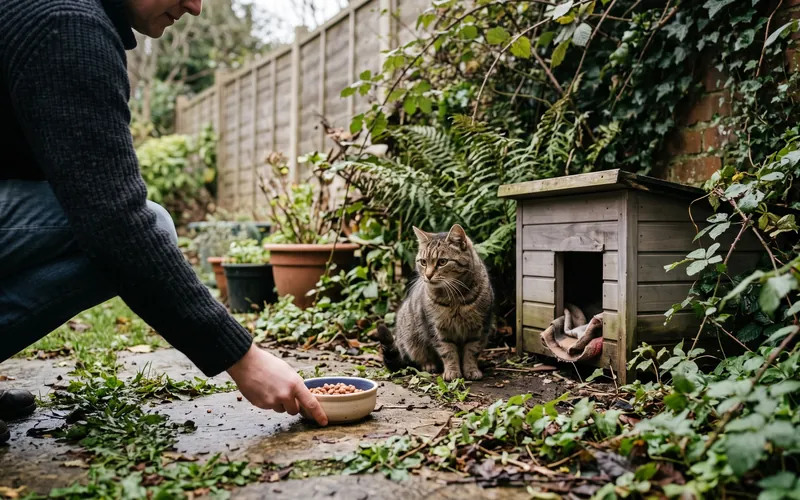
- Provide shelter, such as a box with blankets in a shed or porch.
- Keep it away from your own pets until it's been checked by a vet, as strays can carry fleas, worms and infections. See flea treatment for cats and cat worming.
- Contact a rescue such as Cats Protection, the RSPCA, Blue Cross or a local charity for advice.
If you want to keep a stray cat
The original owner may still legally own the cat, so you must make reasonable efforts to find them first. If nobody comes forward after a few weeks of searching, talk to a rescue. They can help you keep the cat properly, with vet checks, vaccinations, a microchip registered to you and neutering. See vaccination costs and free cat neutering.
What to do about feral cats
Feral cats shouldn't be brought indoors as pets, because they're frightened of people and very stressed by confinement. The best way to help them is to:
- Contact a rescue about TNR. Charities such as Cats Protection run trap, neuter and return schemes, often for free. Neutering stops colonies growing and reduces fighting, spraying and noise.
- Provide food and water at a regular time and place if you can commit to it.
- Offer shelter, such as an insulated box or shed, especially in winter.
- Ask about relocation only if the colony is in danger. Some rescues rehome feral cats as farm, stable or smallholding cats.
Feral kittens
Kittens born to feral mothers can often become pets if they're handled early, ideally before 7 to 8 weeks. Don't try to catch kittens yourself, as the mother may be nearby. Contact a rescue, which may place them with an experienced fosterer. Find out more in our guide on how to foster a cat.
Cat rescues that help with strays
Across the UK, you can contact:
- Cats Protection: the UK's largest cat charity, with centres and volunteer branches nationwide.
- RSPCA branches in England and Wales, the Scottish SPCA in Scotland, and the USPCA in Northern Ireland.
- Blue Cross, Battersea and Wood Green.
- Local rescues, such as Mrs Murray's Home for Stray Dogs and Cats in Aberdeen, Celia Hammond Animal Trust in London and the South East, and many small independent charities.
Local councils in the UK deal with stray dogs, not stray cats, so a cat charity is usually the best first contact.
Stray cats in winter
Cold, wet weather is hard on stray and feral cats. You can help by putting out a sheltered, insulated box with straw (which stays dry, unlike blankets), keeping water from freezing, and offering extra food. Check under car bonnets before driving, as cats often sleep near warm engines. Antifreeze is extremely poisonous to cats, so clean up spills straight away.
Preventing stray cats
Many strays are unneutered pets that wandered away, or the kittens of unneutered cats. You can help reduce the number of stray cats in the UK by neutering your own cats at about 4 months, microchipping them and keeping your contact details up to date, and supporting local TNR and rescue charities.
FAQs
How can I tell if a cat is a stray?
Signs that a cat may be a stray include appearing suddenly and staying around, being thin, hungry or unkempt, having a matted coat or injuries, and being friendly but desperate for food or shelter. However, many friendly cats are owned and just visiting, so check for a microchip and look for an owner before assuming it's a stray.
How can you tell if a cat is feral?
Feral cats usually avoid people, hide or run when approached, don't meow at humans, and are most active at dawn and dusk. They often live in groups (colonies) near farms, industrial sites or allotments. A tipped left ear shows that a feral cat has been neutered and returned.
Should I feed a stray cat?
If you're sure the cat is a stray, a small amount of food and fresh water helps. But if it might be owned, feeding it can encourage it to leave its home. Try the paper collar test first, and check with neighbours and local lost-pet groups.
What do I do if I find a stray cat in the UK?
Check that it isn't hurt, look for a collar, and ask a vet or rescue to scan it for a microchip for free. Post on local lost-and-found groups, ask neighbours and register it as found. If nobody claims it, contact a local cat rescue such as Cats Protection for help.
Can I keep a stray cat I found?
In the UK, the original owner may still legally own the cat. You must make reasonable efforts to find them first, including a microchip scan and found-cat reports. If no owner is found, speak to a rescue, which can help you adopt the cat properly.
Can a feral cat become a pet?
Feral kittens can often be socialised if they're handled from a young age, ideally before 7 to 8 weeks. Adult feral cats rarely become house pets and are usually happiest being neutered and returned to their colony, or rehomed as farm or stable cats.
What is Mrs Murray's Home for Stray Dogs and Cats?
Mrs Murray's Home for Stray Dogs and Cats is a long-established animal rescue charity in Aberdeen, Scotland. It takes in and rehomes stray and unwanted dogs and cats in the area. If you've found a stray cat in or around Aberdeen, it's one of the local rescues you can contact.
Sources and further reading
This guide is for general information only and is not a substitute for advice from a vet. Medicines, doses and costs change: always follow your vet and the product leaflet. If your cat is unwell or you think it has eaten something toxic, contact your vet or an emergency vet straight away.